
…From the glorious days of the Green Eagles to the recurring embarrassment of qualification failures, Nigerian football needs more than another foreign coach. It needs a complete institutional overhaul.
…Perhaps the most embarrassing aspect of Nigeria’s football decline is that other African countries, some with significantly smaller populations and fewer resources, are demonstrating what proper football organisation can achieve.
By the G&B Journal Correspondents
WED NOV 18 2026-theGBJournal| There was a time when the Nigerian national football team commanded fear, respect and admiration across the African continent.
Wearing the famous green and white jersey was not merely an opportunity to showcase individual talent; it was a responsibility, a national calling and, above everything else, an honour.
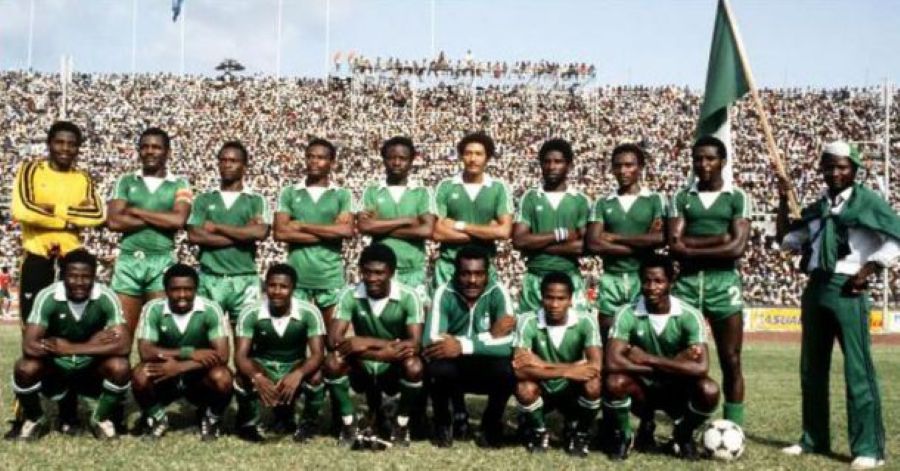
Those who watched the Green Eagles of the 1970s and 1980s will remember a generation of footballers who played with an extraordinary sense of commitment.
Christian Chukwu, Adokiye Amiesimaka, Emmanuel Okala, Aloysius Atuegbu, Godwin Odiye, Muda Lawal, Segun Odegbami, Henry Nwosu, ‘Quick Silver’ Okey Isima, Moses Otolori and Felix Owolabi were among the players who helped establish Nigeria as a formidable force in African football.
They were followed by another generation whose exploits helped transform the national team’s reputation and eventually saw the Green Eagles become the Super Eagles in 1988.
Rashidi Yekini, Daniel Amokachi, Sunday Oliseh, Austin ‘Jay-Jay’ Okocha, Nwankwo Kanu, Victor Ikpeba, late Steven Keshi, Joseph Yobo, Babayaro and a host of others became household names, not simply because of their individual brilliance but because they understood what it meant to represent Nigeria.
They were hungry for success. They wanted to win trophies, conquer Africa and announce Nigeria’s arrival on the global football stage.
And they did.
Nigeria won the Africa Cup of Nations in 1980, 1994 and 2013, while the country’s performances at the 1994 and 1998 FIFA World Cups established the Super Eagles as one of the most exciting teams in international football.
The generation that represented Nigeria at the 1994 World Cup, in particular, remains a reference point for what the country can achieve when talent, ambition and effective football management come together.
But what happened to that Nigerian football identity?
The foreign-based player syndrome
One of the most troubling developments in Nigerian football is the growing dependence on players whose football development has taken place almost entirely outside the country’s domestic football system.
There is absolutely nothing wrong with having Nigerian footballers playing in Europe and other competitive leagues around the world. Indeed, the success of players such as Victor Osimhen, Ademola Lookman, Alex Iwobi and several others is something the country should celebrate.
The problem, however, is the apparent overdependence on established foreign-based professionals, sometimes at the expense of developing and giving opportunities to emerging talents within Nigeria.
The national team should not become an exclusive club where recognition is determined primarily by the foreign league in which a player competes.
A player’s commitment, current form, tactical suitability and willingness to give everything for the national colours should matter more than the prestige of the club on his résumé.
There is an increasingly uncomfortable question surrounding the national team: are we selecting players because they are genuinely the best available footballers, or because they have become familiar names in European football?
Playing abroad does not automatically translate into commitment, patriotism or superior footballing ability.
Nor should every foreign-based player be regarded as indispensable.
Nigeria must rediscover the courage to identify, develop and promote homegrown talents who are hungry for opportunities and eager to establish themselves on the international stage.
WHAT OTHER AFRICAN COUNTRIES ARE GETTING RIGHT
Perhaps the most embarrassing aspect of Nigeria’s football decline is that other African countries, some with significantly smaller populations and fewer resources, are demonstrating what proper football organisation can achieve.
Consider South Africa.
The country’s domestic Premier Soccer League has remained an important source of national team talent. Its football structure has provided opportunities for locally developed players to compete at the highest level, while the national team continues to benefit from that domestic foundation.
Morocco offers another compelling example.
Its football renaissance did not happen overnight. The country invested in infrastructure, youth development, coaching education and organised football administration. The Mohammed VI Football Academy is one of the most visible expressions of that long-term commitment.
Morocco’s historic 2022 World Cup semi-final appearance was not an accident. It was the product of years of planning, investment and deliberate football development.
Cape Verde, meanwhile, offers a different lesson. Despite its relatively small population, the country has successfully built a competitive national team by identifying and integrating talent from its extensive diaspora.
Its historic qualification for the 2026 World Cup demonstrated what a coherent recruitment strategy and collective commitment can accomplish.
There is an important distinction here: these countries have different football models, and not all rely predominantly on home-based players. Cape Verde, for instance, draws extensively from its diaspora.
The lesson is not that Nigeria should abandon foreign-based players. It is that successful national teams require an organised system for discovering, developing and integrating talent, wherever that talent is found.
Nigeria should be doing considerably better.
With its population, football culture, enormous reservoir of natural talent and established domestic football history, the country should not be struggling to compete with nations it once routinely regarded as underdogs.
THE NFF: WHERE IS THE FOOTBALL DEVELOPMENT PLAN?
It is difficult to discuss the Super Eagles’ recurring struggles without examining the institution responsible for managing Nigerian football.
The Nigeria Football Federation has repeatedly come under criticism over its administration of the national game.
Questions surrounding funding, planning, coaching appointments, player welfare, grassroots development and allegations of financial impropriety have continued to undermine confidence in the country’s football administration.
The problem is that Nigerian football administration too often appears reactive rather than strategic.
A tournament approaches, the federation searches for a coach, players are assembled, expectations rise, and the country begins another cycle of uncertainty.
There appears to be little continuity in the technical direction of the national team.
What is Nigeria’s long-term football philosophy?
What kind of football does the country want its national teams to play?
Where is the systematic programme for identifying young players across the states and developing them into future internationals?
How are local coaches being trained and supported?
And why does every new administration appear to inherit the same problems without presenting a convincing roadmap for solving them?
These are questions that deserve answers.
Nigeria once had a coach in Clemens Westerhof who demonstrated what a combination of tactical understanding, talent identification and team-building could achieve.
Westerhof did not merely assemble a collection of famous footballers. He built a team. He recognised talent, gave players opportunities and developed a competitive side that went on to win the 1994 AFCON and reach the second round of the 1994 World Cup.
The question is not whether Nigeria must necessarily employ another Westerhof. Rather, why has the country struggled to establish a sustainable football development structure that can produce similar results regardless of who occupies the coaching position?
A federation that repeatedly changes coaches without addressing the underlying institutional weaknesses is simply treating symptoms while ignoring the disease.
THE SUPER EAGLES AND THE DECLINE OF A FOOTBALLING GIANT
Nigeria’s failure to qualify for the 2026 FIFA World Cup was more than an ordinary sporting disappointment.
For a country with Nigeria’s football pedigree, missing consecutive World Cup tournaments represents a serious indictment of the system responsible for managing the national game.
The painful playoff defeat to the Democratic Republic of Congo exposed yet again how far the country has fallen from the standards expected of a former African champion.
The consequences extend beyond the football pitch.
International tournaments provide visibility, commercial opportunities, national pride and a platform for showcasing Nigerian sporting excellence.
When the Super Eagles are absent, Nigeria loses more than a place in a competition. It loses an opportunity to demonstrate its footballing relevance on the global stage.
The recurring qualification difficulties should therefore be treated as a national sporting emergency.
It is no longer sufficient to blame referees, injuries, inadequate preparation or individual mistakes. Those factors may contribute to particular disappointments, but they cannot continually explain away systemic failures.
At some point, the people entrusted with managing Nigerian football must accept responsibility.
WHY NOT LOOK INWARDS?
Perhaps the most important question Nigeria must now confront is why the country continues to overlook the enormous footballing potential within its own borders.
Across Nigeria, there are talented youngsters playing in local leagues, academies, community competitions and grassroots tournaments.
Many possess the technical ability, physical attributes and determination required to succeed at the highest level.
Yet the pathway from grassroots football to the national team remains inadequate.
Local competitions need better organisation, improved facilities, proper scouting networks and stronger financial support.
The Nigeria Premier Football League must become more attractive, competitive and professionally managed.
There should be a comprehensive national scouting programme that identifies outstanding players from every geopolitical zone.
Young footballers must be given opportunities to progress through structured development programmes, while home-based players should receive meaningful opportunities to compete for places in the senior national team.
The national team should be a meritocracy, not a showcase for footballers with impressive European club affiliations.
Imagine what could happen if Nigeria invested the same energy it expends searching for established foreign-based players into building a properly functioning domestic football development system.
Imagine a Super Eagles side in which homegrown talents compete alongside established professionals abroad, with selection determined by performance, discipline, tactical suitability and commitment.
That is not an unrealistic ambition. It is how sustainable football development should work.
A COMPLETE OVERHAUL, NOT ANOTHER PUBLIC RELATIONS EXERCISE
Nigeria does not need another round of promises from football administrators. It needs measurable reforms.
First, the NFF must establish a transparent and sustainable national football development policy that survives changes in leadership.
Second, grassroots football must receive serious investment. Schools, academies, state football associations and local competitions should become integral components of a national talent identification programme.
Third, the domestic league must be strengthened. Players should have access to better facilities, reliable salaries, professional coaching and competitive opportunities.
Fourth, national team recruitment and selection must be based on merit. No player, regardless of his European club or international reputation, should enjoy an automatic place in the squad.
Fifth, Nigeria must invest in coaching education, sports science, youth development and modern football infrastructure.
Finally, the NFF must embrace accountability. Allegations of corruption and financial mismanagement should be addressed transparently, and football administrators should be judged by measurable achievements rather than political connections and promises.
NIGERIA MUST REDISCOVER ITS FOOTBALLING SOUL
The Super Eagles were once a symbol of Nigerian sporting excellence.
They represented a country that could compete with the best, challenge established football powers and produce players whose names commanded respect across the world.
That history should not become a permanent excuse for celebrating past achievements while ignoring present failures.
Football has evolved. Other African countries have invested, planned and developed systems capable of challenging the traditional continental heavyweights.
Nigeria cannot continue to rely on its population, historical achievements and abundance of naturally gifted footballers as though these are sufficient guarantees of success.
Talent without structure is wasted potential.
Players without proper development are opportunities lost.
And a national team without competent administration will eventually become a reflection of the dysfunction surrounding it.
The solution is not to shut the door on Nigerian footballers playing abroad. It is to stop treating them as the only dependable source of national team quality.
Nigeria must look inwards, rebuild its domestic football structures, develop its young talents and restore the pride associated with wearing the national colours.
The Green Eagles and the early Super Eagles generations demonstrated what Nigerian football could become.
Many of those players were products of the Nigeria Academicals system, which scouted promising footballers from schools and universities across the country and created a recognised pathway into the national team.
That system has effectively been abandoned, and its disappearance has severed one of the most important links between education, grassroots football and elite national representation.
The responsibility now rests with the country’s football administrators to create a system capable of producing another generation worthy of that legacy.
Nigeria does not lack football talent. What it desperately lacks is a football administration capable of identifying, nurturing and harnessing that talent.
Until that changes, the Super Eagles will continue to underperform—not because Nigeria has run out of gifted players, but because the institutions responsible for finding, developing and uniting them have failed.
Rebuilding the national team therefore requires more than appointing another coach or recalling another foreign-based star.
It requires restoring a credible development pathway, reviving school and university scouting, strengthening the domestic game and holding football administrators accountable for results.
Only then can Nigeria expect the Super Eagles to recover their identity, compete consistently at the highest level and once again make the national colours a source of pride rather than recurring disappointment.
PLAYERS THAT WON NIGERIA ITS 1ST AFCON TITLE: GoalKeepers Best Ogedegbe Emmanuel Okala-
Defenders: Christian Chukwu, David Adiele, Okey Isima, Tunde Bamidele, Kadiri Ikhana, Patrick Ekeji, Godwin Odiye and Charles Bassey-
Midfielders: Mudashiru (Muda) Lawal, Alloysius Atuegbu, Henry Nwosu, Felix Owolabi, Moses Otolorin-
Forwards / Attackers:Segun Odegbami, Adokiye Amiesimaka, Ifeanyi Onyedika, Shefiu Mohammed, Martin Eyo and Tunji Banjo
X-@theGBJournal|email:gbj@govbusinessjournal.com|govandbusinessj@gmail.com