
…CPPE argues that prosperous economies are built on production, refining, manufacturing, value addition and the strengthening of domestic productive capacity.
…Countries that become excessively dependent on imports inevitably export jobs, weaken domestic industries, erode local investments and mortgage their economic sovereignty.
SUN MAY 24 2026-theGBJournal| The Centre for the Promotion of Private Enterprise (CPPE) has warned that Nigeria risks undermining a historic opportunity to achieve energy self-sufficiency and industrial transformation.
This is coming amid renewed tensions between the Dangote Refinery, the Nigerian National Petroleum Company (NNPC) and petroleum marketers seeking continued access to petrol import licences.
”This debate goes far beyond petroleum products. It speaks to the very architecture of Nigeria’s economic philosophy, the future of industrialisation, the resilience of the macroeconomy and, ultimately, the preservation of the country’s economic sovereignty. No nation has ever imported its way to industrial greatness.,” the Think-Tank said in a statement signed by its CEO, Muda Yusuf.
CPPE argues that prosperous economies are built on production, refining, manufacturing, value addition and the strengthening of domestic productive capacity.
”Countries that become excessively dependent on imports inevitably export jobs, weaken domestic industries, erode local investments and mortgage their economic sovereignty.
Nigeria must therefore avoid drifting into a policy regime that undermines domestic production in the name of competition or liberalisation,” ” it notes.
The Think-tank says Import dependence carries profound economic consequences.
For decades, Nigeria’s dependence on imported petroleum products created deep distortions within the economy.
It exerted enormous pressure on foreign reserves, weakened the naira, accelerated the collapse of domestic refineries, entrenched a rent-seeking ecosystem, worsened FX illiquidity, fuelled corruption within the subsidy regime and imposed severe fiscal burdens on public finances.
At the height of the fuel subsidy era, Nigeria spent trillions of naira annually subsidising imported fuel — effectively transferring national wealth, jobs, industrial opportunities and value creation to foreign economies and their local collaborators.
The country was also spending over $10 billion annually on petroleum product imports.
The consequences were severe and far-reaching:
-Persistent pressure on the exchange rate
-Widening trade deficits
-Weak industrial competitiveness
-Massive fiscal leakages
-Investor uncertainty
-Macroeconomic fragility
According to the CPPE: Indeed, excessive import dependence was one of the major factors that pushed Nigeria’s foreign exchange market dangerously close to systemic distress before the recent reforms of the current administration restored stability and improved investor confidence.
It would therefore be economically imprudent to recreate the very conditions that previously weakened the economy.
Every serious economy protects its strategic sectors.
The United States is deploying tariffs and industrial subsidies to support manufacturing competitiveness. China aggressively protects strategic industries. Europe is increasingly embracing industrial policy intervention. India continues to deepen domestic manufacturing through its “Make in India” agenda.
Industrialisation has never been built on extreme liberalisation. No nation develops by turning itself into an attractive destination for imported goods.
Self-reliance is not economic isolationism. It is economic pragmatism anchored on national interest.
It is the deliberate strengthening of domestic productive capacity in order to reduce vulnerability to external shocks and reinforce long-term economic resilience.
A country that cannot refine its own petroleum products despite being a major crude oil producer exposes itself to profound economic vulnerability. Energy security is national security.
A nation that persistently imports what it should ordinarily produce locally gradually weakens its productive base, destroys industrial capabilities and compromises long-term economic stability.
The current policy conversation around petroleum product imports appears fundamentally inconsistent with Nigeria’s industrial aspirations.
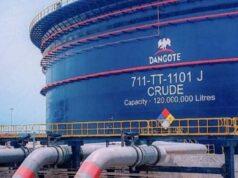
Nigeria has just witnessed one of the most consequential industrial investments in Africa through the establishment of the Dangote Refinery, alongside growing investments in modular refineries across the country. These investments should ordinarily be strategically supported, celebrated and strengthened.
Instead, there appears to be mounting pressure for unrestricted importation of refined petroleum products — a policy orientation capable of undermining domestic refining investments and discouraging future industrial commitments. This presents a troubling contradiction in policy signalling.
What message are we sending to investors if a multi-billion-dollar refinery investment of continental significance is confronted with regulatory uncertainty and policy headwinds?
The pathway to competition is not the promotion of imports. The pathway to competition is the encouragement of additional domestic refining investments.
Advocacy for fiscal protection of domestic refining is neither unusual nor extraordinary.
Nigeria already provides varying degrees of tariff and fiscal protection to several manufacturing subsectors under existing fiscal policy frameworks.
There is currently an Import Adjustment Tax covering 192 tariff lines designed to support domestic industries, including: Pharmaceuticals, Textiles, Chemicals and allied products, Iron and steel, Cement, Ceramics and sanitary wares, Furniture, Food processing, Automobile assembly, Wires and cables, Soap and detergents and many more.
The same strategic policy support should naturally extend to domestic refining because refining is not merely a commercial activity; it is a critical industrial, economic and national security investment.
The proposition that imported products should compete freely with locally produced goods — including petroleum products — ignores the severe structural disadvantages confronting Nigerian manufacturers.
Domestic producers contend with High energy costs, Poor infrastructure, Multiple taxation, Elevated interest rates, Logistics bottlenecks, FX volatility, and Regulatory headwinds.
Meanwhile, foreign producers often operate within significantly more supportive ecosystems characterised by Stable electricity supply, Lower financing costs, Efficient logistics systems, Quality infrastructure, Export incentives, and Strong state support.
Competition can only be meaningful where production occurs under broadly comparable macroeconomic, structural and regulatory conditions. In the absence of such parity, what is often presented as “competition” merely becomes the institutionalisation of structural disadvantage against domestic industries.
Local enterprises should not be subjected to destructive competition under profoundly asymmetric conditions. Such an approach would not promote efficiency; it would undermine industrialisation, weaken domestic investment, erode jobs, compromise economic sovereignty and deepen import dependence.
An indiscriminate liberalisation regime within a structurally fragile economy is not a pathway to competitiveness. It is a pathway to deindustrialisation.
Indeed, it was indiscriminate import liberalisation that precipitated the collapse of many once-thriving domestic industries, including tyre manufacturing giants such as Dunlop and Michelin, as well as textile mills, battery manufacturing firms, automobile assembly plants, pharmaceutical companies and electronics assembly industries.
Many of these enterprises were not destroyed by inefficiency alone, but by a policy environment that exposed domestic producers to unfair external competition amid crippling infrastructure deficits, high energy costs, weak logistics systems, prohibitive financing costs and multiple regulatory burdens.
This is why the implementation of the [AfCFTA] could become deeply disruptive for domestic manufacturers if urgent and deliberate steps are not taken to strengthen local production capabilities, improve competitiveness and address the structural impediments confronting Nigerian industries.
Trade liberalisation without competitiveness is not integration; it is deindustrialisation.
Attempts to portray Dangote Refinery as a monopolistic threat are simplistic, fundamentally flawed and grossly unfair. The refinery did not prevent other investors from entering the sector. It did not cause the collapse of state-owned refineries. It simply undertook an extraordinary industrial investment at a scale unprecedented in Africa.
Scale creates competitiveness. Scale lowers unit costs. Scale deepens value chains. Scale strengthens economic resilience. Scale should not be criminalised.
Large market share, in itself, is not evidence of monopoly abuse. Across the world, governments regulate dominant market players through competition laws and antitrust institutions to prevent abuse of market power. That responsibility properly belongs to competition regulators.
Nigeria should not demonise audacious investment, industrial courage, scale and risk appetite. A country that undermines transformative investment sends deeply troubling signals to both domestic and foreign investors.
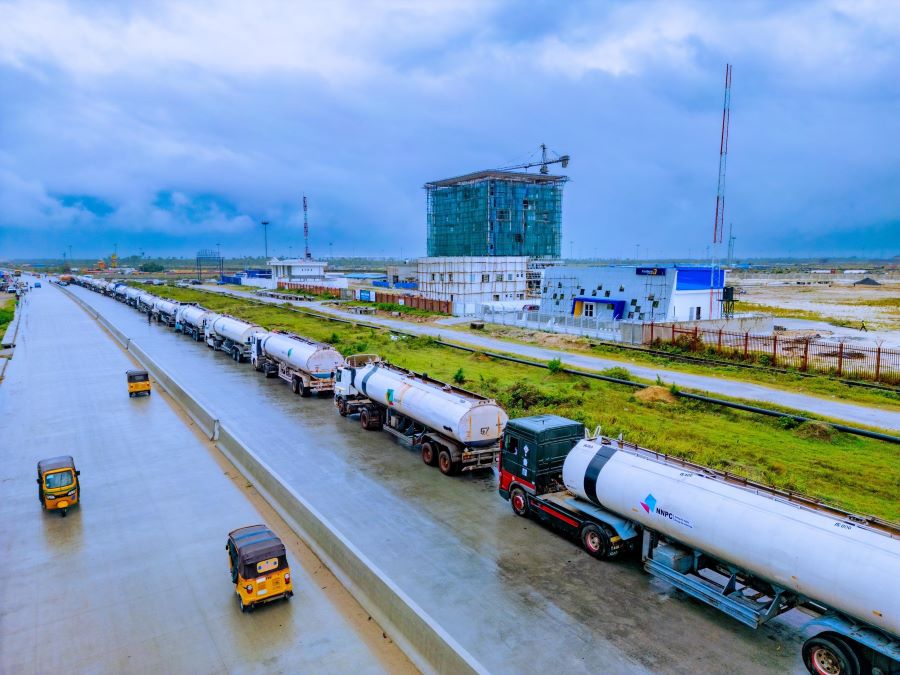
Every imported petroleum cargo represents exported jobs, exported industrial opportunities, Additional pressure on foreign reserves, Weakening of local value chains, reduced domestic capacity utilization, and import dependence weakens national economic resilience.
Domestic refining, on the other hand, strengthens Energy security, Foreign exchange conservation, Job creation, Industrial linkages, Backward integration, Balance of payments sustainability, and Macroeconomic stability. A nation that produces what it consumes builds resilience. A nation addicted to imports builds vulnerability.
Nigeria’s recent experience with food importation clearly illustrates the dangers of excessive liberalisation.
Large-scale food imports disrupted local agricultural value chains, weakened incentives for domestic farmers and undermined investments in local production. Admittedly, imports helped moderate the prices of some food items, thereby providing temporary relief to consumers.
However, the experience underscores the imperative of balancing short-term consumer welfare with long-term domestic productive capacity. Many Nigerian farmers are yet to recover from the disruptions created by those policy measures.
The refining sector must not be subjected to the same policy error. Temporary import advantages should never be permitted to destroy long-term domestic industrial capabilities.
Nigeria cannot achieve meaningful industrialisation without deliberate and sustained support for domestic production. Industrial transformation requires:
-Strategic protection
-Policy consistency
-Strong domestic value chains
-Support for local investors
-Reduction in import dependence
No economy becomes prosperous by importing what it can produce domestically. The future of Nigeria’s economic resilience lies in production, refining, manufacturing and value addition — not in the perpetuation of import dependence.
Nigeria must therefore decide whether it wishes to build a production economy or remain trapped within a consumption economy.
History has repeatedly shown that nations which neglect domestic production eventually weaken their currencies, compromise economic sovereignty and expose themselves to severe external vulnerabilities.
X-@theGBJournal|Facebook-the Government and Business Journal|email:gbj@govbusinessjournal.com|govandbusinessj@gmail.com