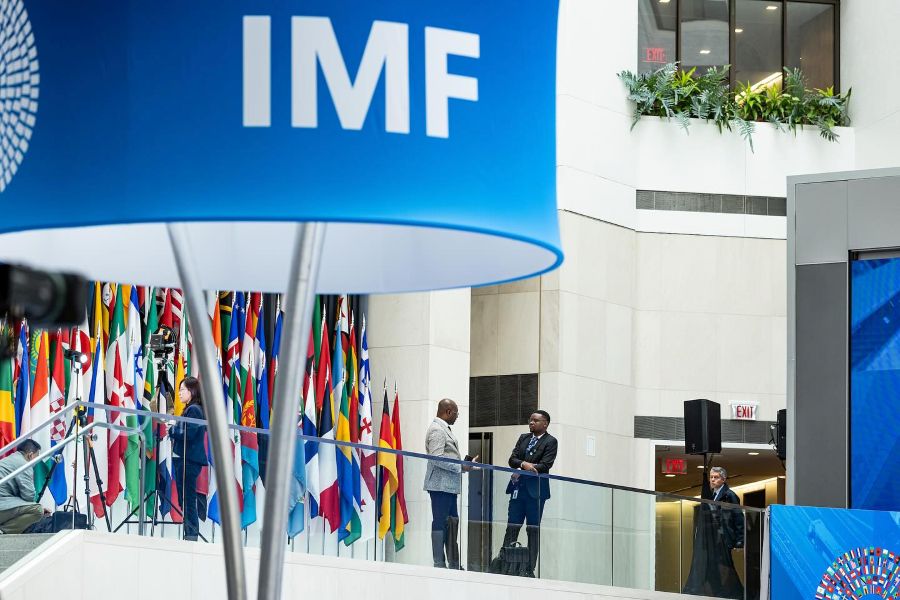

SUN JUNE 14 2026-theGBJournal|The Centre for the Promotion of Private Enterprise (CPPE) welcomed the International Monetary Fund’s positive assessment of Nigeria’s economic reforms, saying the findings of the IMF’s latest Article IV Consultation broadly validate the view long held by the private sector that recent policy measures have helped restore a measure of macroeconomic stability.
The policy advocacy group said the Fund’s recognition of progress in key economic indicators underscores the impact of reforms aimed at correcting long-standing distortions in the foreign-exchange market, public finances and monetary policy framework.
According to CPPE, the IMF’s conclusions align with the position consistently advanced by business leaders and other stakeholders who have supported efforts to stabilize Africa’s largest economy.
However, the group cautioned that the IMF’s continued backing of tight monetary policy and elevated interest rates risks overlooking the growing burden on businesses and households.
While acknowledging the role of monetary tightening in curbing inflationary pressures, CPPE argued that persistently high borrowing costs could undermine private-sector investment, constrain enterprise expansion, weaken job creation and increase debt-servicing pressures for both companies and the government.
CPPE said the next phase of economic management should prioritize translating macroeconomic improvements into tangible welfare gains for citizens.
With key stabilization measures increasingly taking hold, policymakers must now focus on fostering inclusive growth, expanding employment opportunities and improving living standards, it said.
The challenge facing Nigeria, according to the group, has evolved from restoring economic stability to ensuring that the benefits of reform are broadly shared across the economy.
It noted that the cost of credit in Nigeria has reached levels that are becoming increasingly prohibitive for productive investment.
Lending rates remain among the highest in the world, making it difficult for businesses to expand, invest or create jobs.
High yields on government securities have also intensified the crowding-out effect in the financial system. Banks and investors are increasingly channeling resources into treasury bills and government bonds rather than financing productive sectors of the economy.
As a consequence, capital is gravitating towards financial assets rather than productive assets.
”An economy cannot achieve sustainable development when financial capital earns higher returns from government financial instruments than from supporting enterprise, innovation and industrializationl” CPPE said.
CPPE also shares the IMF’s concern regarding the growing dependence on foreign portfolio inflows.
”Portfolio investments can provide valuable liquidity and support exchange rate stability. However, they are also highly volatile and vulnerable to shifts in global risk sentiment.”
The rollover, CPPE saqid, risks highlighted by the IMF deserve serious attention, particularly in an increasingly uncertain global environment characterized by geopolitical tensions, trade disruptions and financial market volatility.
For the think-tank, sustainable external sector resilience cannot be built solely on portfolio flows.
It must rest on stronger exports, higher productivity, increased foreign direct investment and a more competitive domestic economy. Hot money can stabilize an economy temporarily; productive investment is what transforms it permanently.
One area where the IMF report could have been stronger is in its recognition of the critical role of sub-national governments, cpCPPE argued.
Following recent improvements in federation revenue allocations, state governments now command significantly greater fiscal resources. Consequently, their spending priorities have become increasingly important to the success of economic reforms.
Many of Nigeria’s most pressing development challenges—including food production, rural infrastructure, basic education, primary healthcare and local security interventions—fall substantially within the responsibilities of state governments.
Any serious conversation about economic reform, poverty reduction and inclusive growth must therefore incorporate the role of the states. Economic transformation in a federation cannot be driven from the centre alone.
Macroeconomic stability may rescue an economy from crisis, but shared prosperity is what secures public confidence in reform. That should be the defining objective of the next phase of Nigeria’s economic journey.
X-@theGBJournal|Facebook-the Government and Business Journal|email:gbj@govbusinessjournal.com|govandbusinessj@gmail.com