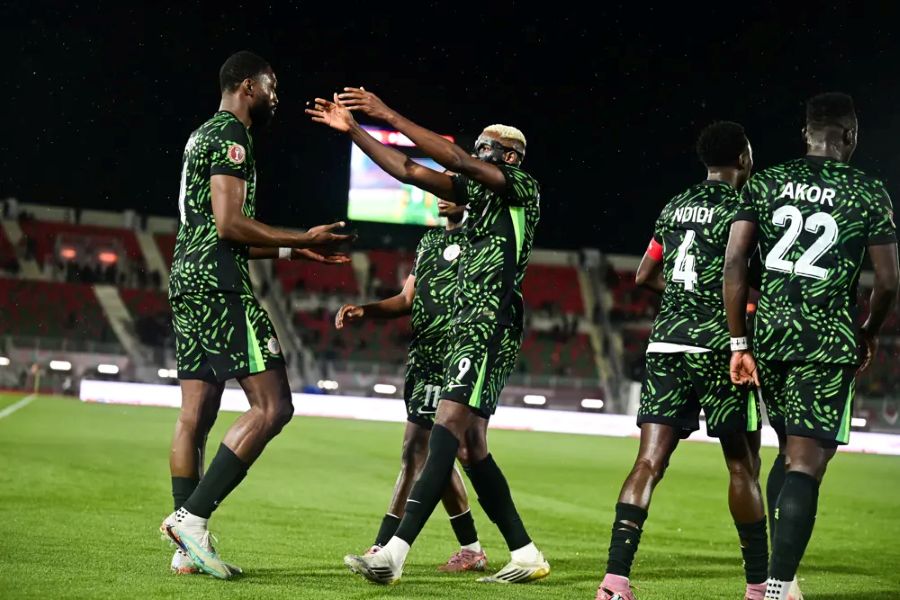

…Nigeria’s failure to qualify mirrors a deeper national crisis. Citizens increasingly see institutions that do not reward merit, leadership that often appears disconnected from ordinary people, and systems where politics frequently triumphs over competence.
By Igwebuike Okoh
WED JULY 01 2026-theGBJournal| The FIFA World Cup is more than a football tournament. It is one of the few moments when an entire nation, regardless of tribe, religion, class or political affiliation, rallies behind a common identity.
For a few weeks, flags fly higher, arguments become friendlier, and citizens remember what it feels like to belong to something bigger than themselves.
That is why failure to qualify hurts.
Even football giants feel the psychological blow. Germany’s recent exit from the tournament has left many supporters questioning the direction of a nation that has long taken pride in sporting excellence. If a country with Germany’s economic strength and institutional stability can feel diminished by football disappointment, imagine the emotional cost for a country like Nigeria, which has not even made it to the competition.
For Nigerians, the World Cup has always been more than ninety minutes on a football pitch. It has been a rare escape from economic hardship, insecurity, unemployment and political frustration. It is one of the few stages where Nigerians expect to compete with the world’s best and be respected.
When that opportunity disappears, so does a powerful source of national confidence.
Nigeria’s failure to qualify mirrors a deeper national crisis. Citizens increasingly see institutions that do not reward merit, leadership that often appears disconnected from ordinary people, and systems where politics frequently triumphs over competence. Football, like governance, suffers when transparency, planning and accountability are replaced by vested interests.
The disappointment of missing the World Cup therefore extends beyond sport. It reinforces a dangerous belief that Nigeria is becoming a nation that consistently falls short of its enormous potential. Every missed tournament reminds millions of young Nigerians that another opportunity to celebrate their country together has been lost.
A nation cannot thrive on disappointment alone. Hope must be built deliberately—through better governance, stronger institutions and leadership that places merit above patronage. If Nigeria can fix the systems that govern football, perhaps it can also begin fixing the systems that govern the country.
Because qualifying for the World Cup is not just about football. For Nigeria, it is about restoring belief that excellence is still possible.
Igwebuike Okoh write from Cologne, Germany
X-@theGBJournal|Facebook-the Government and Business Journal|email:gbj@govbusinessjournal.com|govandbusinessj@gmail.com