
…Stiell cites worsening climate impacts, fossil fuel-driven inflation and stalled negotiations as he calls for reform of global climate talks
MON NOV 23 2026-theGBJournal| UN Climate Change Executive Secretary Simon Stiell has warned that the world cannot afford another breakdown in international climate negotiations, as worsening climate impacts, rising fossil fuel costs and the approaching breach of the critical 1.5°C warming threshold intensify pressure for urgent global action.
In a blunt assessment of the outcome of COP31 in Antalya, Türkiye, Stiell expressed disappointment that countries failed to reach agreement on two presidency-led decisions, including the contentious issue of advancing the transition away from fossil fuels.
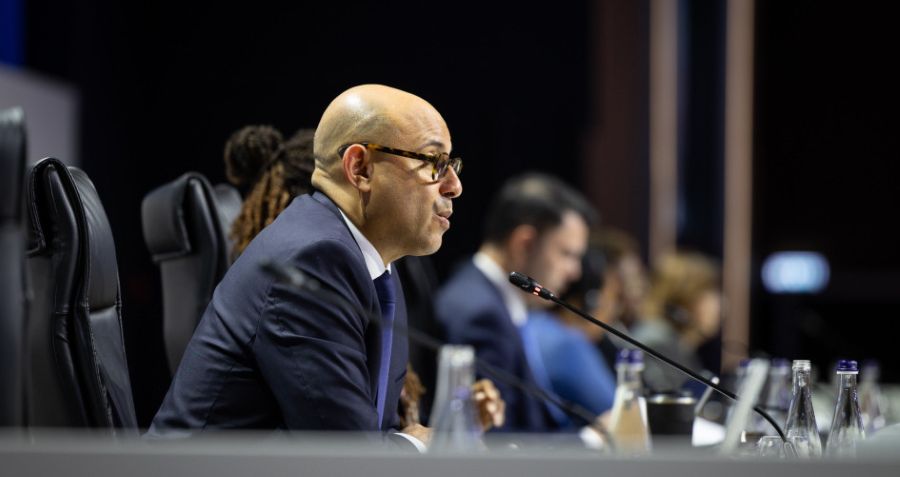
“The world cannot afford a repeat of this moment,” he said in his closing remarks at the conference on Sunday, November 22.
His warning comes amid growing divisions over how to implement the historic commitment made at COP28 in Dubai in 2023 to transition away from fossil fuels in energy systems in a just, orderly and equitable manner.
Despite that agreement, countries remain divided over the practical steps, timelines and mechanisms required to accelerate the shift away from coal, oil and gas.
Stiell said the consequences of inaction were becoming increasingly difficult to ignore, with climate-related impacts worsening across the world and fossil fuel costs fuelling inflation across economies.
“Climate impacts are worsening the world over… fossil fuel costs are driving inflation through every economy… and 1.5 overshoot is approaching,” he said.
The UN climate chief argued that the latest setback should prompt governments to examine how international climate negotiations operate, while preserving the consensus-based system that has delivered important agreements over the past decade.
He cited previous achievements, including the Paris temperature targets, new climate finance goals, the commitment to transition away from fossil fuels and the establishment of a global goal on adaptation.
But he acknowledged that the process needed to improve, modernise and reform as the world moved from negotiating commitments to implementing them.
“This process belongs to 194 Parties. Consensus works best from the ground up, with full transparency, taking time to listen to all views, always building on what came before,” he said.
Stiell also cautioned against allowing the failure of the presidency-led negotiations to overshadow progress made in other areas of COP31.
He said the conference’s Action Agenda had delivered concrete results across six areas, including transforming agriculture and food systems and strengthening resilience in cities and infrastructure.
Commitments made by individual countries and at the Leaders’ Summit, he said, showed that around half of the global economy was accelerating electrification.
The COP31 Electrification Delivery Package had also recorded important progress, which he said should stimulate further innovation and investment and help accelerate the transition towards cleaner energy systems.
On negotiations, countries secured decisions on a Just Transition, reinforcing the importance of fairness and inclusion as economies move away from carbon-intensive energy sources.
Stiell said protecting workers, communities and vulnerable populations must remain central to climate action.
However, the inability to reach agreement on the two presidency-led decisions exposed continuing divisions among governments, particularly over the future of fossil fuels and the pace of the global energy transition.
The setback also places greater pressure on COP32, scheduled to take place in Ethiopia in 2027, to rebuild momentum and strengthen implementation of existing climate commitments.
Stiell described the next conference as a vital stepping stone, particularly as countries prepare for the second Global Stocktake, the mechanism for assessing collective progress towards the goals of the Paris Agreement.
“The second GST must build on the first… not step back. Humanity cannot afford anything else,” he said.
He maintained that international climate cooperation had delivered significant progress over successive conferences, helping to move humanity away from a potentially catastrophic trajectory of global warming.
But he warned that far greater efforts were required to match the scale of the crisis.
“Clearly much, much more is needed,” he said.
Thanking the Turkish government and people for hosting the conference, Stiell also urged civil society organisations to sustain pressure for climate action, describing their contribution as more important than ever.
“The fight continues. We will never give up,” he said.
X-@theGBJournal|email:gbj@govbusinessjournal.com|govandbusinessj@gmail.com