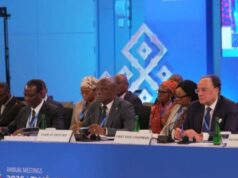


…The International Monetary Fund has already ranked Nigeria among the top 10 contributors to global real GDP growth in 2026, projecting the country to account for roughly 1.5 per cent of world growth this year
TUE SEPT 01 2026-theGBJournal| Nigeria’s economy is gathering momentum, with Finance Minister Taiwo Oyedele pointing to accelerating growth, a stronger naira and broader expansion across productive sectors as evidence that the government’s economic reforms are beginning to translate into a more resilient economy.
Nigeria’s real gross domestic product expanded by 4.43 per cent year-on-year in the second quarter of 2026, up from 4.23 per cent in Q2 2025 and 3.89 per cent in the first quarter of this year.
The latest performance lifted real GDP growth for the first half of 2026 to 4.16 per cent, compared with 3.68 per cent in the corresponding period of 2025, signalling what the government sees as a sustained strengthening of economic activity.
For Oyedele, the significance of the figures extends beyond the headline growth rate.
Growth is becoming more broad-based, with 27 economic subsectors recording real growth above 3.0 per cent in Q2 2026, compared with 23 subsectors in the same quarter last year.
That widening base is important for the government’s argument that the recovery is moving beyond a narrow group of industries and beginning to spread across the productive economy.
The productive sectors led the expansion. Manufacturing grew by 3.24 per cent, more than double the 1.60 per cent recorded in Q2 2025, reflecting improved industrial output.
Agriculture expanded by 4.39 per cent, up from 2.82 per cent, pointing to stronger production and value-chain performance.
Services, the economy’s largest growth driver, expanded by 4.60 per cent, compared with 3.94 per cent a year earlier.
The Finance Minister’s perspective published today and seen by the G&B Journal, is that the improvement in these sectors provides a more meaningful measure of the reform programme than GDP growth alone.
Sustained expansion in manufacturing, agriculture and services would be critical to converting macroeconomic stabilisation into higher incomes, investment and employment.
The relative stability and steady appreciation of the exchange rate have also amplified the gains in dollar terms.
The naira appreciated by more than 12 per cent between the first half of 2025 and the first half of 2026, resulting in an expansion of the economy by approximately 17 per cent in US dollar terms over the period.
The Oyedele argues that, if sustained alongside its social programmes, the combination of stronger real growth and exchange-rate stability could meaningfully strengthen dollar incomes, improve purchasing power and lift millions of Nigerians out of poverty.
This is central to the economic case being advanced by Oyedele: macroeconomic reform is intended not simply to improve fiscal and monetary indicators but ultimately to produce a more productive economy and better living standards.
Given the momentum, Nigeria is positioned to consolidate its standing among Africa’s largest economies and advance towards the government’s target of a US$1tn economy by 2030.
The International Monetary Fund has already ranked Nigeria among the top 10 contributors to global real GDP growth in 2026, projecting the country to account for roughly 1.5 per cent of world growth this year, ahead of several advanced and emerging economies.
Continued macroeconomic stability, sustained growth across productive sectors and improving investor confidence would accelerate Nigeria’s progression towards becoming Africa’s largest economy by 2028.
But the Oyedele’s message is also that the recovery remains dependent on policy continuity.
The latest figures strengthen the case for maintaining the reform trajectory rather than reversing course as the initial costs of adjustment give way to stronger economic activity.
“These results underscore the importance of sustaining our reforms and ensuring policy consistency as their benefits begin to reach households across the country,” he said.
“The Government remains focused on accelerating inclusive growth and translating these macroeconomic gains into shared prosperity for every Nigerian family.”
For Oyedele and the economic management team, the immediate challenge is therefore to turn improving macroeconomic indicators into durable private-sector investment, stronger household incomes and broader productivity gains.
The 4.43 per cent quarterly growth rate is an encouraging signal, but reaching a US$1 trillion economy by 2030 will require the acceleration to persist well beyond the current rebound
The latest data nevertheless provide the government with a stronger platform from which to argue that its reforms are beginning to reshape Nigeria’s growth trajectory — with exchange-rate stability, expanding productive-sector activity and investor confidence increasingly reinforcing one another.
By Charles IKE-OKOH
X-@theGBJournal|email:gbj@govbusinessjournal.com|govandbusinessj@gmail.com