
THUR OCT 08 2026-theGBJournal| Former Anambra State Governor and Nigeria Democratic Congress party (NDC) presidential candidate Peter Obi has called for a decisive shift in Nigeria’s economic strategy from consumption to production, arguing that a stronger manufacturing sector is critical to creating jobs, boosting exports and reducing the country’s dependence on imports.
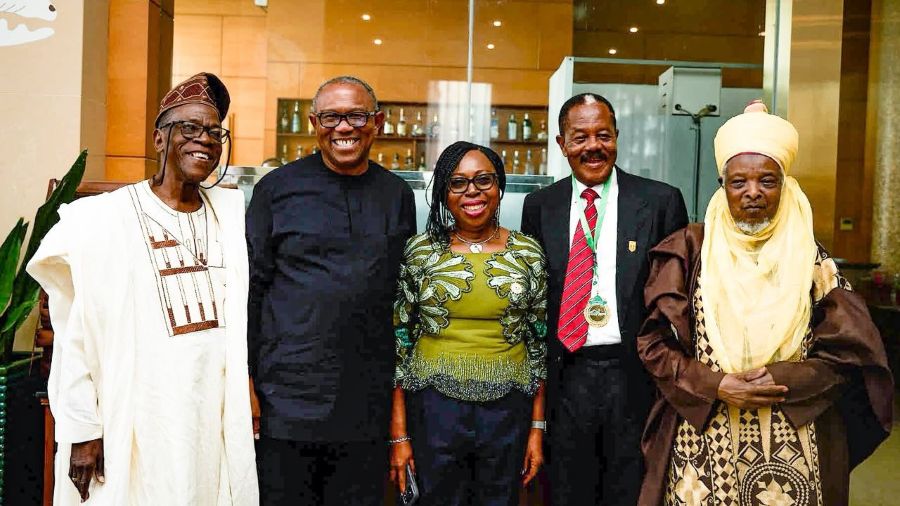
Obi made the case during his visit to the Manufacturers Association of Nigeria (MAN) in Lagos, where he attended the inauguration of the association’s newly elected President, Dr. Eric Okoye, at the Oriental Hotel.
Speaking after interacting with the new MAN leadership and members of the manufacturing community, Obi said Nigeria possesses “enormous potential” in manufacturing but requires consistent government policies and a more supportive business environment to unlock it.
“We must therefore deliberately move from a consumption-driven economy to a productive economy, one that produces, creates jobs, adds value and competes successfully in the global market.”
According to figures cited by Obi, manufacturing currently accounts for about 7.5% of Nigeria’s GDP, significantly below the levels he referenced for Egypt, Morocco and several emerging Asian economies.
He cited manufacturing contributions of about 14% in Egypt, 15% in Morocco, 25% in Vietnam, 19% in Indonesia and 20% in Bangladesh, using the comparison to underline what he described as the scale of Nigeria’s untapped industrial opportunity.
Obi argued that government policy must focus on creating conditions that allow manufacturers to invest, expand production and compete internationally.
He identified right government policies, an enabling business environment and stronger public-private collaboration as key requirements for increasing manufacturing’s contribution to national output.
A stronger industrial base, he said, would have wider economic effects — from employment creation and increased productive capacity to lower import dependence and higher exports.
“A stronger manufacturing sector will expand employment opportunities, strengthen our productive capacity, reduce our dependence on imports, increase exports, and improve the standard of living of our people,” Obi said.
His comments come against the backdrop of continued debate over how Nigeria can strengthen domestic production and reduce vulnerability to external shocks by expanding its productive base.
Obi congratulated Okoye and the new MAN leadership, wishing them what he described as a “successful and productive tenure.”
He also pledged continued engagement with Nigeria’s manufacturing sector, saying collaboration with industry would remain important to efforts aimed at building a more productive economy.
X-@theGBJournal|email:gbj@govbusinessjournal.com|govandbusinessj@gmail.com