


…The founder of Princesschi Trend tells the G&B Journal she wants to build more than a fashion label. She dreams of an African luxury house that celebrates heritage, commands global recognition and gives back to the community.
SAT OCT 17 2026-theGBJournal| There is a particular kind of ambition that begins with a piece of fabric and ends with a vision of the world.
For Nworisa Chibuzor Francisca, the journey from the bustling fabric shops of Yaba, Lagos, to the possibility of building an internationally recognised African fashion house is about more than clothes.
It is a quest to give African identity a distinctive place in global fashion, one carefully considered garment at a time.
“Africans are royalty, and our fashion should reflect that,” says Francisca, founder, chief executive and creative director of Princesschi Trend Ltd.
It is an ambitious proposition in a Nigerian fashion market estimated at between $2 billion and $6 billion, where the challenge for emerging designers is not simply to create beautiful clothes, but to build brands with the resources, recognition and staying power to compete beyond their immediate markets.
Francisca’s own beginnings were modest. Growing up in a middle-class family, she watched her parents maintain a distinctive sense of style.
Their example planted an early appreciation for fashion, although turning that interest into a business would come later, driven initially by the practical demands of making a living.
She began sourcing fabrics in Yaba, photographing materials that caught her attention and posting them on her WhatsApp status.
When customers expressed interest, she would return to buy them. Her friends became her first customers.
“Honestly, survival was my initial motivation,” she says. “I wanted to use the gifts God had given me to earn a living on my own terms.”
But the business gradually revealed a larger possibility.
Her instinct for fabrics, understanding of style and ability to communicate with customers could be combined in a more creative enterprise.
Fabric sourcing evolved into fashion design, and Princesschi Trend emerged.
Today, the label rests on a philosophy that Francisca hopes will distinguish it in a crowded industry: African heritage should be a foundation for innovation, not something to be discarded in the pursuit of modernity.
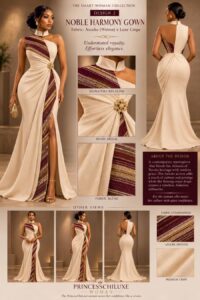
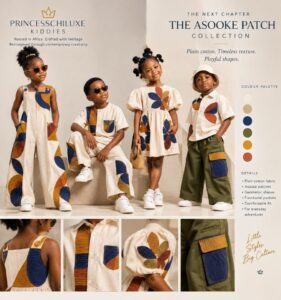
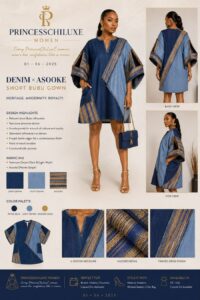
The designer wants to work with indigenous textiles such as Aso-Oke, bringing traditional materials into contemporary silhouettes that communicate sophistication without losing their cultural identity.
“I believe we have so much within our continent that we can proudly create, innovate, and share with the world without losing our identity in the process,” she says.
Her ambitions extend beyond Nigeria. Francisca wants African fashion houses to attain the kind of enduring recognition enjoyed by established international luxury brands, with names that evoke a distinctive creative identity and craftsmanship across generations.
“When we look at established international fashion houses such as Louis Vuitton, we recognise their names and associate them with a distinct identity,” she says. “I want to see African fashion houses attain that level of recognition and longevity.”
One woman she would particularly like to dress is Mo Abudu, the Nigerian media entrepreneur whose personal style and business achievements have become a source of inspiration.
Francisca admires Abudu’s commitment to projecting Africa positively and creating platforms for African creatives. But it is her willingness to keep building, even after achieving considerable success, that resonates most deeply.
“Life does not have a deadline for becoming who you are meant to be,” she says, reflecting on Abudu’s journey.
“You can achieve one milestone and still have the courage to begin another chapter.”
For Abudu, she imagines a refined, structured ensemble incorporating Aso-Oke and carefully chosen African-inspired accessories.
The intention would be to preserve the entrepreneur’s understated elegance while making her heritage unmistakable.
“I would want her to look at herself and see not just a beautifully dressed woman, but an African queen wearing her heritage with pride,” Francisca says.
Such ideas, however, must contend with the economics of building a young business.
Limited finances mean Francisca often handles everything from sourcing and production to marketing, customer relationships and quality control.
The demands leave less time for experimentation and the development of new collections.
There is also the private struggle of learning to look beyond her present circumstances.
“Above all, I have learnt not to allow my present situation to define the size of my future,” she says.
That future includes a social mission. Francisca hopes to support children from disadvantaged backgrounds through educational opportunities, scholarships and, eventually, a free academy.
She wants Princesschi Trend to become a business that creates jobs, empowers people and gives back to the community.
“When people hear the name Princesschi Trend Ltd, I want them to think of more than beautiful clothes,” she says. “I want them to think of royalty, impact, compassion, and humanity.”
For now, the fashion house remains a work in progress, sustained by conviction, resourcefulness and the belief that a small beginning need not dictate the limits of a large dream.
Francisca wants her clothes to turn heads. But the more enduring ambition is to build an African brand that the world will remember — not simply for how its garments look, but for the identity they carry and the lives its success might transform.
“Because as much as I want people to remember us for our clothes and the confidence our designs inspire,” she says, “I want them to remember that, above everything else, life is about humanity first.”
X-@theGBJournal|email:gbj@govbusinessjournal.com|govandbusinessj@gmail.com