
…Governors call for more resources for scholarships, out-of-school children and Tsangaya education as they seek a united regional approach to development
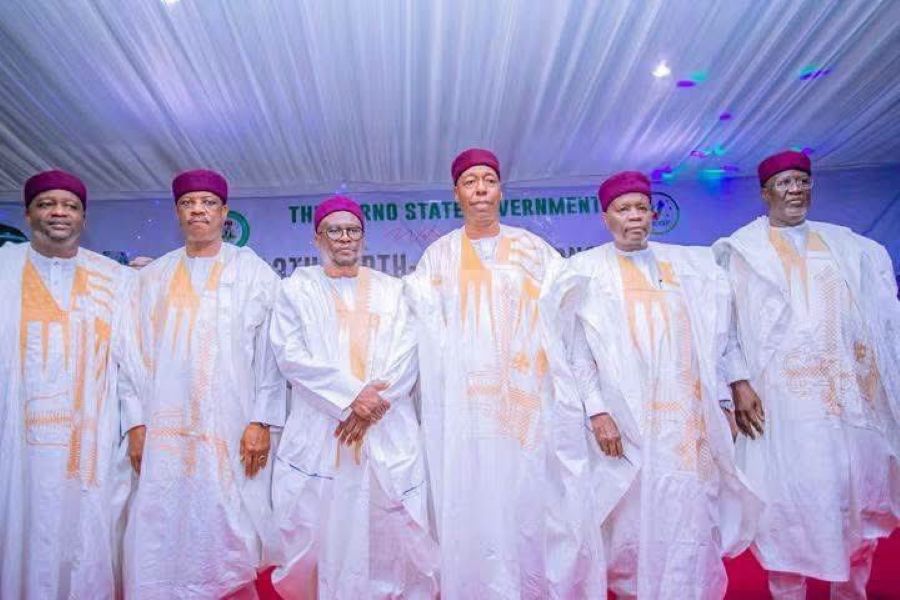
SUN OCT 04 2026-theGBJournal| Governors of Nigeria’s six North-East states have called for increased investment in education, warning that tackling the region’s deep educational challenges must become a central priority in its drive for sustainable development.
At their 13th meeting in Maiduguri, the North-East Governors’ Forum (NEGF) urged the Federal Government and the North-East Development Commission (NEDC) to commit more resources to the education sector, including the long-awaited scholarships for indigent students and a coordinated campaign to reduce the number of children out of school.
The governors also called for stronger support for Tsangaya education, signalling a broader regional effort to address the educational needs of children outside the conventional school system.
The demand came as the governors reviewed six years of cooperation among Adamawa, Bauchi, Borno, Gombe, Taraba and Yobe, and reaffirmed their commitment to speaking with one voice on issues affecting the region’s security, economy and development.
The Forum said the NEDC had played an important intervention role in the subregion but stressed that education required greater attention if the North-East was to overcome its long-standing development challenges.
The governors’ call places education alongside infrastructure, energy and transportation as a key pillar of the region’s development agenda.
The meeting also welcomed renewed Federal Government attention to major infrastructure projects, including the Port Harcourt–Jos–Bauchi–Gombe–Maiduguri rail corridor and the Akwanga–Jos–Bauchi–Gombe–Biu–Maiduguri highway.
The Forum, however, urged the Federal Government to revive oil exploration previously commenced but stalled in Magumeri and Gubio Local Government Areas of Borno State.
On electricity, the governors said cooperation among member states had transformed energy from an individual state concern into a regional agenda.
They encouraged states to take advantage of the new electricity law, abundant sunshine and expanding solar and mini-grid opportunities to address the subregion’s power needs.
They also renewed their call for the completion of the long-delayed Mambila Hydropower Project, following the resolution of the legal dispute surrounding the project.
In transportation, the governors agreed to partner with Green Ville Energy to expand CNG and LNG stations across the region, while welcoming Federal Government and NEDC support for 10,000 electric tricycles, 10 electric buses and 300 electric taxis, expected to be launched in October.
The Forum also resolved to establish a North-East regional air shuttle to make the movement of people and goods across the six states faster and easier.
But beneath the announcements on roads, rail, power and transport, the governors’ education appeal highlights a more fundamental challenge: the region’s ability to give its young population access to meaningful education and opportunity.
For the governors, addressing that challenge will require sustained investment, regional coordination and a renewed focus on children who remain outside the formal education system.
X-@theGBJournal|email:gbj@govbusinessjournal.com|govandbusinessj@gmail.com