
THUR AUG 20 2026-theGBJournal| Nigeria’s aviation regulator is facing renewed pressure from lawmakers to strengthen enforcement against airlines, as concerns over unpaid statutory remittances, persistent flight disruptions and passenger protection expose gaps in the country’s regulatory framework.
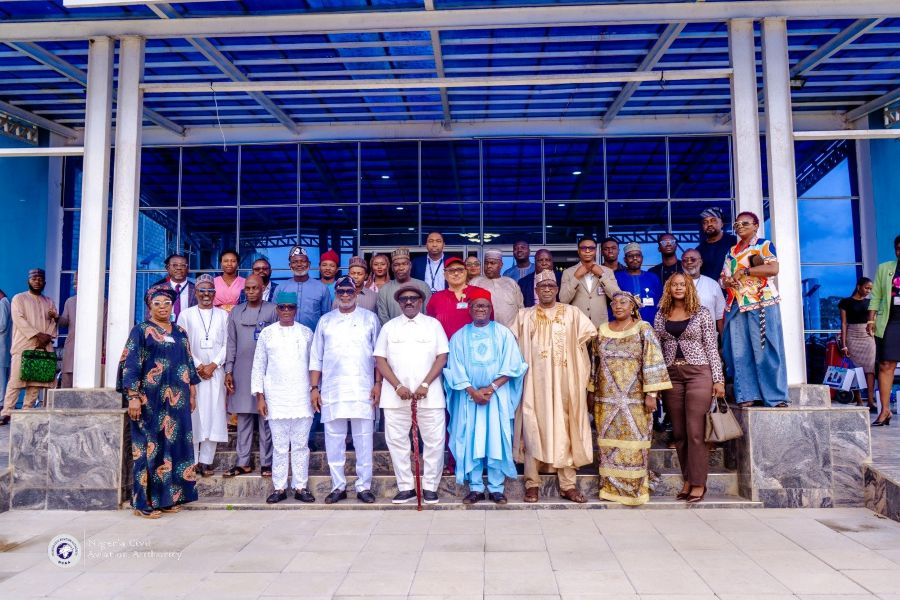
The House of Representatives Committee on Delegated Legislation raised the issues during a familiarisation visit to the headquarters of the Nigeria Civil Aviation Authority on Wednesday, signalling a push by the National Assembly to take a closer look at how aviation rules are made, enforced and updated.
The intervention comes as Nigeria seeks to improve the reliability of its aviation sector, where recurring delays and cancellations have heightened scrutiny of airlines’ operational capacity and the effectiveness of consumer-protection mechanisms.
Capt. Chris Najomo, director-general of civil aviation, told the committee that sustained engagement between the regulator and parliament was necessary to keep Nigeria’s aviation rules aligned with International Civil Aviation Organization standards.
He said the Civil Aviation Act 2022, the Nigerian Civil Aviation Regulations 2023 and related instruments provide the legal foundation for the NCAA’s responsibilities covering safety, security, economic regulation and consumer protection.
But the lawmakers also highlighted an enforcement problem that could have direct implications for the regulator’s finances and effectiveness.
Rt Hon. Olufemi Richard Bamishile, chairman of the committee, raised concerns about outstanding statutory remittances owed by airlines and called for changes to the law that would allow applicable funds to be deducted and remitted directly to the NCAA.
Such a mechanism, if adopted, could reduce reliance on airlines to make payments voluntarily and give the regulator a more predictable revenue stream for carrying out its oversight responsibilities.
The committee also pressed the NCAA on persistent flight delays and cancellations. Hon. Rufus Adeniyi Ojuawo sought assurances on what was being done to prevent disruptions from becoming a recurring feature of domestic air travel.
Michael Achimugu, the NCAA’s director of public affairs and consumer protection, said inadequate aircraft capacity had previously amplified disruptions. In some cases, he said, a single aircraft serving multiple routes could leave passengers stranded when it became unavailable.
The regulator is now looking to increase operational resilience through dry-lease arrangements that would bring additional aircraft into service. It is also developing a system that would enable passengers affected by disruptions to be rebooked on alternative airlines.
That shift is significant because it moves the focus beyond compensating passengers after a disruption towards building a system capable of containing the impact when an airline fails to operate a scheduled service.
The meeting also highlighted the possibility of a broader overhaul of the legal framework governing the industry.
Mary Tufano-Eche, director of legal services at the NCAA, said a review of the Civil Aviation Act was in its final stages with the Ministry of Justice.
The legislation will undergo further updating before being presented to the National Assembly.
The review could provide lawmakers with an opportunity to address long-standing questions around regulatory enforcement, airline obligations and consumer protection, while giving the NCAA clearer powers to respond to operational and financial failures in the sector.
For Nigeria’s aviation industry, the issue is increasingly less about whether regulations exist than whether the regulator has the tools, funding and enforcement powers to make airlines comply consistently.
The familiarisation visit therefore points to a potentially important next phase in aviation reform: aligning Nigeria’s rules with international standards while giving the NCAA stronger mechanisms to enforce them and protect passengers when airlines fall short.
X-@theGBJournal|email:gbj@govbusinessjournal.com|govandbusinessj@gmail.com