
…NNPC to sell petrol at cost as government unveils sweeping measures to shield households from rising pump prices — but insists the subsidy era will not return
By Charles IKE-OKOH
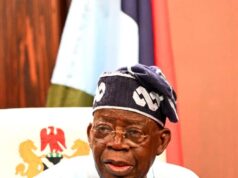
FRI OCT 09 2026-theGBJournal| President Bola Ahmed Tinubu’s administration has moved to cushion Nigerians from the latest petrol-price shock, ordering a temporary 30-day relief package while drawing a firm line against a return to the controversial fuel subsidy regime.
In a move aimed at easing pressure on households, commuters and businesses, NNPC Retail has agreed to forgo its petrol retail profit margin and sell fuel at cost for the next 30 days.
The arrangement, backed by President Tinubu, means that if NNPC’s landing cost of petrol is N1,300 a litre, the company will sell it at N1,300 rather than adding its normal retail margin.
The government says commercial transport operators and other vulnerable consumers will be among those targeted by the relief.
But as Nigerians brace for the impact of soaring global crude oil prices, the Federal Government is making one point repeatedly clear: This is not a return to petrol subsidy.
Finance Minister and Coordinating Minister of the Economy, Taiwo Oyedele, said the NNPC discount should not be mistaken for a restoration of the subsidy regime that ended on May 29, 2023.
Instead, the government is attempting to cushion what it describes as a temporary global oil-price shock without reversing the market reforms that followed the removal of subsidy.
The announcement comes at a politically sensitive moment, with the rising cost of petrol adding fresh pressure to transport fares, food prices, logistics and household incomes.
And Abuja is betting that a combination of temporary intervention and longer-term measures can prevent the latest fuel crisis from becoming another economy-wide shock.
Among the most significant measures announced is a proposed ceiling of N1,350 a litre on the ex-gantry or landing cost of petrol.
Under the plan, when the underlying cost rises above the ceiling, refiners and importers would carry the shortfall and recover it later when crude prices or exchange-rate conditions improve.
The objective, Oyedele said, is not to fix petrol prices permanently but to smooth out violent swings.
His argument is simple: a stable price is less damaging to the economy than a sharp increase followed by a much slower fall.
As the minister put it, N1,400 today and N1,400 tomorrow may be preferable to N1,500 today and N1,300 tomorrow, because sudden fuel-price increases feed rapidly into fares, food and logistics costs, while reductions are often slower to reach consumers.
The proposed ceiling would be reviewed monthly, with the government promising to publish the figures.
Crude for Nigerian refineries
The Federal Government is also moving to shield domestic refiners from global price volatility through forward sales of crude.
As oil production rises and previously committed crude becomes available, the government says additional supplies will be directed towards domestic refineries.
The aim is to reduce the exposure of Nigerian fuel prices to sudden movements in the international market.
That could prove particularly important as the country seeks to rely increasingly on domestic refining rather than imported petrol.
CNG push
The government is also accelerating the rollout of compressed natural gas, or CNG, in partnership with state governments.
CNG, it says, can cost 60 to 70 per cent less than petrol, offering transport operators a cheaper alternative and potentially reducing pressure on commuters.
But there is a catch: the savings will only matter to ordinary Nigerians if transport operators pass them on. The Federal Government says it expects them to do exactly that through lower fares.
Cash, tax and transport relief
The package extends beyond the petrol station.
The government says it is increasing funding for cash transfers to vulnerable households and subsidised credit for small businesses and consumers.
It is also working with states and security agencies to curb road taxes and levies which it says add to transport and logistics costs.
There will also be consideration of an excess-profit tax for operators found to be taking undue advantage of consumers anywhere along the energy value chain.
Revenue generated from such measures, the government says, would be used specifically to cushion fuel-price effects through transport support or vouchers for urban minimum-wage earners.
And under the proposed 2027 Finance Bill, the Federal Government says it will work with the National Assembly on enhanced tax relief for low-income earners.
A fuel reserve for the next crisis
Perhaps the most significant long-term proposal is the creation of a National Strategic Fuel Reserve.
The government says refined products would be released from the reserve under clear and published rules whenever global disruption, hoarding or artificial scarcity threatens supply and price stability.
The objective is not to impose a fixed petrol price but to ensure that sudden supply disruptions do not trigger another dramatic spike.
The Presidency says the reserve would also help deter market manipulation and provide a buffer against future energy shocks.
The subsidy line
For all the measures being announced, the Presidency insists that one policy will not be revived: the blanket petrol subsidy.
The government argues that Nigeria has already experienced the consequences of the old system — including fuel scarcity, smuggling, pressure on the currency and a worsening fiscal position.
Its position is that bringing subsidy back would provide immediate relief but create longer-term problems for the economy.
Instead, the new approach is to intervene selectively: support vulnerable households, smooth price volatility, reduce transport costs, expand cheaper energy alternatives and strengthen domestic fuel supply.
The Presidency acknowledged that the removal of subsidy came at a heavy cost to Nigerians.
But it argued that the answer was not to reverse the reform, but to ensure that its benefits reach ordinary Nigerians more quickly and more tangibly.
The government is also promising a wider package of fiscal measures aimed at bringing inflation down to single digits over the near term.
The big test
For millions of Nigerians, however, the success of the measures will ultimately be judged at the filling station, in the danfo, keke and bus — and in the price of food delivered to the market.
The immediate question is whether NNPC’s 30-day sacrifice of its retail margin can provide meaningful relief while the government negotiates its proposed N1,350 landing-cost ceiling.
The bigger test will be whether the measures can prevent another fuel-price shock from rippling through the wider economy.
For now, President Tinubu’s administration is attempting a delicate balancing act:
Give Nigerians relief — without bringing back the subsidy. And that could prove to be the defining fuel-policy test of the next few months.
X-@theGBJournal|email:gbj@govbusinessjournal.com|govandbusinessj@gmail.com