


…Nigeria’s banking system enters 2027 with stronger capital, a more transparent foreign exchange market and renewed confidence. But the Central Bank governor’s next challenge is to turn those gains into productive lending, deeper financial markets and an economy capable of sustaining growth.
By Charles IKE-OKOH
SUN NOV 29 2026-theGBJournal| For three years, the Central Bank of Nigeria has been preoccupied with repairing the foundations of an economy whose financial system had become vulnerable to distortions, declining confidence and an increasingly difficult allocation of scarce foreign exchange.
Now, with the naira showing greater resilience, banks emerging from a major recapitalisation exercise and financial markets recording stronger activity, Olayemi Cardoso is preparing to move the argument beyond stabilisation.
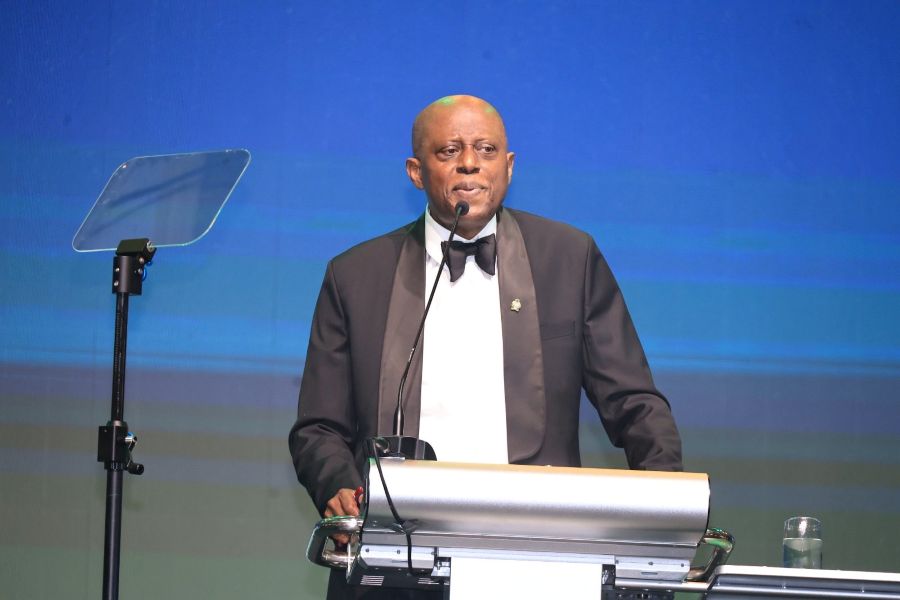
The next phase, as the Central Bank governor made clear at the 61st Annual Bankers’ Dinner of the Chartered Institute of Bankers of Nigeria in Lagos on Friday, November 27, will be about what Nigeria can build on the back of those reforms.
“The question before us is no longer simply how to restore stability, but what we do with it, and how we ensure it endures.”
That question could become the defining economic policy challenge of 2027.
Cardoso’s address, delivered under the theme From stability to strength: Securing Nigeria’s financial future, was both a defence of the Central Bank’s reform programme and a statement of intent for the next stage of financial sector development.
It was also an acknowledgement that restoring confidence, while necessary, is not sufficient.
Nigeria needs a financial system that does more than preserve the value of money, manage foreign exchange pressures and maintain the soundness of banks. It must also mobilise domestic savings, finance businesses, support investment and provide the credit required to expand productive capacity.
The distinction is important. A stable financial system can protect an economy from further deterioration. A strong financial system must help it grow.
For Cardoso, the transition will require a more disciplined monetary framework, deeper capital markets, stronger institutions and a banking industry prepared to deploy its enlarged balance sheets towards productive enterprise.
“Our responsibility at the Central Bank remains clear: to preserve monetary and financial stability and maintain confidence in our policy framework. This provides a sound foundation for the Government’s broader growth and development agenda.”
The Governor’s message was that the foundation had been laid. The more difficult work begins now.
The inflation test
The first condition for that transition remains price stability.
Cardoso reiterated the CBN’s ambition to achieve sustainably lower single-digit inflation, describing it as essential to restoring purchasing power, improving business planning and creating the conditions for long-term investment.
“Our ambition remains not simply to bring inflation down to single digits, but to achieve sustainably lower single-digit inflation. This is essential to protecting the purchasing power of Nigerians, giving businesses greater certainty to plan and invest, and laying the foundation for long-term economic growth.”
The emphasis on sustainability is significant.
For households, inflation determines how much income can buy. For businesses, it influences the cost of inventory, wages, working capital and investment. For banks, it affects lending rates, credit risk and the ability to price loans over longer periods.
A sustained reduction in inflation would therefore do more than improve the headline numbers. It could help restore the conditions under which longer-term credit becomes commercially viable.
But the Governor acknowledged that price stability would depend on continued policy discipline, credible institutions and effective coordination between monetary and fiscal policy.
That coordination will be particularly important as the economy moves into 2027. Monetary policy cannot deliver durable price stability in isolation if fiscal pressures, supply constraints and structural weaknesses continue to undermine the disinflation process.
The challenge is to ensure that the gains in stability are not temporary, but become embedded in the way the economy operates.
Stronger banks, but where is the credit?
Perhaps the most consequential part of Cardoso’s outlook was his insistence that the banking industry must now put its stronger capital base to work.
Nigeria’s recapitalisation exercise has increased the capacity of banks to absorb risks and support larger transactions. But capital strength, by itself, does not guarantee that businesses will receive more financing.
The next test is whether banks can translate that capital into productive lending without compromising asset quality or financial stability.
Recognising the stronger capital base achieved through recapitalisation, Cardoso said the next challenge was to put that capital to work by strengthening banks’ ability to support productive enterprises and finance Nigeria’s economic ambitions.
The issue is not simply the volume of lending, but its destination.
A financial system that concentrates on government securities, short-term transactions and relatively low-risk exposures may remain profitable and well-capitalised while leaving much of the productive economy underfinanced.
Cardoso called for greater emphasis on risk-sharing arrangements, loan syndication and other collaborative financing structures, particularly for large-scale transactions that exceed the capacity or risk appetite of individual financial institutions.
Such arrangements could become increasingly important in financing infrastructure, manufacturing, energy and other capital-intensive sectors where individual banks may be reluctant to assume the full exposure.
The Governor’s longer-term ambition is considerably more demanding.
Looking towards 2030, he identified the need to at least double the private sector credit-to-GDP ratio, supported by stronger domestic institutional investment, more developed capital markets and financial institutions capable of financing businesses at different stages of growth.
That target would require more than a larger banking system. It would require a different relationship between finance and the real economy.
Nigeria’s businesses need financing that extends beyond short-term working capital. They need credit for machinery, expansion, technology, infrastructure and the development of new markets.
The question facing the industry is whether the reforms of recent years can create the confidence, risk appetite and financial infrastructure required to support that shift.
The missing link in financial inclusion
The gap between financial access and productive financial participation was particularly evident in the figures Cardoso cited from the 2026 Access to Financial Services Survey.
Approximately 79 per cent of Nigerian adults used formal or informal financial services, while 64 per cent accessed digital financial services and 53 per cent saved formally.
Yet only 10 per cent borrowed through formal financial channels.
The contrast exposes a central weakness in Nigeria’s financial inclusion agenda.
Millions of people have entered the financial system, but far fewer are using it to obtain credit that can support household resilience, entrepreneurship or business expansion.
Cardoso said the priority was to make financial access more useful in people’s daily lives and ensure that appropriate financing reached viable businesses.
That will require financial institutions to look beyond account ownership and payment activity towards the broader economic value of their services.
Digital platforms may make it easier to open accounts, transfer money and save. But their contribution to economic development will be limited if viable small businesses remain unable to obtain affordable financing.
The Governor’s vision is of a financial system that mobilises capital for productive enterprise, supports investment and innovation, and becomes increasingly useful to the people and businesses it serves.
“Nigeria has the market, the talent and the entrepreneurial energy. Our responsibility is to ensure that our financial institutions are equal to that potential.”
The challenge for 2027 will be to make that ambition measurable in the everyday experience of businesses and households.
A more predictable regulatory environment
Cardoso also signalled a shift towards greater regulatory clarity.
The CBN plans to introduce a comprehensive, accessible regulatory rulebook in 2027, setting out requirements and supervisory standards for financial institutions.
The initiative is intended to give banks and other financial service providers greater certainty, promote consistency and strengthen accountability.
For an industry facing rapid technological change and increasingly complex regulatory expectations, clarity can be as important as capital.
Predictable rules help institutions plan investments, assess risks and develop products. They also reduce the scope for inconsistent interpretation and strengthen confidence in the regulatory framework.
Cardoso said stronger monetary policy frameworks, transparency and accountability in regulatory processes would remain important to sustaining price stability.
He also underscored the significance of ending regulatory forbearance, which had provided a more accurate assessment of asset quality and a transparent picture of underlying risks.
The implication is that the banking system must now operate on a more credible assessment of its balance sheets.
That could impose discipline in the near term, but it is essential if the industry is to expand lending without accumulating hidden vulnerabilities.
The Governor’s reference to the Central Bank of the Year award received from Central Banking was framed as recognition of the institution’s progress rather than an end in itself.
The task, he said, was to build a stronger and more effective institution capable of sustaining reforms beyond any individual administration.
The next phase of foreign exchange reform
Foreign exchange reform remains another central pillar of the transition.
Cardoso said Nigeria had moved from an opaque system of multiple exchange rates, in which access to foreign exchange was disproportionately available to a few, to a more transparent, market-driven framework offering broader and more equitable access.
The CBN’s responsibility, he reiterated, was not to target a particular exchange rate level.
Instead, it would safeguard market stability, deepen liquidity and support orderly price discovery, allowing the market-determined exchange rate to respond to macroeconomic fundamentals and global developments.
That distinction will remain important in 2027.
A more flexible exchange rate can help absorb external shocks, but its effectiveness depends on the depth and liquidity of the market, the availability of foreign exchange and confidence in the policy framework.
Cardoso highlighted signs of improving market activity.
The naira had strengthened by approximately 6 per cent over the past year, while daily foreign exchange market turnover had at times exceeded $1bn.
Fixed-income market turnover averaged ₦1.5tn, reflecting what the Governor described as growing market confidence.
Nigeria had also met its target of $1bn in monthly diaspora remittances, with the CBN working to raise the figure to $1.5bn by the end of the first half of 2027.
Remittances are an increasingly important source of foreign exchange, but the longer-term objective is to strengthen the channels through which diaspora funds, trade and investment can support economic activity.
The CBN plans to deepen cross-border payment and settlement arrangements, strengthen banking relationships and facilitate trade and investment flows, particularly with international markets in Asia.
The Governor also announced plans to work with market participants to launch interbank repurchase agreement and overnight indexed swap markets in the first quarter of 2027.
These instruments could improve liquidity management, support more efficient pricing and strengthen the infrastructure of Nigeria’s financial markets.
He urged banks to adopt the Nigeria Overnight Financing Rate, introduced as a pricing benchmark earlier in the year, and incorporate it into loan pricing to improve transparency and interest rate risk management.
The ambition is to develop a financial market in which pricing is more transparent, liquidity is more readily available and institutions can manage risks with greater precision.
Payments, trust and the digital economy
The future of Nigeria’s financial system will also depend on how effectively it manages the expansion of digital finance.
Cardoso’s Payments System Vision 2028, launched in 2026, sets out a framework focused on interoperability, security, inclusion, innovation and trust.
Its targets include achieving 95 per cent financial inclusion by 2028, expanding the acceptance of QR and contactless payments, reducing reliance on cash outside the banking system and significantly cutting payment fraud.
The CBN has introduced measures to strengthen controls against payment fraud, promote competition and improve the security and resilience of critical payments infrastructure.
The localisation of payment transaction data is also intended to strengthen regulatory oversight and safeguard the integrity of the payments ecosystem.
But Cardoso’s most important observation was that financial inclusion cannot be judged solely by the number of people brought into the system.
Trust depends on what happens after they arrive.
A failed transaction, compromised account or unresolved payment dispute can undermine confidence in digital finance, particularly among customers who are only beginning to use formal financial services.
The Governor stressed that consumer protection must therefore become an essential part of the financial inclusion agenda.
The challenge is to build a digital payments ecosystem that is not only fast and convenient, but also reliable, secure and accountable.
Artificial intelligence and digital assets, including stablecoins, are expected to reshape financial services further.
Cardoso said innovation must evolve within appropriate regulatory safeguards to preserve monetary and financial stability, protect consumers and maintain confidence in the financial system.
The regulatory task will be to accommodate useful innovation without allowing technological change to create new channels of financial instability or undermine public trust.
Building an institution that outlasts its governor
Underlying the Governor’s 2027 agenda is a broader concern about institutional sustainability.
Cardoso said the reforms of the past three years would need to be supported by systems, capabilities and professional standards capable of preserving the gains beyond any individual administration.
He reaffirmed his commitment to a Central Bank where Nigerians did not need to know the Governor or anyone else in the institution to have their legitimate business attended to.
That ambition speaks to the importance of predictable institutional processes, transparency and accountability.
The CBN is also investing in the capabilities of its staff, strengthening supervisory and technical expertise and deepening its contribution to economic research, policy analysis and public debate.
The objective is to make the institution more responsive, rigorous and effective in delivering its mandate.
Nigeria’s removal from the Financial Action Task Force grey list in October 2025 was another milestone highlighted by Cardoso, reflecting efforts across government, regulatory authorities and the financial sector to strengthen the framework against money laundering, terrorist financing and related financial crimes.
The progress matters for international confidence, correspondent banking relationships and the country’s ability to participate more fully in global financial markets.
But institutional credibility will ultimately depend on consistency: whether rules are applied transparently, risks are addressed promptly and legitimate businesses can operate without uncertainty.
The 2027 delivery test
Cardoso’s speech was, in many respects, a declaration that the Central Bank’s reform agenda is entering a new phase.
The immediate priority has been to restore confidence, confront economic distortions and strengthen the foundations of the financial system.
The next priority is to institutionalise those gains and make them economically productive.
That will require banks to expand financing for viable businesses, financial markets to deepen, regulatory processes to become more predictable and digital services to deliver greater security and value to consumers.
It will also require the CBN to maintain monetary discipline while allowing the financial system to support the Government’s broader growth and development agenda.
The Governor challenged banks to translate stronger balance sheets into greater capacity to finance productive enterprises, invest in the economy and serve customers more effectively.
He also urged fintechs and other financial service providers to strengthen governance, operational resilience and consumer trust.
The message to the industry was unmistakable: recapitalisation cannot be the destination.
Nigeria’s financial system has spent years trying to restore stability. Its next test is whether that stability can finance a more productive economy.
The ambition is a system capable of attracting long-term capital, supporting businesses at different stages of growth and providing the financial infrastructure for a larger, more diversified economy.
Cardoso’s vision is of a Nigeria that moves from stability to strength.
The measure of success in 2027 will be whether that transition begins to show up not only in stronger balance sheets and higher market turnover, but in the businesses that expand, the investments that are financed and the households that gain meaningful access to credit.
That is the difference between a financial system that has been repaired and one that is finally working for the economy.
X-@theGBJournal|email:gbj@govbusinessjournal.com|govandbusinessj@gmail.com