

SAT JUNE 27 2026-theGBJournal| Nigeria’s federal government is seeking an estimated N500 billion ($320 million) in investment over the next five years to accelerate the country’s digital health transformation, as authorities push to build an integrated and interoperable healthcare system aimed at improving service delivery and advancing universal health coverage.
The proposed investment underscores Abuja’s efforts to modernise healthcare infrastructure through digital technologies, strengthen data-driven decision-making and expand access to quality medical services across the country.
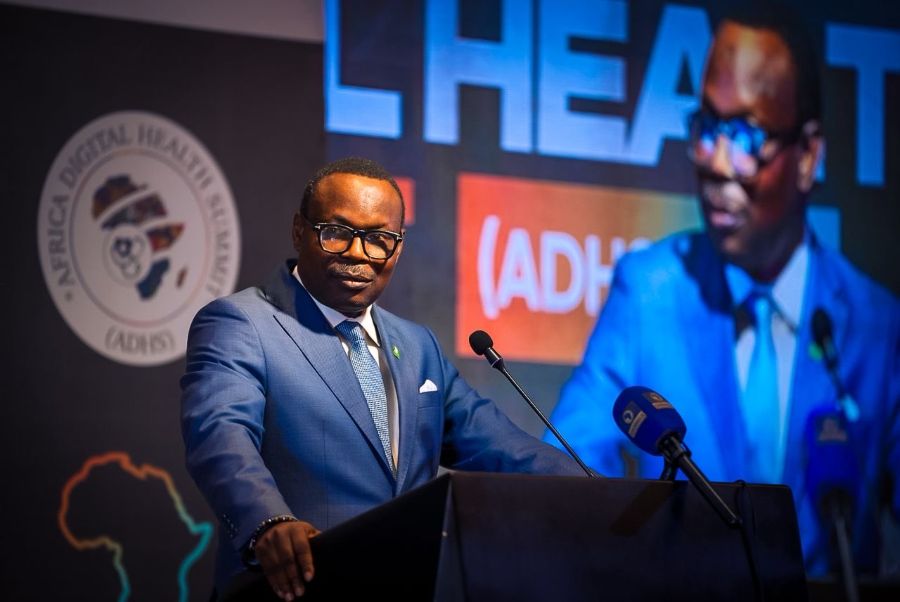
Speaking at the opening of the 6th Africa Digital Health Summit (ADHS 2026) in Abuja, the Honourable Minister of State for Health and Social Welfare, Dr. Iziaq Adekunle Salako, said the country’s focus is no longer on proving digital health solutions through isolated pilot projects, but on scaling nationally integrated systems that deliver measurable impact for every Nigerian.
He noted that the National Digital Health Architecture (NDHA), endorsed by all 36 states and the Federal Capital Territory, provides the framework for harmonising health information systems, improving interoperability and enabling a shared health record to strengthen continuity of care, planning and evidence-based decision-making across the health sector.
Highlighting progress already recorded, the Minister disclosed that an assessment of Nigeria’s 79 Federal Tertiary Hospitals revealed an average 74.5 per cent adoption of Electronic Medical Records, while digital logistics platforms have been deployed across all 774 Local Government Areas to improve vaccine supply chain management.
He added that states are also being incentivised to adopt the National Digital Health Architecture through ongoing primary healthcare reforms.
Dr. Salako acknowledged that significant structural gaps remain, including inadequate electricity and internet connectivity at many Primary Healthcare Centres, limited interoperability among legacy systems, shortages in digital health skills and continued dependence on donor funding. He revealed that 43 per cent of Primary Healthcare Centres lack electricity, while about 60 per cent of rural facilities have no internet connectivity, underscoring the need for sustained investment in digital infrastructure.
The Minister called on development partners, state governments, the private sector and technology innovators to align investments with the National Digital Health Architecture, while urging the National Pension Commission and Pension Fund Administrators to consider digital health infrastructure as a strategic long-term investment capable of strengthening health insurance, improving efficiency and delivering better health outcomes for Nigerians.
He reaffirmed that the Federal Government has established the policy direction, standards and implementation framework required to move Nigeria’s digital health ecosystem from fragmented innovations to an integrated national platform.
The Federal Ministry of Health and Social Welfare remains committed to working with states, development partners and the private sector to accelerate the adoption of secure, interoperable and sustainable digital health solutions that strengthen the health system and improve access to quality healthcare for all Nigerians.
X-@theGBJournal|Facebook-the Government and Business Journal|email:gbj@govbusinessjournal.com|govandbusinessj@gmail.com