

…Government mobilises 496,000 tonnes of fertiliser-related stocks as Shettima orders rapid production, stock verification and nationwide distribution ahead of dry-season farming
TUE NOV 17 2026-theGBJournal| Nigeria is mobilising its underutilised fertiliser industry to produce and release as many as 3.5 million bags of fertiliser to farmers, in a government-backed intervention that seeks to lower agricultural production costs, revive struggling blending plants and strengthen domestic food supplies.
President Bola Ahmed Tinubu has approved funding under the Renewed Hope Agricultural Stabilisation and Productivity Initiative, directing government agencies, financial institutions and private-sector operators to accelerate production and distribution ahead of the forthcoming dry-season farming season.
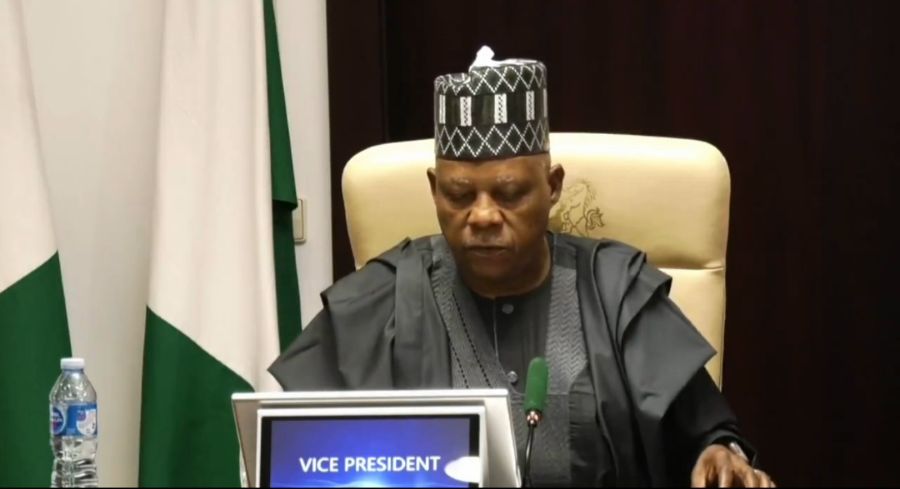
Vice President Kashim Shettima, who is coordinating the implementation, on Monday directed stakeholders to expedite arrangements for the production and release of more than three million bags, following an assessment by the Fertiliser Producers and Suppliers Association of Nigeria (FEPSAN) that existing raw materials could support production of approximately three million bags of NPK fertiliser within weeks.
The industry says it could make approximately 3.5 million bags available within the stipulated period when existing finished products are combined with additional output.
The intervention places Nigeria’s fertiliser manufacturing capacity at the centre of the government’s food-security strategy, with the potential to reactivate factories, restore employment and stimulate business across transportation, warehousing and agricultural input distribution.
But the immediate challenge is execution: converting available stocks and raw materials into affordable fertiliser and ensuring supplies reach farmers before the critical planting window, including communities affected by insecurity.
Speaking at a meeting with fertiliser industry stakeholders at the Presidential Villa in Abuja, Shettima expressed concern that many of Nigeria’s blending plants were operating below capacity even as farmers contend with rising input costs.
“Today, many of our fertilizer blending plants are operating below capacity at the same time the high cost of fertilizer continues to increase the cost of production for our farmers,” he said.
The government wants to reverse that situation by supporting the rehabilitation and full utilisation of existing blending capacity rather than relying solely on imported finished products.
“The government wants to support the rehabilitation and full utilization of our fertilizer blending capacity. We want the factories producing, we want workers back to work. We want transporters, warehouse, and agro-dealers to be engaged again,” the Vice President said.
The economic implications extend beyond agriculture. Fertiliser production supports a network of businesses and workers involved in manufacturing, storage, haulage and distribution, making the intervention a potential stimulus for rural economic activity.
“A strong fertilizer value chain supports hundreds of thousands of direct and indirect jobs. Revitalizing this sector is therefore important not only for agriculture but also for employment, rural livelihoods and economic activities across the country,” Shettima said.
The scale of the proposed intervention is underpinned by a substantial volume of fertiliser-related stocks identified by industry operators and government-linked entities.
Minister of Budget and Economic Planning, Senator Abubakar Atiku Bagudu, disclosed that stakeholders had identified approximately 496,000 metric tonnes of fertiliser-related stocks, describing the volume as a reasonable starting point for implementing the presidential directive.
“From what has been presented, we have about 496,000 metric tonnes of stock, and it is a good, reasonable starting point,” Bagudu said.
The figure provides the government with an initial inventory base for the programme, although the various categories of materials, finished products and stocks in transit will need to be coordinated to translate available supply into actual production and distribution.
FEPSAN President, Alhaji Abubakar Sadiq Kassim, said members had completed an assessment of available NPK fertiliser stocks, raw materials and the industry’s capacity to produce additional quantities within the implementation period.
“Based on information received from our members, the raw materials currently available can support the production of about 148,000 metric tonnes of NPK 20-10-10 within the next few weeks as targeted. This will give about three million bags of fertiliser,” he disclosed.
In addition to the proposed production, fertiliser manufacturers are holding approximately 29,000 metric tonnes of finished NPK fertiliser that could be purchased immediately and released for distribution.
Kassim said the combination of existing finished products and additional production would enable the industry to make approximately 3.5 million bags available within the stipulated period.
He added that blending facilities and existing stocks were spread across different parts of the country, a geographical distribution that could accelerate delivery and reduce the logistical burden of supplying farmers nationwide.
The industry believes the intervention could unlock investments already made in blending plants, warehouses, distribution infrastructure and agro-dealer networks that are currently operating below their installed capacity.
“I want to thank the President for taking a personal interest in reviving the Nigerian fertiliser industry. We are extremely encouraged by this intervention because this is about food security, jobs, rural livelihoods and economic and social stability of our country,” Kassim said.
The government is also moving to establish tighter controls over the programme’s supply chain.
Shettima directed the Office of the National Security Adviser to verify and track fertiliser stocks declared by industry stakeholders, an oversight measure intended to strengthen transparency, accountability and the integrity of the distribution exercise.
The directive introduces a security dimension to what is primarily an agricultural and industrial intervention, with the government seeking to establish that declared stocks are available and can be accounted for throughout the supply process.
The Vice President also instructed the NSA’s office to ensure that farmers in states facing security challenges are not excluded from the programme.
He stressed that vulnerable farming communities and areas that are difficult to access must receive attention during distribution.
The emphasis on these communities reflects the importance of ensuring that insecurity does not further undermine agricultural production by preventing farmers from accessing essential inputs.
Shettima said the success of the intervention would depend on timely production, effective coordination and efficient distribution, rather than simply the availability of fertiliser at factory and warehouse level.
“Every stakeholder is expected to prepare accordingly in ensuring the success of the Presidential mandate to deliver fertilizer to farmers for the fast approaching dry-season farming,” he charged.
Under the approved implementation framework, Tinubu has designated the Bank of Agriculture (BOA) and Bank of Industry (BOI) as fund administrators and financial intermediaries for the initiative.
Their involvement is intended to provide the financial structure for the government’s engagement with domestic fertiliser blending companies and support the purchase of locally manufactured products.
The Ministry of Finance Incorporated (MOFI) is also expected to contribute to the supply pipeline.
A representative of the organisation disclosed that MOFI had approximately 90,000 metric tonnes of materials on the ground, with additional goods in transit bringing its combined quantity to about 248,000 metric tonnes.
The representative expressed confidence that the materials could be made available within the implementation window established by the President’s directive.
Bagudu said the government would continue working with stakeholders to identify additional funding opportunities through existing government programmes to sustain the intervention beyond the immediate presidential directive.
“We will work with every other stakeholder to identify other government programmes that will have funding that can be used to support this initiative even beyond the duration of the President’s directive,” he said.
For the government, the ultimate measure of the programme’s success will be whether farmers can obtain fertiliser at prices they can afford.
Shettima said the Federal Government intends to purchase fertiliser produced by Nigerian blending companies and make it available to farmers at affordable prices under the Renewed Hope Agricultural Stabilisation and Productivity Initiative.
“But ultimately the Nigerian farmer is at the centre of this initiative. Under the Renewed Hope Agricultural Stabilisation and Productivity Initiative, government intends to purchase fertilizers produced by Nigerian blenders and make it available to our farmers at affordable prices,” he said.
The policy combines two objectives: improving farmers’ access to essential agricultural inputs while creating demand for domestic fertiliser manufacturers.
By purchasing locally blended fertiliser, the government hopes to provide a market for factories, encourage production and reactivate the wider commercial network supporting the industry.
The initiative forms part of the Tinubu administration’s broader agricultural productivity and food-security agenda, which seeks to strengthen domestic input supply, improve access to essential production materials and stimulate economic activities in rural communities.
For the fertiliser industry, the presidential intervention offers an opportunity to move existing investments and idle capacity back into productive use. For farmers, the immediate expectation is more accessible fertiliser at affordable prices ahead of the dry-season planting cycle.
The government has secured the industry’s commitment, identified substantial stocks and designated financial intermediaries. The next test is whether the production, procurement and distribution machinery can deliver the promised volumes within the narrow agricultural window.
With millions of bags targeted and hundreds of thousands of tonnes of materials identified, the stakes extend beyond fertiliser availability to the country’s capacity to link domestic industrial production with agricultural productivity and food security.
X-@theGBJournal|email:gbj@govbusinessjournal.com|govandbusinessj@gmail.com