

WED APRIL 15 2026-theGBJournal| The Federal Government has expanded its maternal and newborn health response to 32 states, delivering nearly 79,000 emergency medical transports nationwide, as part of intensified efforts to reduce preventable deaths among Nigerian women and newborns.
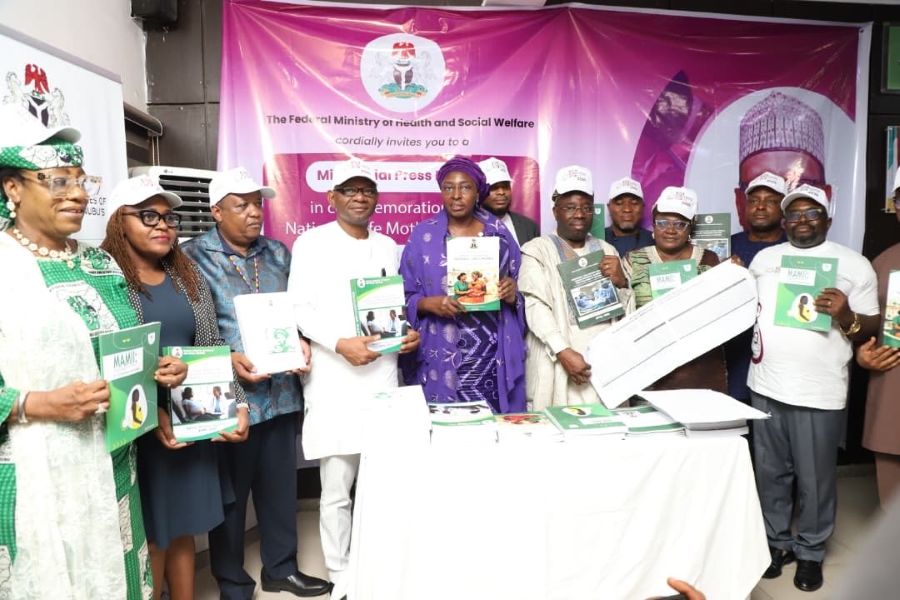
Speaking at a ministerial press briefing to mark Safe Motherhood Day 2026, the Coordinating Minister of Health and Social Welfare, Prof. Muhammad Ali Pate, said that while Nigeria has made measurable progress in expanding access to maternal health services, gaps remain — particularly in ensuring that every woman receives timely, high-quality, and respectful care when and where she needs it.
He noted that this year’s theme, “Closing the Gap: From Coverage to Quality Care for Every Mother,” reflects a national shift toward prioritising quality, timeliness, and equity of care, stressing that better outcomes depend on how effectively the system responds at critical moments.
At the centre of these efforts is the Maternal and Neonatal Mortality Reduction Innovation and Initiative (MAMII), now operational in 32 states. The programme targets the leading causes of maternal and neonatal mortality through data-driven interventions that strengthen service delivery, emergency obstetric care, and referral systems — marking a shift toward a more coordinated, systems-based approach to saving lives.
The Minister, represented by the Permanent Secretary, Daju Kachollom S., also highlighted progress under the National Emergency Medical Services and Ambulance System (NEMSAS/RESMAT).
Emergency services are now operational in 136 MAMII LGAs, supported by 612 ambulances deployed across 340 LGAs and Emergency Medical Teams nationwide. To date, 78,962 beneficiaries have been transported, with pregnant women accounting for about 60 per cent of cases.
To reduce financial barriers , the Federal Government , through the National Health Insurance Authority (NHIA), is expanding access to Comprehensive Emergency Obstetric and Newborn Care services. More than 32,000 women and 1,700 newborns have benefitted across over 250 health facilities, with additional facilities at various stages of readiness.
At the primary healthcare level, the Executive Director, Dr. Muyi Aina, said ongoing investments in frontline services are improving access and continuity of care, with increasing antenatal attendance reflecting growing confidence in the health system.
Recent data shows a 20 per cent increase in antenatal care attendance (ANC4) in programme areas, alongside the identification and linkage of 166,463 previously unregistered pregnant women to care across eight states.
To support service delivery, over 111,000 mama kits have been distributed nationwide, while essential maternal and newborn commodities have reached 968 primary healthcare centres, benefiting an estimated 1.2 million women and newborns.
Additional support includes the distribution of 243,198 family planning commodities, over 10,000 reproductive health equipment units, and the recruitment of more than 5,000 health workers.
As part of efforts to strengthen quality of care, the Federal Government has introduced new clinical protocols, updated antenatal care guidelines, and life-saving skills training packages to improve consistency in service delivery nationwide.
Development partners, including the World Health Organization (WHO), commended Nigeria’s progress and reaffirmed their support for ongoing reforms, particularly in strengthening quality and system coordination.
The Federal Government emphasised the need for sustained collaboration across all levels, calling on state governments, health workers, communities, and partners to scale efforts and ensure that ongoing reforms translate into improved outcomes for every Nigerian mother and newborn.
X-@theGBJournal|Facebook-the Government and Business Journal|email:gbj@govbusinessjournal.com|govandbusinessj@gmail.com