

…For the banking sector, the retention of the exceptionally high CRR means liquidity conditions will remain tight.
…Deposit Money Banks will continue to keep a substantial portion of customer deposits sterilised with the CBN, limiting the amount available for lending.
…For households and businesses, borrowing costs are expected to remain elevated as commercial lending rates continue to track the benchmark interest rate.
WED MAY 20 2026-theGBJournal| Nigeria’s monetary authorities have opted for caution once again, signaling that the battle against inflation and exchange rate pressures remains far from over.
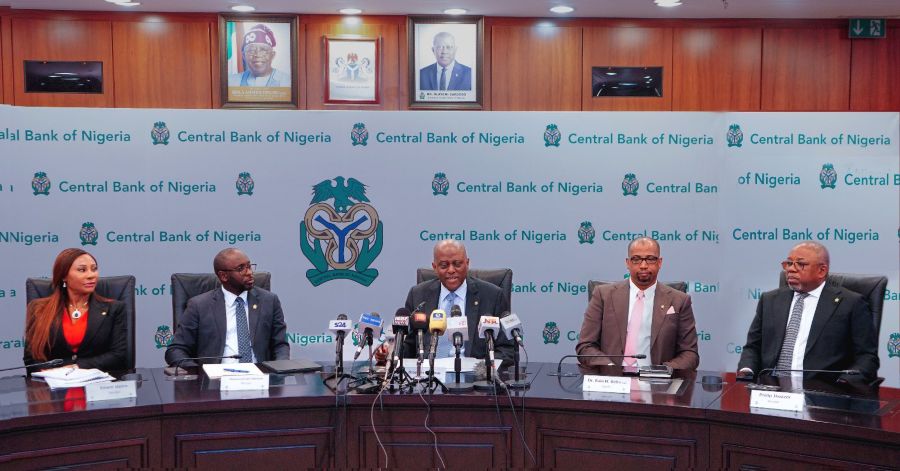
At the end of its 305th Monetary Policy Committee (MPC) meeting held on May 19–20, 2026, the Central Bank of Nigeria (CBN) retained all key monetary parameters, underscoring a deliberate strategy to sustain tight monetary conditions despite mounting concerns over economic growth, elevated borrowing costs, and weakening consumer demand.
The MPC voted unanimously to retain the Monetary Policy Rate (MPR) at 26.50%, while also maintaining the asymmetric corridor around the benchmark rate at +50/-450 basis points.
In addition, the Committee retained the Cash Reserve Ratio (CRR) for Deposit Money Banks at 45.0%, Merchant Banks at 16.0%, the CRR on non-Treasury Single Account public sector deposits at 75.0%, and the Liquidity Ratio at 30.0%.
The decision reflects the apex bank’s determination to consolidate recent gains in price stability and defend investor confidence in the foreign exchange market amid persistent domestic and global uncertainties.
It marks another pause in the CBN’s aggressive monetary tightening cycle that began in response to surging inflation, exchange rate volatility, and excess liquidity within the financial system.
By leaving rates unchanged, the MPC appears to be signaling confidence that previous tightening measures are beginning to moderate inflationary pressures, while also acknowledging that prematurely easing policy could reverse fragile macroeconomic gains.
The implication of the decision is significant for businesses, consumers, banks, and investors across the economy.
For households and businesses, borrowing costs are expected to remain elevated as commercial lending rates continue to track the benchmark interest rate.
Companies dependent on bank financing will likely face sustained pressure on operating costs, expansion plans, and working capital access.
Small and medium-sized enterprises, in particular, may continue to struggle with expensive credit conditions, potentially slowing private sector investment and job creation.
For the banking sector, the retention of the exceptionally high CRR means liquidity conditions will remain tight.
Deposit Money Banks will continue to keep a substantial portion of customer deposits sterilised with the CBN, limiting the amount available for lending.
While this supports the apex bank’s inflation-control strategy, it also constrains credit expansion to the real economy.
The MPC’s decision is also widely seen as a move aimed at sustaining foreign portfolio investor confidence in Nigeria’s fixed income market. High interest rates have helped improve yields on government securities, making Nigerian assets more attractive to offshore investors seeking returns in emerging markets.
Analysts believe the decision to hold rates steady could help support foreign exchange inflows and reduce pressure on the naira, especially as the CBN continues efforts to stabilise the currency market through orthodox monetary reforms.
Inflation remains the central concern shaping the Committee’s stance. Although recent data suggest signs of moderation in some price indicators, inflationary risks linked to food supply disruptions, energy costs, exchange rate pass-through, insecurity, and fiscal pressures continue to threaten overall price stability.
The MPC therefore appears unwilling to loosen monetary conditions until there is clearer evidence of sustained disinflation.
The decision also reflects the delicate balancing act confronting the CBN. While tighter monetary policy supports currency stability and inflation control, it simultaneously weighs on economic growth by increasing financing costs for businesses and consumers.
Economists expect the apex bank to maintain its cautious posture over the near term, especially if inflation remains stubbornly elevated or if global financial conditions tighten further.
Ultimately, the MPC’s latest stance reinforces the message that the CBN’s immediate priority remains macroeconomic stability rather than growth stimulation.
By maintaining an aggressive anti-inflation posture, the apex bank is betting that restoring price and currency stability will provide the foundation for stronger and more sustainable economic growth in the medium term.
X-@theGBJournal|Facebook-the Government and Business Journal|email:gbj@govbusinessjournal.com|govandbusinessj@gmail.com