
By Charles IKE-OKOH
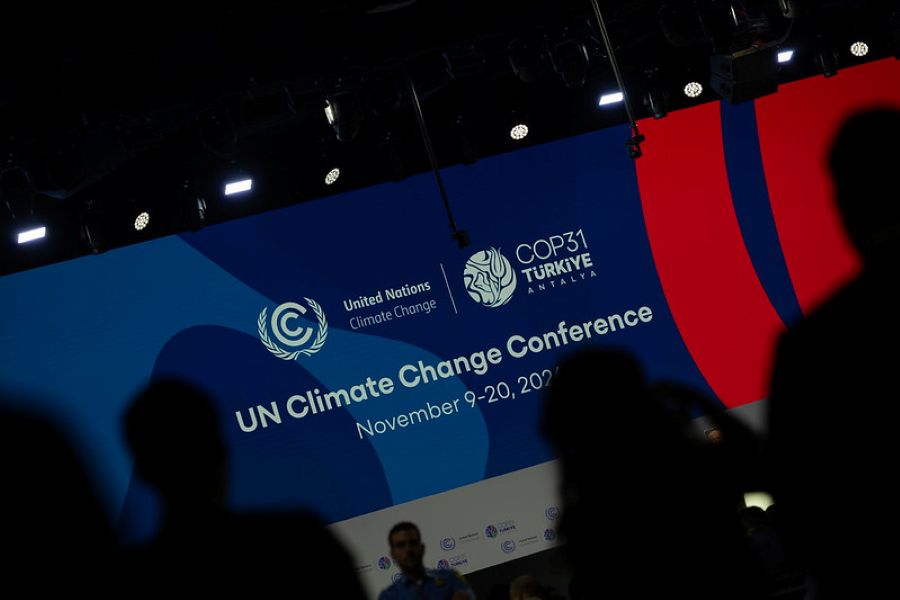
TUE NOV 17 2026-theGBJournal| A new draft decision prepared under the COP31 Presidency consultations has placed Africa’s climate financing needs, energy access and right to development at the centre of an increasingly difficult global climate debate, raising questions about whether developing countries can meet rising climate ambitions without adequate international support.
The 18-page document, dated November 16, 2026, outlines proposals covering climate finance, adaptation, fossil fuel transition, industrialisation and the economic consequences of unilateral climate-related trade measures.
Although still an unedited negotiating text and not an agreed outcome, its provisions could have significant implications for African countries.
Perhaps the most consequential proposal concerns adaptation finance.
Citing the United Nations Environment Programme’s 2026 Adaptation Gap Report, the draft estimates that developing countries will require approximately $305 billion annually by 2035 to meet their adaptation needs, against international public adaptation finance of just $28–32 billion in 2024.
Against this shortfall, paragraph 73 proposes that adaptation finance should reach at least $120 billion through a tripling of existing finance by 2035.
It also requests developed countries to provide a roadmap explaining how increased contributions will be delivered.
For Africa, where climate impacts threaten agriculture, water security, infrastructure, public health and livelihoods, the proposal represents an important negotiating opportunity.
However, the central question will be whether the proposed financing translates into predictable, accessible resources rather than additional promises.
The draft acknowledges some of the structural obstacles confronting developing countries, including high borrowing costs, limited fiscal space, unsustainable debt, complex application procedures and conditionalities attached to climate finance.
It calls for greater reliance on grants, highly concessional funding and other non-debt-creating instruments.
This is particularly significant for African economies already facing substantial debt pressures.
Financing climate adaptation through additional borrowing risks increasing fiscal vulnerabilities in countries that have contributed relatively little to historical global emissions.
Energy development presents another major area of interest.
Paragraph 49 explicitly calls for universal access to clean, reliable, affordable and sustainable energy, including in Africa.
It also advocates investment in renewable energy, electricity grids, storage and modern transmission infrastructure.
The provision is important for a continent where expanding electricity access, industrial capacity and clean cooking remains a major development challenge.
It recognises that the energy transition cannot be separated from affordability, energy security and the financing constraints facing developing economies.
However, the draft also calls for accelerated action to phase out fossil fuels, including an immediate transition away from fossil fuels in energy systems.
This language could prove contentious for African countries seeking to reconcile climate commitments with energy poverty, industrialisation and the development of domestic energy resources.
The draft attempts to address this tension by emphasising just transition pathways that integrate developing countries into technology value chains, strengthen industrial capacity, promote local value addition and create decent employment.
It also calls for financial and technological support while safeguarding countries’ right to development.
Another particularly relevant provision concerns unilateral climate-related trade measures.
The draft expresses serious concern about measures that could undermine developing countries’ market access, competitiveness, investment and industrialisation.
This is significant for African exporters facing the potential implications of carbon-related trade requirements, including the European Union’s Carbon Border Adjustment Mechanism.
Importantly, the draft proposes an assessment of the economic and social consequences of such measures for developing countries.
Africa also features prominently in a proposed initiative entitled the Antalya-to-Addis Ababa Roadmap on Adaptation and Resilience Finance.
The initiative, to be guided by the COP31 and COP32 Presidencies, would examine predictable public financing for adaptation and loss and damage, including innovative funding sources and improved access mechanisms. Its findings are expected to be presented at COP32 in 2027.
The broader political significance of the draft lies in its recognition of developed countries’ historical responsibility and existing financial obligations under the climate regime.
It reaffirms that developed countries must provide adequate, accessible and predictable resources to support developing countries’ mitigation and adaptation efforts.
For African negotiators, the challenge will be to ensure that these commitments are not diluted as negotiations progress.
The continent’s priorities are clear: climate finance that does not deepen debt, an energy transition that does not undermine development, stronger adaptation support and fairer access to international markets.
Ultimately, the draft raises a fundamental question for COP31: can the world accelerate climate action while ensuring that Africa is not left to finance the consequences of a crisis it contributed least to creating?
X-@theGBJournal|email:gbj@govbusinessjournal.com|govandbusinessj@gmail.com