
…MDGIF says its catalytic investments have mobilised N1.6 trillion across 31 projects as government seeks to turn stranded gas into power, transport fuel and industrial growth
By Charles IKE-OKOH
MON OCT 05 2026-theGBJournal| Nigeria is deploying hundreds of billions of naira of public-backed capital to build the infrastructure needed to convert its vast but underdeveloped gas resources into a more reliable source of energy, industrial feedstock and transport fuel.
The Midstream and Downstream Gas Infrastructure Fund (MDGIF) has approved an estimated N671 billion in final investment decisions (FIDs) across its portfolio since its board was inaugurated in March 2024, according to figures released by the fund.
The investments are expected to catalyse a total of N1.6 trillion in investment, highlighting the government’s strategy of using relatively limited public capital to absorb early-stage risks and attract private money into projects that have struggled to reach financial close.
The fund said its portfolio now covers 31 projects and 205 infrastructure assets, with 127 projects or assets commenced, 10 commissioned and nine stations already in commercial operation.
At the centre of the strategy is a problem that has constrained Nigeria’s economic growth for years: the country has abundant natural gas resources but lacks enough of the infrastructure required to process, transport, store and distribute the fuel efficiently.
The MDGIF is designed to address that gap by taking minority equity positions in commercially viable projects rather than providing conventional grants or loans.
“We share risk, strengthen capital structures and crowd in private and institutional finance while keeping commercial discipline, so returns recycle into the next generation of projects,” the fund says.
That model is intended to create a revolving pool of capital rather than a one-off government spending programme.
The fund says its interventions are aimed at building infrastructure that can bring stranded gas to market, expand industrial feedstock, reduce transport costs and provide cleaner cooking fuel and more reliable power.
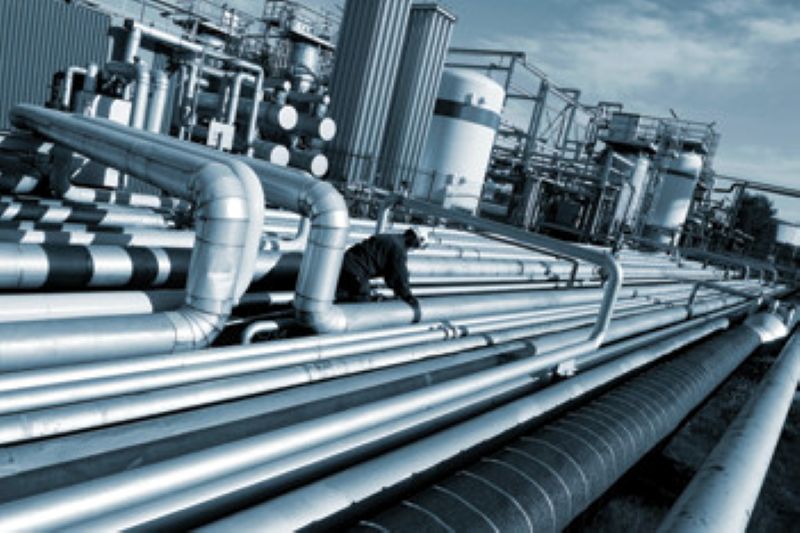
The scale of the intervention reflects the infrastructure deficit. The portfolio includes 160 CNG daughter stations, 20 CNG/LNG mother stations, 13 depots and RLNG facilities and 12 gas processing plants.
The government is also seeking to use the fund to accelerate the transition towards compressed natural gas as an alternative transport fuel, particularly following the removal of petrol subsidies and the resulting pressure on transport costs.
President Bola Ahmed Tinubu said at the commissioning of MDGIF-supported CNG projects in May that the investments showed Nigeria could use its domestic resources to improve energy security and reduce costs.
“These projects are a testament that Nigeria can achieve energy security, lower transport costs, create jobs and build a cleaner, stronger economy from our own resources,” President Tinubu said.
From gas reserves to bankable assets
The economic significance of the fund lies less in the headline value of its approvals than in its attempt to solve the financing problem between a technically viable gas project and an investment that commercial lenders are prepared to fund.
MDGIF was established under the Petroleum Industry Act 2021 and is funded principally through a 0.5 per cent levy on wholesale gas and petroleum prices collected by the Nigerian Midstream and Downstream Petroleum Regulatory Authority, as well as gas-flare penalties released through the Nigerian Upstream Regulatory Commission.
Investment income and grants are also recycled into the portfolio.
The fund says its capital base gives it the ability to acquire, hold and dispose of property and intervene in projects where commercially sound investments have struggled to attract sufficient financing.
Its approach is therefore closer to that of a development investor than a conventional government spending agency.
The fund says its current investment framework can support projects over an 18-month to five-year incubation period, giving it room to originate, assess and develop projects before they become fully commercial.
That distinction matters in Nigeria’s gas sector, where infrastructure projects can face long lead times, uncertain demand, high financing costs and regulatory or construction risks before generating revenues.
One example highlighted by the fund is an equipment-leasing joint venture intended to support the presidential target of deploying 500 CNG infrastructure assets under the National CNG Corridor.
The project includes four mother stations and 75 integrated refuelling units.
Another project is a mini-LNG plant described by MDGIF as Nigeria’s first indigenous facility of its kind.
The fund said its 30 per cent equity stake helped unlock an InfraCredit guarantee after the project had previously struggled to secure one.
The project, it said, is expected to be commissioned before the end of the fourth quarter of 2026.
The bigger bet on gas
Nigeria’s gas ambitions are being pursued against a paradox: the country possesses substantial gas resources, yet households and businesses continue to face unreliable energy supplies and inadequate gas infrastructure.
The government’s bet is that expanding the midstream and downstream network can help bridge that gap by making gas physically available where it is needed.
For manufacturers, greater availability of gas could improve access to industrial energy and feedstock. For transport operators, CNG infrastructure could provide an alternative to petrol and diesel.
For households, investment in gas processing and distribution could eventually support cleaner cooking options.
But the success of the strategy will ultimately depend on whether the infrastructure produces commercially sustainable businesses rather than simply increasing the number of government-supported projects.
That is why MDGIF’s claim that it is investing “minority catalytic equity, not grants or loans” is central to its model.
The objective is to use public money to take early risk, attract private capital and eventually recycle investment returns into new projects.
The fund has set up a portfolio that includes projects in Lagos, Abuja, Owerri and Ile-Ife, while about 50 further projects are expected to reach pre-commissioning before the end of the year, according to the fund.
The emerging picture is therefore one of Nigeria attempting to build a gas economy from the middle outward: not simply producing more gas, but investing in the pipelines, processing plants, CNG stations, LNG facilities and storage infrastructure required to turn the resource into an economic asset.
If the model works, the significance of the N671 billion already approved will extend beyond the projects directly financed by the fund.
The larger prize is the N1.6 trillion of private and institutional investment it says it has catalysed — and the possibility of establishing a repeatable financing model for an infrastructure sector that has historically struggled to convert Nigeria’s resource wealth into dependable economic output.
X-@theGBJournal|email:gbj@govbusinessjournal.com|govandbusinessj@gmail.com