
MON SEPT 14 2026-theGBJournal| When Nigeria first joined the World Energy Council in April 1960, the country was months away from independence, and its modern energy industry was still taking shape.
More than six decades later, Nigeria has returned to the organisation as a Member Committee at a moment when both the country’s energy sector and the global conversation it is rejoining look markedly different.
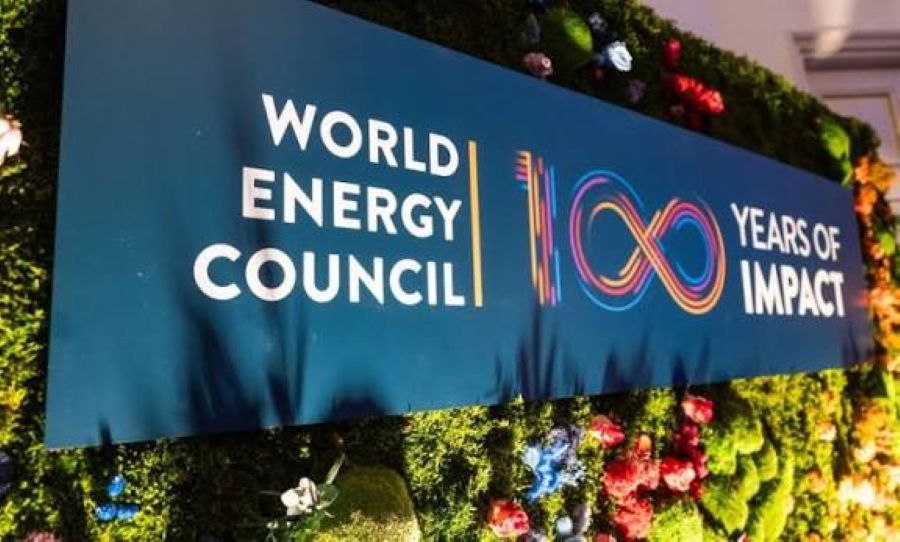
The governing board of the World Energy Council’s Nigerian Member Committee was inaugurated in Abuja on 7 August, formally restoring Nigeria’s participation in the global body.
The committee is chaired by Abdulrazaq Isa, co-founder of Waltersmith Petroman Oil Limited, while Bala Wunti, formerly Chief HSE Officer at NNPC Limited, serves as Chief Executive Officer.
Its board brings together figures from policy, academia, energy institutions and private enterprise, including Professor Wumi Iledare, Dr Mustapha Abdullahi, Mrs Aisha Farida Katagum, Dr Emmanuel Okon, Dr Victor Ekpenyong, Dr Imamuddeen Talba and Dr Ainojie Alex Irune, Managing Director of Oando Energy Resources and Executive Director of Oando PLC.
The Nigeria returning to the Council is substantially different from the country that first joined it.
Over the intervening decades, Nigeria has developed into one of Africa’s largest oil and gas producers, built a significant domestic energy industry and seen indigenous companies move from relatively limited participation in the upstream sector to acquiring and operating substantial portfolios previously controlled by international oil companies.
That evolution has accelerated over the last decade as international majors have reshaped their Nigerian portfolios and local companies have assumed greater responsibility for producing assets. The composition of the new WEC Nigeria board reflects some of that history.
Isa has spent nearly three decades building Waltersmith, while other members bring experience across government, petroleum economics, engineering, renewables and energy operations. Irune, 45, represents another part of the indigenous energy story, having built much of his career during the period when Nigerian companies significantly expanded their upstream ambitions.
His career has unfolded alongside that transformation. A computer scientist with a doctorate from the University of Nottingham, Irune began in technology and automotive research in the United Kingdom before returning to Nigeria.
At Oando, his career moved through corporate communications, strategy and upstream operations as the company itself evolved into a significant indigenous upstream player.
He was involved in the organisational transition following Oando’s $1.5 billion acquisition of ConocoPhillips’ Nigerian upstream business in 2014 and subsequently served as Group Chief Strategy and Corporate Services Officer during a period of restructuring.
A decade later, as Managing Director of Oando Energy Resources, he led the completion of Oando’s $783 million acquisition of Nigerian Agip Oil Company from Eni.
In many respects, Irune’s career has become a microcosm of what has happened to the Nigerian energy industry over the last decade-plus: greater indigenous participation gave way to greater ownership, and ownership has increasingly brought responsibility for operatorship, investment and institution-building.
Nigeria’s return to the World Energy Council is taking place against an equally significant change in the global energy conversation. Energy security and affordability now sit alongside the challenge of reducing emissions, while emerging economies continue to argue that transition pathways must account for different levels of development and energy access.
For Nigeria, those tensions are immediate. The country possesses substantial hydrocarbon resources while facing significant domestic energy and infrastructure needs. It is seeking greater investment in its energy sector while also navigating the implications of a global transition towards lower-carbon energy systems. Nigeria’s renewed participation in the Council will therefore depend on the experience and perspective it brings to that debate.
Irune has increasingly argued that Africa’s energy transition must be grounded in the continent’s economic realities, with greater energy access and industrialisation central to its approach. He has also made the case for gas as an important development fuel and for indigenous companies to retain more of the value created from African resources. Those arguments will now sit within a broader Nigerian contribution.
More than six decades after first joining the World Energy Council, Nigeria returns with considerably more operating experience of its own, a larger indigenous energy industry, and a different set of questions about what its resources should deliver for its economy.
X-@theGBJournal|email:gbj@govbusinessjournal.com|govandbusinessj@gmail.com