
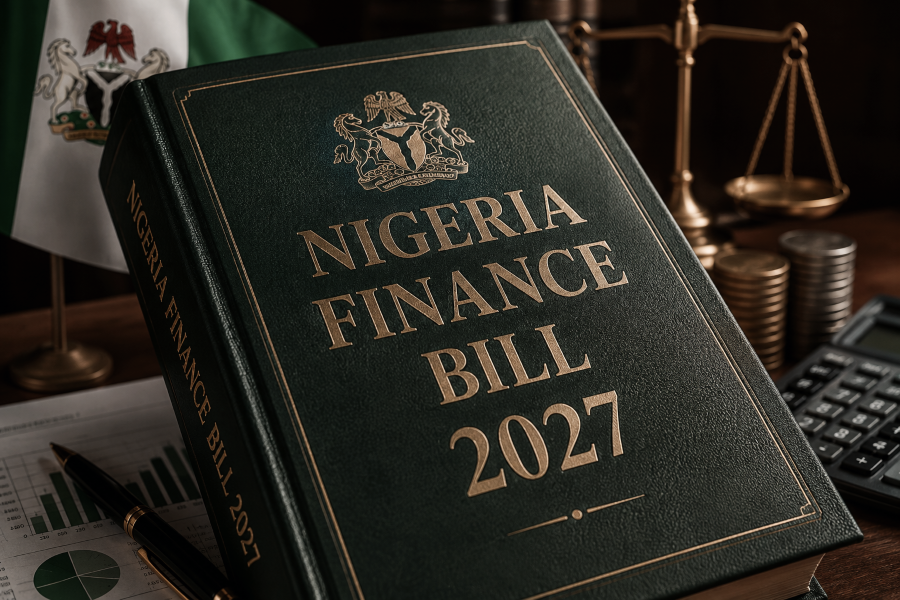

…The Federal Government has used Finance Bills and subsequent Finance Acts to make regular changes to its tax and fiscal framework.
FRI AUG 28 2026-theGBJournal| The Federal Ministry of Finance has opened consultations on the Finance Bill 2027, asking businesses, investors and other stakeholders to propose changes to fiscal laws aimed at making it easier to do business, improving tax administration and strengthening government revenue.
The Ministry, in this regard today sent out an invitation to Nigerians, businesses, investors, professional bodies, civil society organisations, academia, public institutions and other stakeholders to submit practical, evidence-based proposals for the bill.
The consultation comes as Nigeria continues to implement a broad overhaul of its tax system and seeks to improve revenue collection while supporting investment and economic growth.
The government said in the invite seen by the G&B Journal, that the Finance Bill 2027 would provide an opportunity to identify gaps, inconsistencies and implementation problems in existing laws and propose amendments that could deliver measurable improvements to the economy.
The exercise is also intended to ensure that fiscal laws keep pace with changes in the economy and do not impose unnecessary regulatory or administrative costs on businesses.
The Federal Government has used Finance Bills and subsequent Finance Acts to make regular changes to its tax and fiscal framework.
The Finance Act 2023, the fourth in a series of Finance Acts, amended several tax, excise and duty laws and focused on areas including tax equity, economic growth, tax incentives and revenue administration.
The Finance Bill 2027 comes against the backdrop of further tax reforms and is aimed at addressing practical issues that emerge as the country’s fiscal framework evolves.
The ministry said proposals should focus on improving the ease of doing business and investment, strengthening tax administration and revenue mobilisation, promoting fiscal transparency and accountability, and reducing unnecessary regulatory and administrative burdens.
It is seeking input in five broad areas:
-Taxation and revenue administration: tax policy, revenue mobilisation, compliance, taxpayer services, tax certainty, incentives, customs and excise, and coordination among revenue agencies.
-Fiscal policy and management: revenue and expenditure management, budgeting, public financial management, fiscal sustainability, public debt and intergovernmental fiscal relations.
-Fiscal responsibility, transparency and accountability: budget discipline, financial reporting and disclosure, monitoring, accountability and institutional oversight.
-Financial and economic regulation: capital markets, investment and cross-border capital flows, anti-money laundering, financial reporting and other regulations with significant fiscal or economic implications.
-Other related matters: laws, regulations and institutional arrangements requiring amendment, harmonisation or introduction to improve Nigeria’s competitiveness and economic governance.
The government said priority would be given to proposals that address gaps or inconsistencies in existing laws, reduce regulatory burdens, improve investment and productivity, eliminate overlapping provisions and strengthen institutional coordination, transparency and accountability.
It also wants reforms that can improve revenue mobilisation and fiscal sustainability without unnecessarily constraining economic activity.
The finance ministry is equally encouraging stakeholders to go beyond general recommendations.
Contributors, it said should where possible, identify the specific law and provision requiring amendment, explain the problem and provide proposed drafting language.
“That approach could give businesses and investors a direct opportunity to flag provisions that create uncertainty, increase compliance costs or discourage investment, while giving policymakers concrete amendments to consider” a finance analyst said.
Meanwhile, submissions are due by Friday, September 11, 2026.
X-@theGBJournal|email:gbj@govbusinessjournal.com|govandbusinessj@gmail.com