
MON JULY 27 2026-theGBJournal| Nigeria is unlikely to suffer significant economic fallout from the United States’ decision to impose a 12.5% tariff on selected imports from the country, as the bulk of its exports to the U.S. remain exempt, according to the Centre for the Promotion of Private Enterprise (CPPE).
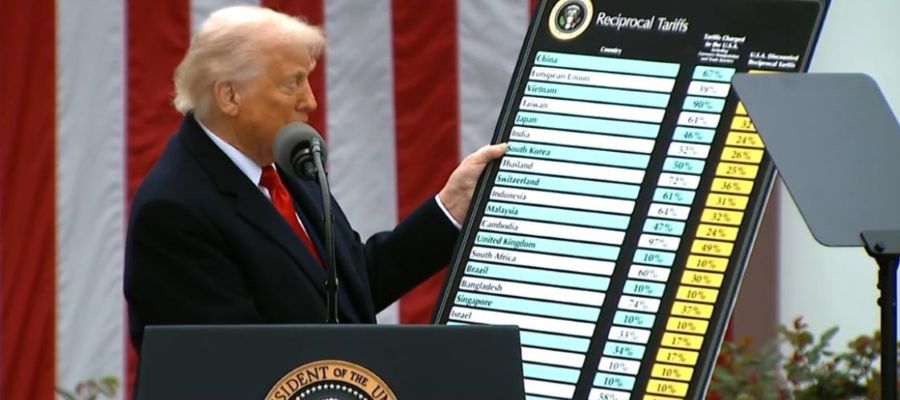
”Our assessment is that the new tariff regime represents a continuation of the Trump administration’s reciprocal tariff policy, albeit under a different legal framework.”
Following the judicial invalidation of the earlier reciprocal tariffs, ”the current measures appear to have been restructured under Section 301 of the U.S. Trade Act, with allegations relating to forced labour providing the statutory basis for their implementation” the think-tank noted in a note to theG&BJournal on Sunday.
Although the legal foundation has changed, the underlying policy objective remains essentially the same: protecting U.S. domestic industries, strengthening American manufacturing competitiveness and advancing broader U.S. trade and economic interests.
The policy institute also notes that the tariff, introduced as part of Washington’s revised reciprocal trade framework affecting about 60 trading partners, would have only a limited impact on Nigeria because crude oil, liquefied natural gas and other petroleum products—which account for more than 80% of the country’s exports to the U.S.—are excluded from the measure.
CPPE also notes that the United States is not Nigeria’s largest export destination.
Based on Nigeria’s first-quarter 2026 merchandise trade data, exports to the U.S. accounted for just 5.56% of total exports valued at about ₦21.6 trillion, compared with 13.09% for India, 9.29% for France, 9.22% for the Netherlands and 7.68% for Spain.
While the think tank said some non-oil exporters, particularly in agriculture and manufacturing, could face weaker competitiveness in the U.S. market, it argued that the overall effect on Nigeria’s export earnings, foreign exchange inflows and broader macroeconomic performance would be modest.
“The issue is one of materiality,” CPPE said, noting that the products subject to the new tariffs account for only a small share of Nigeria’s exports, while the country’s dominant export category remains outside the scope of the U.S. measures.
Nevertheless, the development, CPPE said, reflects a broader structural shift in global trade policy. It reinforces the trend towards greater protectionism, industrial policy and strategic use of trade instruments to advance domestic economic objectives.
This evolving environment calls for a stronger emphasis on export diversification, enhanced manufacturing competitiveness, increased domestic value addition and deeper regional integration under the African Continental Free Trade Area (AfCFTA).
Nigeria should also sustain efforts to strengthen labour standards, improve supply chain transparency and engage proactively with the United States through diplomatic and trade channels to seek clarity on the implementation of the new measures and minimise any adverse effects on affected exporters.
Overall, while the new U.S. tariffs have generated understandable concern, their direct economic implications for Nigeria should not be overstated.
”The greater challenge lies not in the immediate loss of export opportunities, but in navigating an increasingly fragmented and protectionist global trading environment,” CPPE said.
X-@theGBJournal|Facebook-the Government and Business Journal|email:gbj@govbusinessjournal.com|govandbusinessj@gmail.com