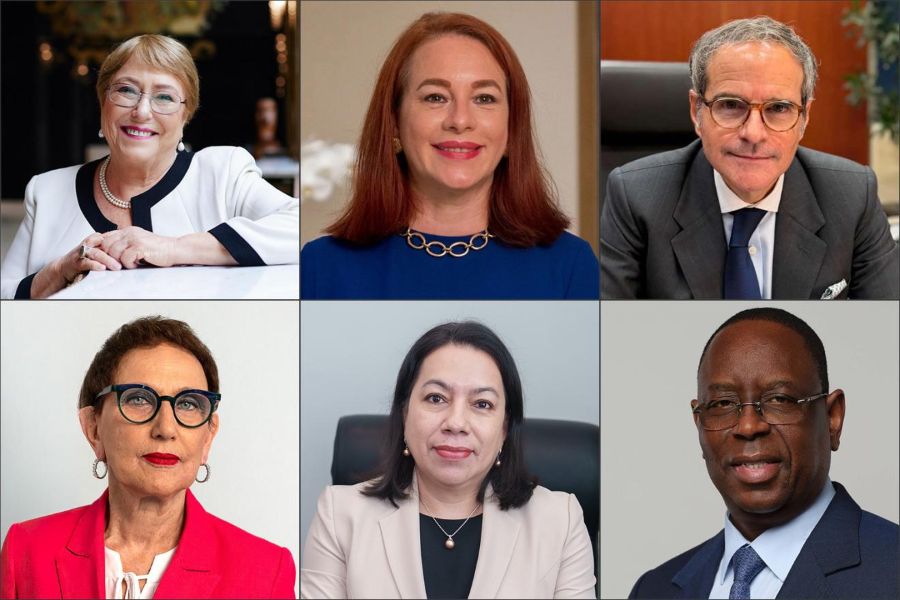

THUR JULY 23 2026-theGBJournal| Four women and two men are vying to become the next United Nations secretary-general as the world body moves into a crucial phase of selecting a successor to António Guterres, whose second five-year term expires in December.
The six candidates faced their first collective public examination on Thursday at a globally televised town hall at the UN General Assembly Hall in New York, offering member states, civil society and UN staff an opportunity to assess their vision for an organisation grappling with geopolitical conflict, climate change, humanitarian crises and growing questions over the future of multilateralism.
The event, titled “UN Town Hall: The Next Secretary-General,” marks a significant milestone in the appointment process, which has become increasingly transparent following reforms introduced after previous selections were criticised for being dominated by closed-door negotiations among the Security Council’s permanent members.
Leading the field are four women with extensive diplomatic and international governance experience: Michelle Bachelet, Chile’s former president and former UN High Commissioner for Human Rights; Maria Fernanda Espinosa, Ecuador’s former foreign minister and former President of the UN General Assembly; Rebeca Grynspan, head of the UN Trade and Development agency (UNCTAD) and former vice-president of Costa Rica; and Carolyn Rodrigues-Birkett, Guyana’s former foreign minister and former UN ambassador.
The two male contenders are Rafael Grossi, Director-General of the International Atomic Energy Agency (IAEA), who has gained international prominence for his work on nuclear diplomacy in Iran and Ukraine, and Macky Sall, the former president of Senegal, who is campaigning on reforms aimed at strengthening multilateral cooperation and enhancing the effectiveness of the United Nations.
The live discussion, moderated by journalists and streamed worldwide, allows candidates to present their priorities before diplomats, UN employees and civil society organisations, reflecting growing calls for a more open and merit-based selection process.
Although the General Assembly appoints the Secretary-General, the decisive recommendation comes from the 15-member UN Security Council, where any of the five permanent members — China, France, Russia, the United Kingdom and the United States — can block a candidate through their veto power.
The next Secretary-General will inherit an institution facing one of its most challenging periods in decades, with wars in multiple regions, rising humanitarian needs, widening geopolitical divisions and mounting pressure to reform the UN to better reflect today’s global balance of power. The successful candidate is expected to assume office in January 2027 following the expiration of Guterres’ tenure at the end of December.
X-@theGBJournal|Facebook-the Government and Business Journal|email:gbj@govbusinessjournal.com|govandbusinessj@gmail.com