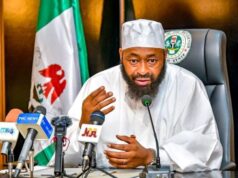

…If the PDP stabilizes in his favour, he remains a central figure within the party. If the crisis deepens or hostile factions attempt to block his path, the APM platform becomes a ready-made political vehicle.
FRI MAY 15 2026-theGBJournal| The decision by Seyi Makinde to formally signal his 2027 presidential ambition may prove to be one of the most consequential political calculations ahead of Nigeria’s next electoral cycle.
Beyond the symbolism of another governor entering the presidential arena, Makinde’s move appears carefully designed to fundamentally alter the balance of power within the opposition and neutralize the crippling internal battles threatening the Peoples Democratic Party (PDP).
What makes the declaration particularly strategic is not merely the ambition itself, but the platform surrounding it: the emerging alliance with the Allied Peoples Movement (APM).
In Nigerian politics, timing and structure matter as much as popularity. Makinde seems to understand that waiting for the PDP’s prolonged leadership crisis to resolve itself could be politically fatal.
By aligning with APM early, he has effectively created a political insurance policy for both himself and allies dissatisfied with the current direction of the PDP.
For months, the PDP has been trapped in destructive internal warfare involving competing blocs loyal to figures such as Nyesom Wike and other party power centres.
The endless legal disputes, factional conventions, and leadership tussles have weakened public confidence in the PDP as a coherent opposition force. Rather than becoming consumed by that uncertainty, Makinde appears to have chosen a different route — building an alternative structure while still retaining influence within the PDP ecosystem.
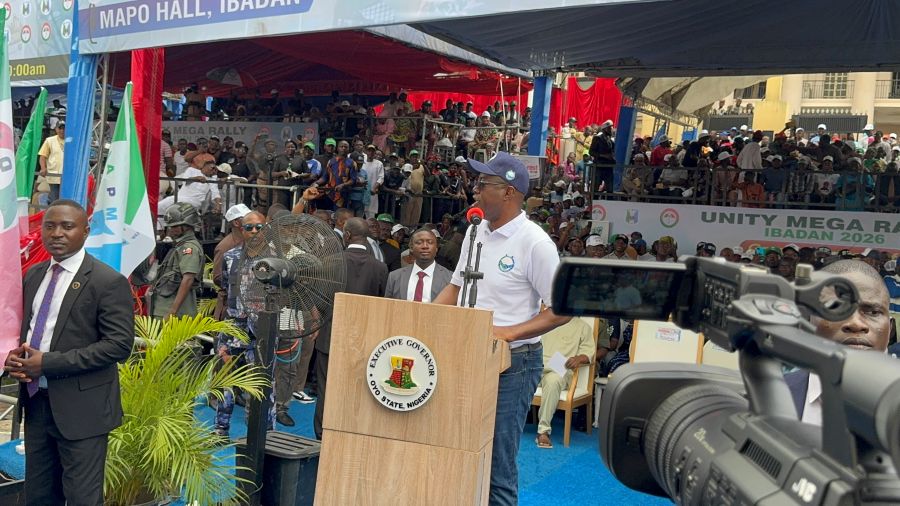
That is the true significance of the joint rally with APM.
The alliance sends a message that Makinde is no longer prepared to allow his presidential future to depend solely on the outcome of court cases, reconciliation committees, or elite negotiations inside the PDP.
If the PDP stabilizes in his favour, he remains a central figure within the party. If the crisis deepens or hostile factions attempt to block his path, the APM platform becomes a ready-made political vehicle.
It is a classic dual-track strategy.
More importantly, APM offers something the PDP currently lacks: institutional calm. Unlike the PDP, the party is largely free from entrenched internal feuds, competing governors’ blocs, or legacy political grudges.
That makes it attractive not only to Makinde loyalists but also to politicians across the country seeking a less toxic political environment ahead of 2027.
The biggest losers from this development may be the factions that assumed Makinde would remain boxed into the PDP’s internal chessboard. Reports of confusion and surprise within the Wike-aligned camp are unsurprising because the APM alliance changes the negotiating dynamics completely.
Once a politician develops a credible external platform, threats of exclusion inside the main party lose much of their potency.
Makinde has also demonstrated a growing understanding of modern Nigerian electoral politics: voters are increasingly less emotionally attached to political parties and more connected to personalities, coalitions, and perceived competence.
The dominance once enjoyed by the PDP and APC as unquestioned political homes is weakening gradually. Nigerian politicians now move with their support bases, financial networks, and regional alliances rather than relying solely on party labels.
That reality explains why the APM project could gain traction faster than many currently expect.
If Makinde successfully positions the alliance as a reformist coalition rather than merely a backup vehicle for aggrieved PDP politicians, it could attract substantial youth support, technocrats, regional stakeholders, and disillusioned opposition figures.
Nigerian politics has indeed, entered an era where smaller parties can rapidly become nationally relevant if they possess strong personalities, strategic financing, and elite defections.
There is also another critical factor working in Makinde’s favour: perception. Among many opposition figures, he increasingly appears disciplined, measured, and administratively focused compared to the noise dominating national politics.
His presidential declaration now elevates him from being merely a regional governor to a national political actor shaping the opposition’s future direction.
Still, the road ahead remains complicated. Building a viable national coalition requires more than symbolic rallies.
It demands structures across the North, South-East, and South-South, elite consensus-building, grassroots mobilisation, and the difficult task of avoiding the fragmentation that has historically weakened opposition alliances in Nigeria.
Yet, regardless of whether Makinde ultimately secures the presidency, his latest move has already achieved one thing: it has shifted the national conversation away from PDP disintegration and toward political realignment.
In doing so, he may have delivered the first genuine strategic surprise of the 2027 race.
Charles Ike-Okoh
X-@theGBJournal|Facebook-the Government and Business Journal|email:gbj@govbusinessjournal.com|govandbusinessj@gmail.com