
…Rising debt obligations continue to outpace productive investment, while crude oil production — the backbone of national revenue — still suffers from theft, underinvestment, and uncertainty in exploration.
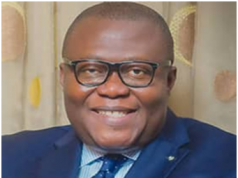
By Mr. Igwebuike Okoh
WED MAY 13 2026-theGBJournal| Nigeria’s economic outlook since last month remains fragile, weighed down by deep structural weaknesses that monetary reforms alone cannot fix.
Rising debt obligations continue to outpace productive investment, while crude oil production — the backbone of national revenue — still suffers from theft, underinvestment, and uncertainty in exploration. Even where global oil prices offer temporary relief, Nigeria has struggled to convert opportunity into lasting economic stability.
The pressure on the naira reflects a broader crisis of confidence. Currency instability has driven inflation higher, reduced purchasing power, and increased hardship for ordinary citizens. Businesses face mounting costs, while investors remain cautious in an environment where policy consistency and institutional trust are uncertain.
Beyond economics, insecurity remains perhaps the greatest threat to growth. Terrorism, banditry, kidnapping, and attacks on infrastructure continue to discourage investment and weaken productivity across agriculture, trade, and industry. Equally damaging is the perception that corruption within public service and among some security and law enforcement institutions undermines accountability and public trust.
Nigeria’s challenge is not merely a lack of resources, but a failure of governance and civic responsibility. The nonchalant attitude toward the rule of law — by both citizens and some of those entrusted to enforce it — weakens institutions and discourages national discipline. No economy can thrive where laws are applied selectively and public confidence in justice is low.
Yet Nigeria still possesses enormous economic potential: a large population, entrepreneurial energy, natural resources, and regional influence. The outlook going forward will depend less on speeches and more on credible reforms — restoring security, strengthening institutions, reducing corruption, and directing public borrowing toward real productivity. Without these, economic recovery may remain slow, uneven, and vulnerable to repeated setbacks.
Mr. Igwebuike Okoh write from Cologne, Germany
X-@theGBJournal|Facebook-the Government and Business Journal|email:gbj@govbusinessjournal.com|govandbusinessj@gmail.com