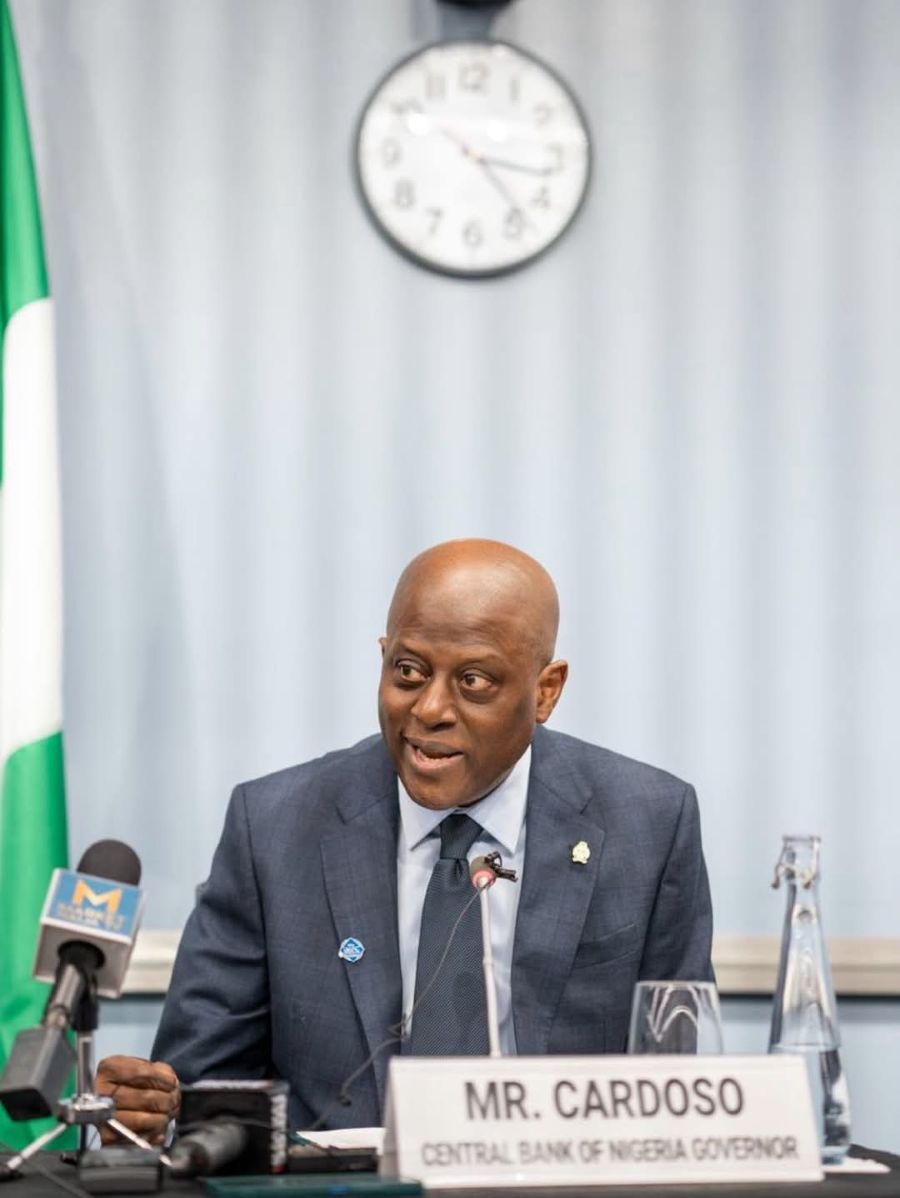

MON APRIL 20 2026-theGBJournal|The Central Bank of Nigeria’s (CBN) Governor Yemi Cardodo said the apex bank’s target of $1 billion in remittances per month by the end of 2026 remains on track.
He gave the assurance in Washington just before the conclusion of 2026 Spring Meetings of the IMF and World Bank.
The comment by the CBN Governor sits within a broader push by the CBN to rebuild confidence in Nigeria’s foreign exchange system and capture more inflows from Nigerians abroad.
For years, Nigeria has been one of Africa’s largest recipients of diaspora remittances—often exceeding oil revenues in terms of stability—but a significant portion has flowed through informal channels due to multiple exchange rates, FX restrictions, and weak trust in the banking system.
At various points, official remittance inflows dropped sharply because senders preferred parallel market rates over the formal banking window.
Cardoso’s $1 billion monthly target—equivalent to about $12 billion annually—is ambitious but strategic.
It reflects the CBN’s belief that Nigeria’s diaspora, estimated in the tens of millions globally, represents a reliable and underutilised source of foreign exchange.
He challenged the banks to leverage the enabling environment created by the CBN to ensure that those in the Diaspora can work through the system seamlessly.
His call for banks to “leverage the enabling environment” signals a shift to shared responsibility.
The regulator has eased policy bottlenecks; now commercial banks are expected to improve their remittance infrastructure—faster processing, better digital platforms, competitive pricing, and stronger partnerships with global transfer services—to make transactions seamless for senders and recipients.
Meanwhile, the Governor assured that the apex bank remains firmly on track, focused on building on existing gains, sustaining reforms, and strengthening institutional capacity to deliver long-term macroeconomic stability.
He said despite global uncertainty, Nigeria’s reform progress continues to stand out. Our policies are strengthening the naira, boosting reserves, and building investor confidence and capital inflows.
”Reforms are delivering results: lower inflation, stable FX markets, and stronger monetary policy are helping to build a solid foundation for long-term growth, he adds.
Cardoso equally reiterated that Nigeria is proud to host the African Monetary Institute (AMI) in Abuja, a key step towards deeper African monetary cooperation and integration.
”Our focus is unwavering: sustain reforms, strengthen institutions, and ensure data-driven decisions that support a stable, growing economy for all Nigerians.”
He noted that the recent banking recapitalisation exercise, which raised N4.65 trillion and attracted diversified participation of 72.55 per cent domestic and 27.45 per cent foreign, underscored both international confidence and domestic ownership.
The Governor is also upbeat about the country’s reserve levels. He maintained that the Nigerian foreign exchange market is now more market-driven and has sufficient liquidity to operate on its own.
Speaking on CBN’s partnership with IMF’s AFRITAC West II, Cardoso underscored his commitment to enhancing human capacity and building strong institutions by emphasising the need to invest in people and to make it a way of life.
X-@theGBJournal|Facebook-the Government and Business Journal|email:gbj@govbusinessjournal.com|govandbusinessj@gmail.com