


MON MAR 16 2026-theGBJournal| Nigeria’s headline inflation rate moderated slightly in February, according to data published today by the National Bureau of Statistics (NBS), easing by four basis points to 15.06% year-on-year from 15.10% recorded in January 2026, and offering a modest sign of cooling price pressures in the broader economy.
The marginal decline reflects slower increases in some non-food components of the consumer basket, though underlying price risks remain.
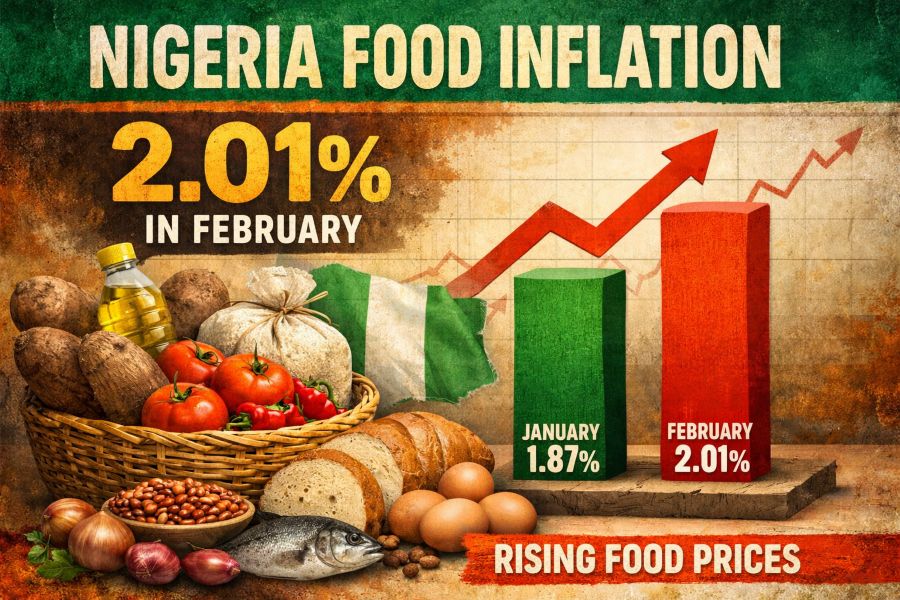
On a month-to-month basis, the inflation rate in February 2026 was reported at 2.01%, 4.89% higher than the rate recorded in January 2026 (-2.88%).
Despite the slight easing in the headline figure, food inflation, a significant driver of overall inflation, continued its upward trajectory rising 12.12% in February 2026 from 8.89% in January 2026.
The increase underscores the persistent cost pressures in one of the most critical segments of household spending.
On a month-on-month basis, the food index accelerated by 4.69% (January: -6.02% m/m), due to the rate of increase in the average prices of Beans, Carrots, Okazi Leaf, Cassava Tuber, Crayfish, Millet Flour, Yam Flour, Snails, Avenger (Ogbono/Apon) – dried ungrinded, cow peas, etc.
Rising prices of staple items, transportation costs linked to food distribution, and lingering supply constraints contributed to the uptick.
The divergence between headline inflation and food prices highlights the uneven nature of Nigeria’s inflation dynamics, with food costs remaining a key driver of overall consumer price pressures.
However, core inflation (all items excluding farm produce and energy) moderated by 184bps to 15.88% y/y in February (January: 17.72% y/y).
On a month-on-month basis, the core index increased by 0.89% (January: -1.69% m/m).
For many households, the persistent rise in food prices continues to erode purchasing power and strain disposable incomes.
Analysts note that while the modest slowdown in headline inflation could signal some stabilization in price growth, sustained improvements will likely depend on stronger agricultural output, improved logistics, and continued macroeconomic policy measures aimed at curbing inflationary pressures.
X-@theGBJournal|Facebook-the Government and Business Journal|email:gbj@govbusinessjournal.com|govandbusinessj@gmail.com