

…TotalEnergies divested its 12.5% stake in Nigeria’s Bonga oil field to Shell for $510 million, another big deal that caught global attention
…Several countries plan to launch new rounds in 2025-2026, offering both onshore and offshore acreage in mature and frontier basins that promise significant opportunities for foreign investors
THUR OCT 02 2025-theGBJournal| Africa’s upstream M&A transactions saw a significant increase in both deal value and count from the second half of 2022 to the first half of 2024, according to new report-‘The State of African Energy 2026 Outlook’- launched by The African Energy Chamber (AEC) at the African Energy Week: Invest in African Energies 2025 conference on Tuesday.
According to the report which is developed in partnership with S&P Global Commodity Insights, in the first half of 2025, transaction values totalled approximately $2.7 billion, up from around $0.9 billion in the second half of 2024. Additionally, deal count rose from 3 to 6 during the period.
Trading company Vitol stakes acquisition in Eni assets in Côte d’Ivoire and the Republic of the Congo for a total consideration of $1.65 billion, ranks among the biggest deals in Africa so far in 2025, according to the report.
The acquisition aligns with Vitol’s strategy to broaden its presence in Africa by capitalising on previous acquisitions, including its existing partnership with Eni SpA.
By acquiring stakes in both established and developing assets that deliver robust cash flow, the company will not only strengthen its LNG supply security but also bolster its global trading operations.
Eni’s divestiture is driven by its portfolio optimisation strategy, using a dual exploration model.
”This model focuses on building hydrocarbon reserves through exploration and asset monetisation by selling minority interests while retaining operatorship in projects,” the report notes.
The proceeds will be invested in other core upstream projects and the development of energy transition initiatives.
Additionally, it strengthens Eni’s partnership with Vitol, ensuring enhanced market access and trading synergies.
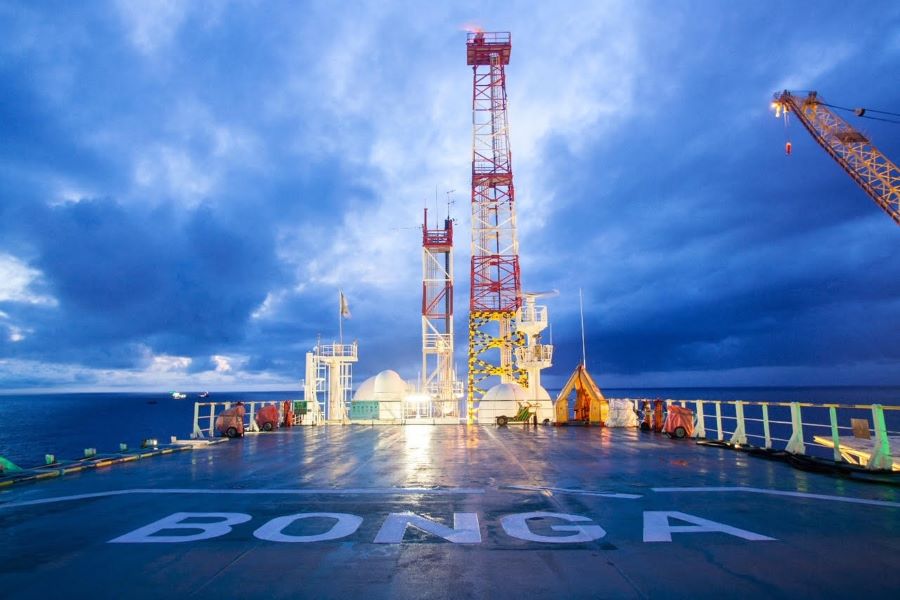
Similarly, TotalEnergies divested its 12.5% stake in Nigeria’s Bonga oil field to Shell for $510 million, another big deal that caught global attention.
Shell’s acquisition is designed to bolster its position in high-return projects, ensuring consistent cash generation and supporting its goal to maintain 1.4 million bbl/d of global liquids production while growing upstream production by 1% annually through 2030.
TotalEnergies said it divested non-core, non-operated assets to focus on operated gas and offshore oil projects in Nigeria, with proceeds supporting the crucial Ubeta development for Nigeria LNG gas supply.
In July 2025, Tullow Oil Plc completed the sale of its assets in Gabon to Gabon Oil Company, a deal valued at $307 million net of tax and customary adjustments.
The transaction represents the sale of 100% of the shares in Tullow’s subsidiary Tullow Oil Gabon S.A, which holds all of Tullow’s non-operated working interests in Gabon.
The sale marks Tullow’s exit from its licences in Gabon after 21 years.
Tullow said the transaction proceeds will be used to strengthen it’s balance by ”materially reducing Tullow’s net debt.”
The other major deals include Egypt’s United Energy Group acquisition of Apex International Energy; Blue Water Energy LLP; Wargurg Pincus Egyptian Western Desert oil assets for $157 million.
Meanwhile, Several countries plan to launch new rounds in 2025-2026, offering both onshore and offshore acreage in mature and frontier basins that promise significant opportunities for foreign investors.
While expected licensing rounds in Angola, Congo, Sierra Leone and Tanzania have been delayed beyond planned launch dates, the first half of 2025 has already seen notable licensing rounds.
Both Algeria and Libya have organised bid rounds after long absences. Algeria held its first bid round in a decade, awarding five out of six blocks offered – three of these featured the new production sharing terms and two were on a royalty/tax basis following improvements to terms introduced by the 2019 Hydrocarbon Law.
Libya launched its first licensing round in 17 years covering 22 blocks, introducing revised fiscal terms to attract investor interest.
The trend towards more favourable terms continues to foster investment, with both frontier and mature producers offering targeted incentives and trialling broadly revised contract terms for the first time.
X-@theGBJournal|Facebook-the Government and Business Journal|email:gbj@govbusinessjournal.com|govandbusinessj@gmail.com