



By G&B Journal Correspondents
SUN NOV 08 2026-theGBJournal| They started as unlikely heroes, endured an opening-day setback and refused to surrender their dreams.
By the time Nigeria’s Flamingos conquered Japan, two players who had struggled for starting places had become the faces of a historic African triumph.
Sometimes, the making of champions begins with a difficult conversation with the bench.
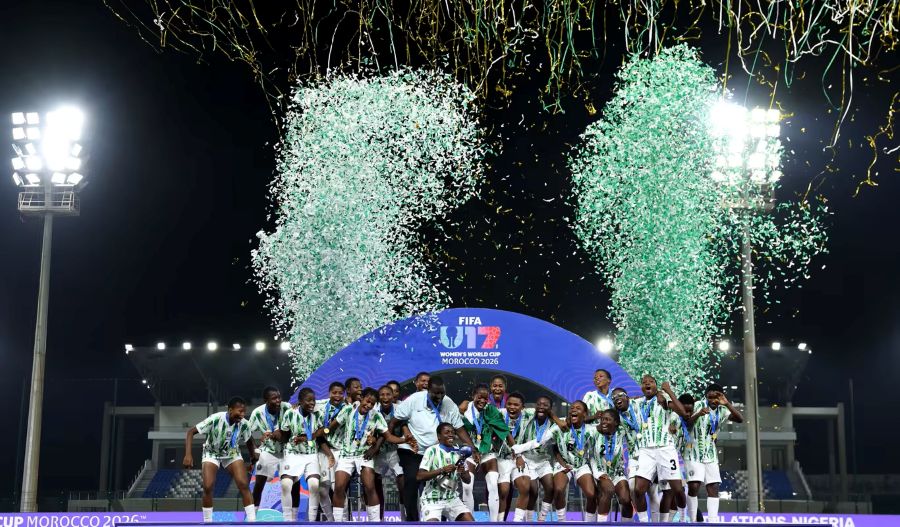
For Nigeria’s Flamingos, the road to becoming the first African nation to win the FIFA U-17 Women’s World Cup was not a straightforward march of dominance. It was a story of patience, rediscovery and players who understood that a supporting role could eventually become a starring performance.
When the tournament began in Morocco, Nigeria suffered a 2-1 defeat to Poland. It was hardly the opening statement expected from a team carrying the hopes of a continent. But instead of allowing disappointment to define their campaign, the players embraced a different mentality: every remaining match was a final.
That response would become the foundation of something extraordinary.


Few players embodied Nigeria’s remarkable transformation better than Oluebube Umejiaku. She began the competition on the bench, making an appearance against Poland and scoring a consolation goal in the defeat. By the end of the tournament, however, she had become its defining figure.
Her goals against DPR Korea, Mexico and, most importantly, Japan transformed her from a promising squad member into a national hero.
Against Japan in the final, Umejiaku delivered when it mattered most, scoring Nigeria’s second goal in the 47th minute after Awawu Bashiru had broken the deadlock seven minutes before half-time.
Japan’s Fuki Ito reduced the deficit in the 80th minute, setting up a tense finish. But the Flamingos held their nerve to secure a 2-1 victory, a maiden world title and a landmark achievement for African women’s football.
Umejiaku’s journey was about more than goals. It was about believing that an opportunity would eventually arrive.
“Every time I went to training and every time I slept, I told God that I’m praying for all the people that are starting. But when I wanted to start, I just told God that it is my time,” she revealed after the final.
Her rise was matched by Bashiru, another player whose tournament initially offered little indication of the decisive role she would eventually play.
She accumulated just 77 minutes between Nigeria’s opening defeat and their quarter-final against Venezuela. However, when coach Akeem Busari handed her a starting opportunity against Brazil, she responded with two goals.
She then opened the scoring against Japan, adding another defining chapter to her unexpected emergence.
Their stories captured the essence of Nigeria’s triumph: a team in which opportunities were earned, setbacks were overcome and different players stepped forward when their country needed them.
Even Umejiaku’s assessment of the final reflected that collective spirit.
“It was very difficult for us, but the instructions of the coaches made us put our heads up,” she said, acknowledging the importance of discipline and encouragement.
Japan coach Sadayoshi Shirai recognised the qualities that made Nigeria champions, describing them as physically powerful and difficult to contain.
But the bigger picture belonged to Africa.
For decades, the U-17 Women’s World Cup had remained beyond the continent’s reach. Nigeria changed that narrative, becoming the first African champions in the competition’s history.
The Flamingos did not simply win a trophy. They demonstrated that greatness does not always announce itself at the beginning of a journey.
Sometimes, it waits on the bench, keeps believing and takes its moment when history comes calling.
X-@theGBJournal|email:gbj@govbusinessjournal.com|govandbusinessj@gmail.com