

…One person is dead, five others injured and serious questions are emerging over an account of political violence in Delta State’s capital.
By our Correspondents
SUN NOV 08 2026-theGBJournal| While the police have highlighted the NDC’s decision to proceed with a road procession despite security warnings, allegations that APC supporters attacked the rally first, destroyed campaign vehicles and that police officers stood by without intervening have opened a much bigger debate about police neutrality, selective accountability and the safety of opposition political activities ahead of the 2027 elections.
The violence that erupted during the NDC rally in Asaba on Saturday, November 7, 2026, should have been a straightforward matter of law enforcement: identify those responsible, establish how the confrontation began and bring perpetrators to justice.
Instead, the circumstances surrounding the incident have raised troubling questions about what happened before the violence, the conduct of security personnel at the scene and the narrative now emerging from the Delta State Police Command.
One person reportedly lost their life, while five others sustained injuries in the incident along Nnebisi Road, Asaba. But beyond the casualty figures, competing accounts of how the confrontation started are exposing a potentially uncomfortable dimension of the incident.
In a statement issued by its Police Public Relations Officer, SP Bright Edafe, the Delta State Police Command announced that it had commenced a full-scale investigation into the violence.
However, much of the statement was devoted to explaining how the police had received intelligence about a possible breakdown of law and order, invited the organisers to a security meeting and advised them against conducting an open road procession.
According to the police, the organisers ignored the advice and proceeded with the procession.
It is an important detail, but it is hardly the entire story.
What the statement does not adequately address is the allegation that NDC supporters were attacked by individuals identified by eyewitnesses as APC supporters before the confrontation escalated.
Information made available to G&B Journal alleges that the NDC procession came under attack, with campaign buses and other vehicles reportedly vandalised and several supporters injured.
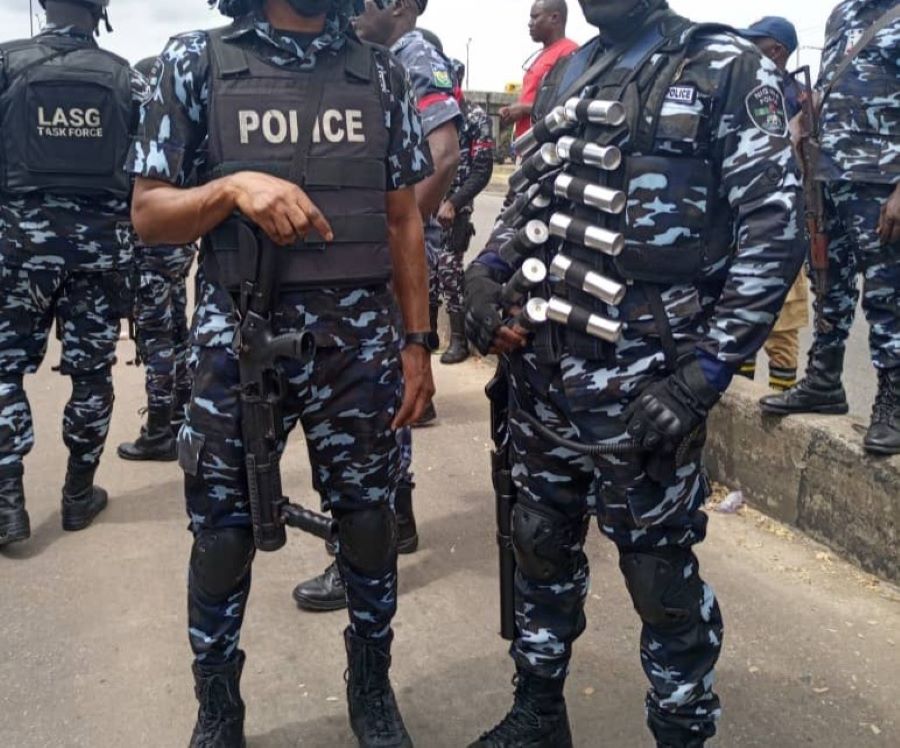
More significantly, an eyewitness who spoke to G&B Journal alleged that police officers deployed to the area stood aside as APC supporters attacked NDC participants.
If substantiated, that allegation raises questions far more serious than whether the organisers ignored police advice.
Were officers present when the alleged attack began? Did they witness the destruction of campaign vehicles? Did they attempt to stop the attackers or make arrests? And if they did not intervene, why?
These are questions the police investigation cannot afford to overlook.
A POLICE STATEMENT THAT LEAVES CRITICAL QUESTIONS UNANSWERED
There is nothing inherently wrong with the police explaining that they advised against a road procession because of intelligence suggesting a possible security threat.
Indeed, if the Command had credible intelligence about an impending attack, the public deserves to know what preventive measures were taken to protect those attending the rally.
But that explanation also invites another question: if the police anticipated violence, why were adequate arrangements apparently insufficient to prevent the incident?
The Command’s statement establishes that the organisers were warned. It does not establish who initiated the violence.
Nor does it provide an account of the alleged attack on NDC supporters, the reported destruction of their vehicles or the allegation that officers failed to intervene.
The distinction matters.
A political organisation’s decision to disregard police advice does not transfer responsibility for an attack to that organisation. Neither does it absolve anyone who may have participated in violence against its supporters.
The police must investigate the circumstances surrounding the entire incident, not simply the part that appears to support the explanation contained in their initial statement.
There is also the question of whether the five injured persons mentioned by the police represent all those injured during the incident or only those whose injuries were recorded after officers arrived.
If NDC supporters were injured during an earlier attack, their accounts and medical records should form part of the investigation.
The destruction of campaign vehicles, if established, should equally attract criminal investigation.
THE ALLEGATION OF POLICE INACTION
Perhaps the most disturbing allegation emerging from Asaba concerns the conduct of the police officers reportedly present when the violence began.
An eyewitness has told G&B Journal that officers stood aside while APC supporters allegedly attacked NDC supporters.
This is an allegation that requires urgent clarification.
The police are not merely observers at political gatherings. They are constitutionally mandated to maintain public order, protect lives and property, prevent crime and enforce the law without political discrimination.
If officers witnessed an attack and failed to intervene, the public deserves an explanation.
If, on the other hand, the officers were overwhelmed, outnumbered or prevented from intervening by circumstances at the scene, the Command should provide that account.
Either way, the issue cannot simply disappear beneath an announcement that investigations have commenced.
A credible investigation must examine not only the conduct of political supporters but also the actions and possible omissions of the officers deployed to maintain security.
The identities of those involved, the sequence of events, available video recordings and eyewitness accounts should provide a basis for establishing what actually happened.
The police must also explain whether any individuals suspected of participating in the alleged initial attack have been identified or invited for questioning.
An investigation that examines only the subsequent confrontation, without establishing what triggered it, would leave the most important part of the incident unresolved.
THE DANGEROUS POLITICS OF ‘RIG AND DIE’
The Asaba incident also comes at a particularly sensitive moment in Nigeria’s political evolution.
With the 2027 general elections approaching, political rhetoric is becoming increasingly combative, with threats and inflammatory declarations threatening to replace the democratic contest of ideas.
The controversial ‘Rig and Die’ declaration attributed to former Deputy Senate President Ovie Omo-Agege has become another illustration of the increasingly aggressive language surrounding the coming elections.
The statement, understood by its defenders as a warning against electoral malpractice, nevertheless raises concerns about the normalisation of violent language in a political environment already burdened by mistrust and partisan hostility.
Political leaders have a responsibility to lower tensions, not encourage an atmosphere in which supporters begin to regard opposing political groups as enemies.
But responsibility does not rest with politicians alone.
Security institutions must demonstrate, through their conduct, that political affiliation offers neither protection from the law nor grounds for discriminatory treatment.
When supporters of one political party believe they can attack another party’s gathering without consequence, the implications extend beyond the immediate victims.
It sends a dangerous message about who can exercise political freedoms safely and who may be left exposed.
This is particularly concerning in a democracy where political rallies, campaign processions and public engagements are legitimate expressions of political participation, subject to applicable laws and reasonable security regulations.
THE OPPOSITION QUESTION
There is an even bigger democratic concern beneath the Asaba incident.
Nigeria’s political space is already characterised by deep mistrust, accusations of institutional partisanship and fears about the ability of opposition groups to organise freely.
In such an atmosphere, the neutrality of the police becomes indispensable.
The responsibility of the police is not to determine which political party deserves protection or which party’s supporters are more entitled to occupy public spaces.
It is to enforce the law equally.
The NDC’s decision to proceed with its procession despite the police advisory can be examined independently. If the organisers violated any applicable regulations, the police are entitled to investigate.
But the same standard must apply to anyone who allegedly attacked the procession, destroyed vehicles, injured participants or disrupted a lawful political activity.
There must not be one set of rules for the organisers of a rally and another for those accused of attacking it.
Neither should the political identity of an alleged perpetrator determine the urgency with which the police investigate an offence.
THE QUESTIONS THAT MUST NOT DISAPPEAR
For the Delta State Police Command, the challenge is now to demonstrate that its investigation will be comprehensive, transparent and impartial.
Who attacked the NDC supporters first?
Were APC supporters involved in the alleged attack, and have any suspects been identified?
What happened to the campaign buses and vehicles reportedly destroyed during the incident?
Were police officers present when the alleged initial attack occurred, and what did they do?
Why does the Command’s statement emphasise the NDC’s decision to disregard its security advice without addressing the allegations surrounding the alleged initial attack?
And, perhaps most importantly, will the conduct of the officers deployed to the area form part of the investigation?
The Commissioner of Police, CP Samuel E. Erale, has condemned the violence and reiterated that political parties are free to conduct lawful political activities.
That assurance is welcome.
But political freedom cannot exist merely as a declaration in a police press release. It must be protected in practice, particularly when political tensions threaten to spill into physical violence.
The death recorded in Asaba should not become another casualty figure in Nigeria’s long history of politically motivated violence, followed by an investigation whose conclusions are never fully explained.
Nor should the incident be reduced to a warning against road processions while the circumstances surrounding the alleged attack remain unanswered.
Those who initiated the violence, those who retaliated, and any officers who may have failed in their responsibilities must all face appropriate scrutiny.
When political violence breaks out, the first responsibility of the police is not to construct a narrative around who disobeyed a security advisory. It is to establish who initiated the violence, who participated in it, whether officers failed to intervene and why citizens exercising their democratic rights were left vulnerable.
In Asaba, those questions remain unanswered.
And in a country approaching another fiercely contested election, the answers matter far beyond Delta State.
X-@theGBJournal|email:gbj@govbusinessjournal.com|govandbusinessj@gmail.com