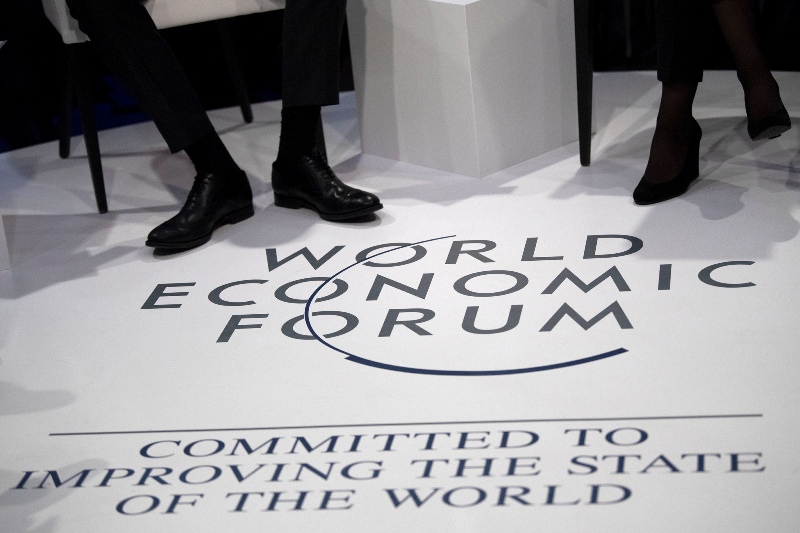

…Over 1,000 global leaders gathered in New York to drive action on climate and nature, responsible AI and frontier technologies, and the mobilization of capital for greater impact.
…The meetings brought together global leaders for high-level working sessions across the WEF’s long-standing communities to advance solutions that no sector can deliver alone.
FRI SEPT 25 2026-theGBJournal| The World Economic Forum’s Sustainable Development Impact Meetings 2026 convened leaders in New York for high-level working sessions to advance solutions that no single actor or sector can deliver alone.
The discussions took place amid fast-evolving economic, technological and geopolitical dynamics, as well as wider environmental challenges. Participants explored how to advance resilient economic growth and sustainable development, build responsible artificial intelligence (AI) and frontier technologies that create economic and societal value, and mobilize capital for greater impact.
The meetings, held alongside the 81st United Nations General Assembly High-Level Week, brought together 600 business executives, 100 top officials from government and international organizations, more than 100 civil society leaders, and representatives from academia and the next generation. The meetings focused on long-term impact and building momentum towards the World Economic Forum Annual Meeting 2027 in Davos, Switzerland.
“As prolonged conflicts and geopolitical tensions put energy, economic and diplomatic systems under strain, business leaders can play a critical role in shaping what comes next,” said Mirek Dušek, Managing Director, World Economic Forum. “By investing boldly, building resilience before crisis hits and working across borders when cooperation is hardest, they can help economies and societies navigate change with speed and purpose.”
Economic growth and sustainable development
Economic growth and sustainable development cannot be seen as competing objectives; instead, economies that invest in climate and nature are better positioned for long-term resilience and prosperity. Amid escalating geopolitical risks, new approaches to investment, productivity, resilience and development are urgently needed to create resilient growth that can endure future shocks.
As part of a longstanding tradition, the meetings convened a high-level luncheon of the Informal Gathering of World Economic Leaders (IGWEL), bringing together 70 leaders from business, government, international organizations, civil society and academia to explore international cooperation amid geopolitical, geoeconomic and technological change, with a particular focus on economic growth and the implications of AI and other frontier technologies.
The WEF’s latest Chief Economists’ Outlook found the global economy stabilizing, though living costs are expected to rise faster than incomes across most regions.
The inaugural Chief Sustainability Officers’ Outlook showed sustainability progress holding steady or accelerating, despite uneven progress across sectors and regions and persistent concerns around compliance and AI’s environmental footprint.
Broadening economic opportunity also requires closing persistent gender gaps. The 20th edition of the Global Gender Gap Report found that 69.2% of the global gender gap is closed across 145 economies, but progress remains fragile: at the current pace, full parity is still 120 years away. Champions of the Global Gender Parity Sprint convened to advance pathways towards parity by 2030 across senior leadership, technology and financial markets.
Strengthening resilience to climate risks was another key focus. A framework for strengthening workforce resilience to extreme heat and a playbook on investing in place-based resilience offered practical approaches to address the $2.4 trillion in productivity at risk from extreme heat and growing insurance pressures.
New partnerships with the Mohamed bin Zayed Water Initiative and United Nations Development Programme will accelerate water innovation and country-level action on plastic pollution, with the latter formalized through an MoU signed at SDIM26.
Beyond climate-related risks, Risk Management, Reimagined outlined four shifts chief risk officers are making as uncertainty becomes structural rather than episodic, from predicting disruptions to preparing for them.
Forum initiatives including Circular Economy Transformation, Alliance of CEO Climate Leaders, UpLink and First Movers Coalition advanced low-carbon and circular solutions, with UpLink announcing innovation cohorts on restoration, low-carbon and circular systems, and carbon dioxide removal. The New Global Stakeholders initiative also highlighted how public-private cooperation can address emerging security risks and strengthen stability.
On industry, the Resilience-to-Growth Circularity Playbook outlined a three-step approach to turn circularity into a driver of resilience and growth. Meanwhile, the Future of Space Community explored how defence-driven investment in Earth intelligence can support climate action.
“As environmental pressures mount, sustainability is increasingly central to competitiveness, resilience, security and well-being. But progress remains uneven: solutions that are commercially compelling in one market can remain constrained by financing costs, infrastructure or policy in another, and the costs and benefits of the transition are not always shared evenly,” said Sebastian Buckup, Managing Director, World Economic Forum.
“In a more fragmented world, the task is to connect capital, technology and markets so that solutions can scale and deliver for people. SDIM showed why practical cooperation around these real-economy challenges remains an urgent priority.”
“The outlook for the global economy has improved, but resilience remains fragile. The Forum’s community of chief economists is concerned about geopolitical disruption, asset-price corrections and readiness for the next shock, and headline growth masks living costs rising faster than incomes across most regions,” said Saadia Zahidi, Managing Director, World Economic Forum. “A new economy demands a new approach to investing in jobs, developing talent and accelerating economic mobility.”
The next phase of AI and technology
AI and frontier technologies are being deployed across economies and societies, unlocking opportunities to boost productivity, accelerate scientific discovery and expand access to healthcare, education and climate solutions. Ensuring that these benefits are broadly shared requires collaboration to close gaps in access, governance, skills and trust.
Communities, including the AI Global Alliance, convened around a shared question: how to harness AI for economic growth without forcing a trade-off between sovereignty and access to capabilities. UpLink announced the winners of its Powering Tomorrow: Electricity Systems and AI in Supply Chains challenges, supporting solutions to strengthen energy systems and supply-chain resilience.
A report on more sustainable and resilient data-centre development highlighted efficiency measures that could reduce energy use by 6.5–11%, while analysis of more than 600 AI start-up solutions identified ways to strengthen supply-chain resilience.
A further report outlined four shifts needed to manage structural uncertainty, while new research on the Mediterranean examined the region’s potential as a production, energy and innovation corridor supporting resilient European value chains.
A report on New Economy Skills called for hybrid training, expanded apprenticeships and portable credentials as demand for trade and manufacturing workers rises.
Leaders from the Future of Jobs Initiative, Future Skills Alliance, Education 4.0 and Chief Learning Officers communities examined how AI is reshaping career pathways, highlighting the need to better connect education and employment as 63% of employers identified skills gaps as a key barrier to transformation.
The Global Coalition for Digital Safety advanced a life-cycle approach to child-safe AI, while a session on AI for Social Innovation laid the groundwork for a coalition set to launch in January 2027, with a goal of mobilizing $500 million by 2030.
“AI advancement is becoming a capital-intensive race set to reward the economies and corporations that can meet rising demands for compute, energy, infrastructure and talent. New approaches from public and private sector leaders are needed to develop the right skills, access and guardrails to help ensure the benefits of AI and frontier technologies are shared broadly,” said Matthew Blake, Managing Director, World Economic Forum.
Directing capital where it can deliver the greatest impact
Many of the communities facing the greatest development and climate challenges are also those where investment is hardest to mobilize. Public finance remains essential, particularly during times of crisis, but fiscal pressures and high sovereign debt limit what it can achieve alone.
The meetings explored how public finance, private investment and philanthropy can work together to unlock capital and support locally led, commercially viable solutions, particularly in fragile and frontier markets.
The InvestFrontier Leadership Group, part of an initiative launched by the World Economic Forum and the European Commission, also met to advance catalytic finance and locally led, commercially viable solutions in fragile and frontier markets.
The Resilience Consortium identified critical infrastructure needs, barriers to private investment and priorities for public-private action. These findings will inform its forthcoming Business Readiness and Resilience Briefing Paper. In addition, the Urban Risk and Resilience community brought together 30 leaders to address the estimated $800 billion annual urban resilience investment gap through 2030.
More than 20 Schwab Foundation social innovators and entrepreneurs contributed to discussions on development, climate adaptation and financing solutions, while roundtables on water, longevity and mining explored innovation, finance, procurement and partnerships to close the pilot-to-scale gap.
The Faith in Action Community convened investment, policy and faith leaders to explore how faith-based principles can inform decisions on capital, technology, work and long-term value, while supporting more inclusive and resilient economies.
“Public finance cannot meet the scale of development challenges alone. Mobilizing private investment and philanthropy, alongside locally led solutions, will be essential to strengthen resilience and drive growth in fragile and frontier markets,” said Sheba Crocker, Managing Director, World Economic Forum.
The Sustainable Development Impact Meetings 2026 (SDIM26) took place in New York, USA on 21-24 September and brought together senior leaders from across sectors and regions to advance solutions to shared opportunities and challenges, with a particular focus on long-term impact and building momentum before the World Economic Forum Annual Meeting 2027.
X-@theGBJournal|email:gbj@govbusinessjournal.com|govandbusinessj@gmail.com