
MON AUG 31 2026-theGBJournal| A proposed law to regulate foreign aid risks undermining the independence of civil society organizations and shrinking civic space in Nigeria, Human Rights Watch said today.
The organization said the National Assembly should reject provisions that would give authorities undue influence over the funding and activities of independent organizations.
In May 2026, the Senate introduced the Foreign Aid (Regulation, Transparency and Disclosure) Bill, which seeks to regulate the use of foreign aid, grants, and donations in Nigeria.
The bill would establish a regulatory commission to oversee foreign aid. The bill says its intention is to promote transparency and accountability, align aid with national development priorities, prevent the misuse and duplication of projects, and improve public access to information about foreign-funded activities.
“Independence is essential to the work of civil society organizations working to scrutinize government actions, expose wrongdoing, hold those in power accountable, and advocate for reforms,” said Anietie Ewang, Nigeria researcher at Human Rights Watch.
“Legislation that seeks to align foreign funding with government priorities risks expanding government control over independent civil society and suppressing dissent.”
The bill, which Human Rights Watch has reviewed, has passed its first and second readings, indicating the Senate’s approval of its general principles.
It has been referred to the Senate Committee on National Planning and Economic Affairs for detailed review, public hearings, and stakeholder consultations.
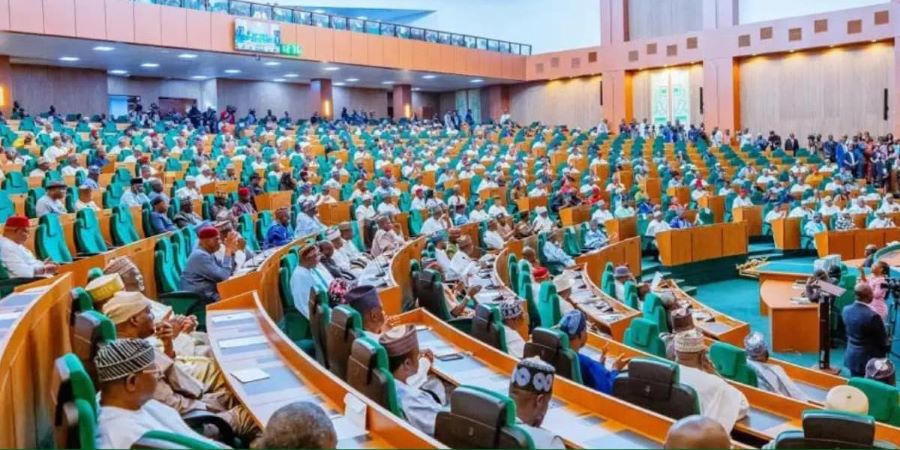
The committee will report its recommendations to the Senate before the bill proceeds to a third reading and final vote. If passed by the Senate, it will also require approval by the House of Representatives and presidential assent before it becomes law.
The committee was given four weeks from July 22 to conduct its review and consultations and is expected to report its recommendations to the Senate at any time.
Nigeria’s National Assembly has, over the years, considered several legislative proposals seeking to expand government regulation and oversight of civil society organizations.
Many faced significant opposition and failed to advance, including a 2016 bill to establish a Nongovernmental Organizations Regulatory Commission that stalled after a public hearing in 2017, and a similar bill introduced in 2020 was withdrawn following opposition from legislators.
The bill raises many of the same concerns for civic space as its predecessors, Human Rights Watch said.
It would require, among other things, that “foreign aid-funded activities shall align with Nigeria’s national development plans and priorities.” This vaguely worded provision offers no meaningful clarity on how that would be assessed, or what activities could be considered inconsistent with government priorities.
Its broad and ambiguous language creates significant uncertainty for organizations engaged in human rights, governance, anti-corruption, and other accountability-related work that may challenge official policies or expose government shortcomings.
Failure to comply with the bill’s requirements could trigger financial penalties, revocation of operating licenses, and even jail terms.
Independent organizations play a vital role in promoting transparency, documenting abuses, advocating reforms, and holding those in power accountable, Human Rights Watch said.
Requiring all foreign-funded activities to align with government priorities would undermine civil society independence and could be used to restrict organizations whose work is critical of those in power, creating opportunities to suppress dissent and limit democratic participation.
The Nigerian Constitution guarantees the rights to freedom of expression and association. These rights are also protected under the International Covenant on Civil and Political Rights and the African Charter on Human and Peoples’ Rights, both of which Nigeria has ratified and is obligated to uphold.
The United Nations special rapporteur on the rights to freedom of peaceful assembly and of association has repeatedly affirmed that the ability of associations to seek, receive, and use resources, including foreign funding, is an integral part of the right to freedom of association and essential to the effective operation of independent organizations.
Likewise, the African Commission on Human and Peoples’ Rights Guidelines on Freedom of Association and Assembly in Africa affirm that associations should have the right to seek, receive, and use funds freely, including from foreign states, international organizations, and other external sources. The guidelines state that governments should not restrict otherwise legitimate activities simply because an organization receives foreign funding.
Conditioning access to foreign funding on conforming with government priorities would severely undermine civil society independence, Human Rights Watch said.
The proposed bill also includes an array of new requirements around financial integrity.
Organizations operating in Nigeria already face extensive registration, financial reporting, and regulatory requirements. Nonprofits must register with the Corporate Affairs Commission as incorporated trustees or other appropriate entities and comply with applicable annual reporting requirements.
Organizations are also subject to registration and reporting obligations under the Special Control Unit Against Money Laundering, the Economic and Financial Crimes Commission, tax authorities, and other regulators. The bill does not include any explanation of why its additional reporting and other requirements are necessary, or how they would complement existing processes and requirements.
“Transparency and accountability are legitimate objectives, but they should not become a pretext to undermine the independence of civil society,” Ewang said. “Nigeria should not create new layers of regulation that give the authorities excessive control over organizations simply because they receive foreign funding.”
X-@theGBJournal|email:gbj@govbusinessjournal.com|govandbusinessj@gmail.com