
…The reclassification is scheduled to take effect from the open of trading on September 21, 2026.
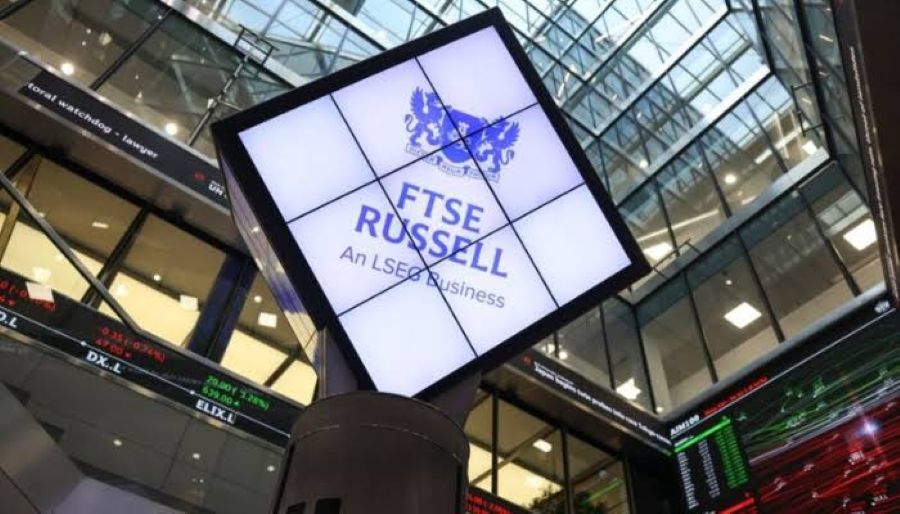
THUR AUG 27 2026-theGBJournal| Nigeria is set to return to FTSE Russell’s Frontier Market status, potentially ending months of uncertainty over its re-entry into one of the key global equity market classifications, according to a statement released on Thursday by Kamorudeen Yusuf, Personal Assistant on Special Duties to President Bola Ahmed Tinubu.
FTSE Russell is expected to formally confirm the decision later this week, according to the statement.
The reclassification is scheduled to take effect from the open of trading on September 21, 2026.
The development would restore Nigeria to a classification it lost three years ago, when FTSE Russell moved the country from Frontier to Unclassified status following persistent difficulties faced by international investors in accessing foreign exchange and repatriating capital.
The latest development follows a reversal of sorts in the status of Nigeria’s planned upgrade.
In September 2025, FTSE Russell placed Nigeria on its Watch List for possible reclassification from Unclassified to Frontier status, saying the market had met the five Quality of Markets criteria required for Frontier classification.
The index provider also noted that foreign-exchange queues had been cleared and that international institutional investors were no longer reporting material delays in repatriating capital.
In April 2026, FTSE Russell went further, formally confirming Nigeria’s reclassification from Unclassified to Frontier Market status, with the change scheduled to become effective on September 21.
The decision was based principally on improvements in market accessibility, FX conditions and the ability of international investors to repatriate funds.
That decision, however, was subsequently put under further review.
The G&B Journal notes that the problem was not a reversal of Nigeria’s broader capital-market reforms, but the timing and practical implications of the country’s migration from a T+2 to a T+1 settlement cycle on June 1.
FTSE Russell became concerned that, although Nigeria formally retained its Delivery versus Payment framework, the shorter settlement window could effectively force international institutional investors to have funds available before executing trades.
In a June 30 review, FTSE Russell said the T+1 regime “could result in Nigeria becoming a de facto prefunded market for international institutional investors.”
It considered a requirement to prefund equity trades negative under its Settlement Cycle (DvP) criterion, one of the five core Quality of Markets requirements for Frontier Market status.
That explains why an upgrade that had already been approved in April was subsequently delayed: FTSE Russell wanted to assess the real-world experience of foreign investors, rather than rely solely on the formal rules governing Nigeria’s settlement system.
The concern was particularly relevant for global investors operating across different time zones, currencies, custodians and settlement arrangements.
A one-business-day settlement window can leave considerably less time to execute FX transactions, transfer funds and complete custody processes than a T+2 framework.
The delay therefore represented a technical market-access test rather than a conventional downgrade.
Securities and Exchange Commission (SEC) subsequently sought to remove that uncertainty.
In an August 12 clarification, the SEC said equities and commodities settled through the Central Securities Clearing System ( CSCS) would continue to operate under the standard Delivery versus Payment framework, with settlement at 5 p.m. on T+1.
Crucially, it stated: “foreign portfolio investors are not required to prefund their accounts for trades in the Nigerian Capital Market.”
The SEC also said capital-market operators dealing with foreign portfolio investors must maintain controls to ensure that trades are funded and settled within the prescribed period.
That clarification directly addresses the issue that prompted FTSE Russell’s review.
If confirmed, the reclassification will not automatically transform Nigeria’s capital market, but it could improve its visibility and investability among international portfolio managers.
FTSE Frontier indices are used as benchmarks and as the basis for index-tracking investment products.
A return to the classification therefore gives Nigeria a clearer route back into the investment universe followed by global frontier-market funds.
The immediate economic benefit is likely to come less from the label itself than from the potential reallocation of funds by investors whose mandates are linked to FTSE Russell classifications.
For Nigeria, that could mean additional portfolio inflows, greater trading activity and potentially deeper liquidity in eligible equities.
It also offers an external measure of progress in the government’s efforts to improve FX-market functioning, capital repatriation and market infrastructure.
The significance is heightened by Nigeria’s history with the index provider.
FTSE Russell removed the country from Frontier status in September 2023 after finding that international institutional investors continued to face material difficulties repatriating capital and executing FX transactions at rates that could support index replication.
The proposed return therefore represents more than a classification change.
It would signal that some of the market-access problems that contributed to Nigeria’s 2023 exit have been substantially addressed.
Additional reporting By Charles IKE-OKOH
X-@theGBJournal|email:gbj@govbusinessjournal.com|govandbusinessj@gmail.com