
THUR AUG 13 2026-theGBJournal| Nigeria has pushed back against a critical assessment of its fiscal transparency by the US State Department, arguing that the report should be viewed as a narrow benchmark of disclosure practices rather than a comprehensive verdict on the country’s public financial management.
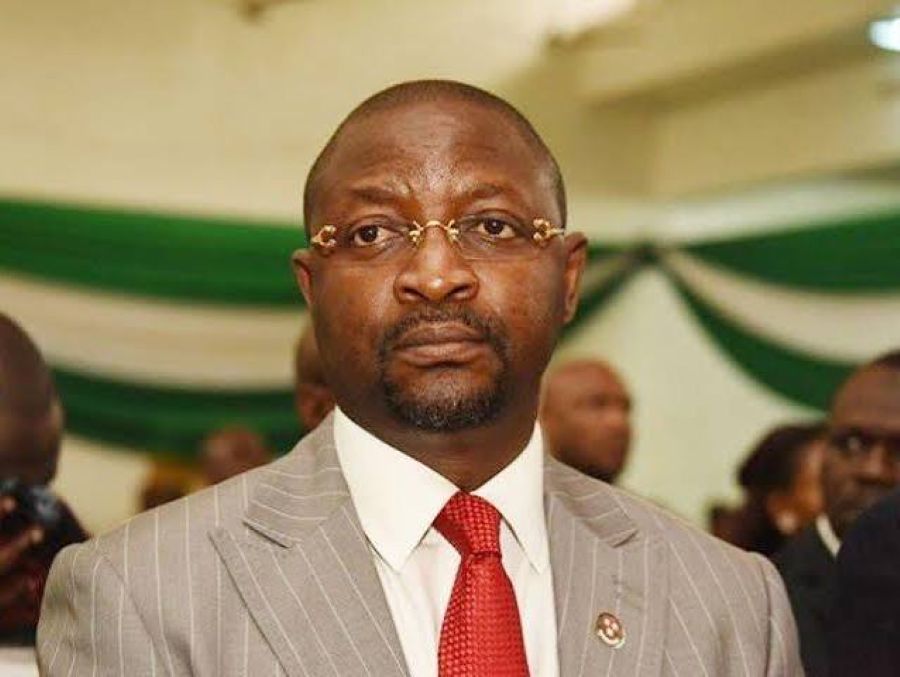
The response, issued by Sunday Dare, Special Adviser on Media and Public Communication to President Bola Tinubu, comes after the US Department of State’s 2026 Fiscal Transparency Report highlighted shortcomings around procurement disclosure, budget-execution reporting and audit processes.
In the report, the U.S State Department assessed Nigeria as not meeting the minimum fiscal transparency requirements for 2026.
According to the State Department, ”during the review period, the government made its enacted budget and end-of-year report widely and easily accessible to the public, including online, but did not publish its executive budget proposal within a reasonable period.
The government made information on debt obligations, including major state-owned enterprise debt, publicly available, but budget documents did not provide a substantially complete picture of the government’s revenues and expenditures, or break down expenditures to support executive offices in the budget.
Actual revenues and expenditures did not reasonably correspond to those in the enacted budget.
The supreme audit institution did not meet international standards of independence or publish substantive reports but did have access to the entire executed budget.
The sovereign wealth fund had a sound legal framework and disclosed its source of funding and general approach to withdrawals.
The government specified in law the criteria and procedures for awarding natural resource extraction contracts and licenses and followed existing regulations in practice. The government did not publish accessible information on public procurement contracts.”
The State Department equally recommended steps Nigeria could take to improve transparency including:
-Making its executive budget proposal widely and easily accessible to the public, including online;
-Providing in the budget a substantially complete picture of the government’s revenues and expenditures;
-Breaking down expenditures to support executive offices in the budget;
-Ensuring actual revenues and expenditures reasonably correspond to those in the enacted budget;
-Ensuring the supreme audit institution meets international standards of independence and publishes audit reports of the government’s executed budget; and
-Publishing accessible information on public procurement contracts.
Dare said the Federal Government recognised the importance of the findings but cautioned against interpreting them as a complete assessment of Nigeria’s broader fiscal reforms.
“The U.S. Fiscal Transparency Report is a specific assessment against the Department of State’s minimum fiscal-transparency requirements,” Dare said, particularly regarding the disclosure of national budget information, government contracts and natural-resource licences.
The government pointed to what it described as progress acknowledged in the US report, including the public availability of budget documents and information on government debt obligations.
It also cited initiatives including the Open Treasury programme, public budget documentation, debt disclosures and public procurement reforms as evidence of efforts to improve fiscal accountability.
G&B Journal analysts notes that the government’s response reflects an important distinction between fiscal transparency and overall fiscal governance.
“The US assessment is effectively testing whether citizens and investors can see how public money is budgeted, spent and audited.
The federal government is correct that this does not capture every reform taking place across Nigeria’s public-finance system, but the weaknesses identified matter because transparency is ultimately about whether outsiders can independently verify how public resources are being used.”
The procurement findings could be particularly significant. Greater disclosure of government contracts allows businesses, investors and citizens to assess how public spending is allocated, while stronger budget-execution reporting makes it easier to determine whether approved spending actually translates into delivered projects and services.
For Nigeria, the issue also has implications beyond its relationship with Washington. Greater fiscal transparency can strengthen investor confidence, improve the credibility of government borrowing and reduce uncertainty around public finances.
Dare said the government was strengthening digital procurement and other systems intended to improve the accessibility, reliability and timeliness of public financial information, while also working to strengthen audit institutions.
“The appropriate response, therefore, is neither to dismiss the findings nor to portray them as a complete characterization of Nigeria’s fiscal governance,” he said. “Rather, the report provides an external benchmark against which existing reforms can be further strengthened.”
An analyst said the government’s strongest response would ultimately be measured by improvements in disclosure rather than rebuttals.
“If procurement records, budget execution data and audit findings become more timely and accessible, the criticism effectively becomes a reform agenda,” the analyst said. “That would be more consequential for investors and citizens than debating the scope of the US report.”
The Federal Government said its objective remained a fiscal system that is more transparent, accountable and credible, arguing that better visibility over public resources would strengthen confidence, support investment and improve the efficiency of government spending.
By Charles Ike-Okoh
X-@theGBJournal|email:gbj@govbusinessjournal.com|govandbusinessj@gmail.com