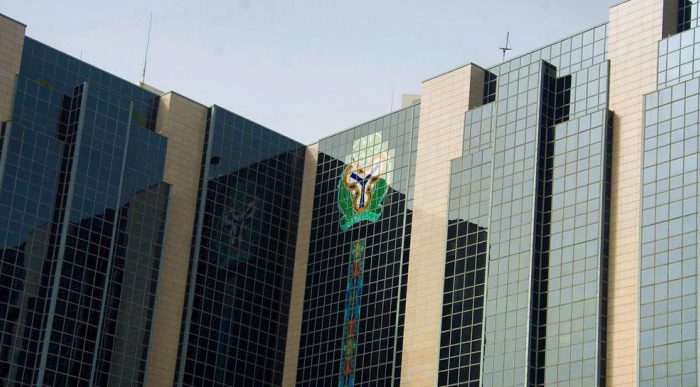

SAT JULY 25 2026-theGBJournal| Credit to Nigeria’s private sector edged higher in June, but lending momentum remained constrained by elevated borrowing costs, highlighting the continued impact of the Central Bank of Nigeria’s (CBN) tight monetary policy on business financing despite an expansion in overall liquidity.
CBN data showed that credit to the private sector rose by 2.7 per cent month-on-month to N83.26 trillion in June from N81.04 trillion in May.
On an annual basis, private sector credit expanded by 9.4 per cent from NGN76.13 trillion recorded in June 2025, indicating that lending has continued to recover, albeit at a measured pace.
The modest monthly increase comes as the CBN maintains one of its most restrictive monetary policy stances in recent years, with high benchmark interest rates continuing to suppress loan demand and temper banks’ appetite for extending new credit.
The elevated cost of borrowing has remained a significant constraint for businesses seeking expansion capital, particularly small and medium-sized enterprises that are more sensitive to financing costs.
While private sector lending strengthened, credit to the government eased by 0.9 per cent month-on-month to N40.03 trillion from NGN40.38 trillion in May.
The decline came despite continued domestic borrowing by the Federal Government to finance its fiscal deficit, suggesting a moderation in banks’ net exposure to public sector lending during the month.
Meanwhile, currency in circulation declined by 2.9 per cent to N5.52 trillion from N5.69 trillion in May. Despite the monthly contraction, cash outside the banking system remains elevated, reflecting the persistent dominance of cash transactions across Nigeria’s large informal economy and continued reliance on physical currency for day-to-day commercial activities.
Broad money supply (M3) expanded by 3.1 per cent month-on-month to N133.25 trillion in June, up from N129.21 trillion in May. The increase was driven primarily by a 4.7 per cent rise in quasi-money, which includes savings and time deposits, alongside a marginal 0.2 per cent increase in narrow money.
The expansion in money supply alongside restrained credit growth underscores the complex balance facing policymakers. While liquidity within the financial system has continued to increase, the transmission into productive private sector lending remains muted as higher interest rates discourage borrowing and investment.
Looking ahead, analysts expect private sector credit growth to remain subdued over the coming months.
The Monetary Policy Committee’s decision in July to leave interest rates unchanged signals that financing conditions will remain tight in the near term, limiting businesses’ access to affordable credit and potentially slowing private sector investment and economic expansion until inflationary pressures ease sufficiently to allow monetary policy to be relaxed.
X-@theGBJournal|Facebook-the Government and Business Journal|email:gbj@govbusinessjournal.com|govandbusinessj@gmail.com