
…The month-long tournament generated more than $40 billion in economic activity, with FIFA itself projected to earn a record $15 billion
…It was a tournament that rewrote records, created new heroes, celebrated old legends and reminded the world why football remains its universal language
…Africa, too, found fresh reasons to celebrate. Cape Verde, one of the tournament’s smallest nations, captured hearts with fearless performances that defied expectations
By Charles IKE-OKOH
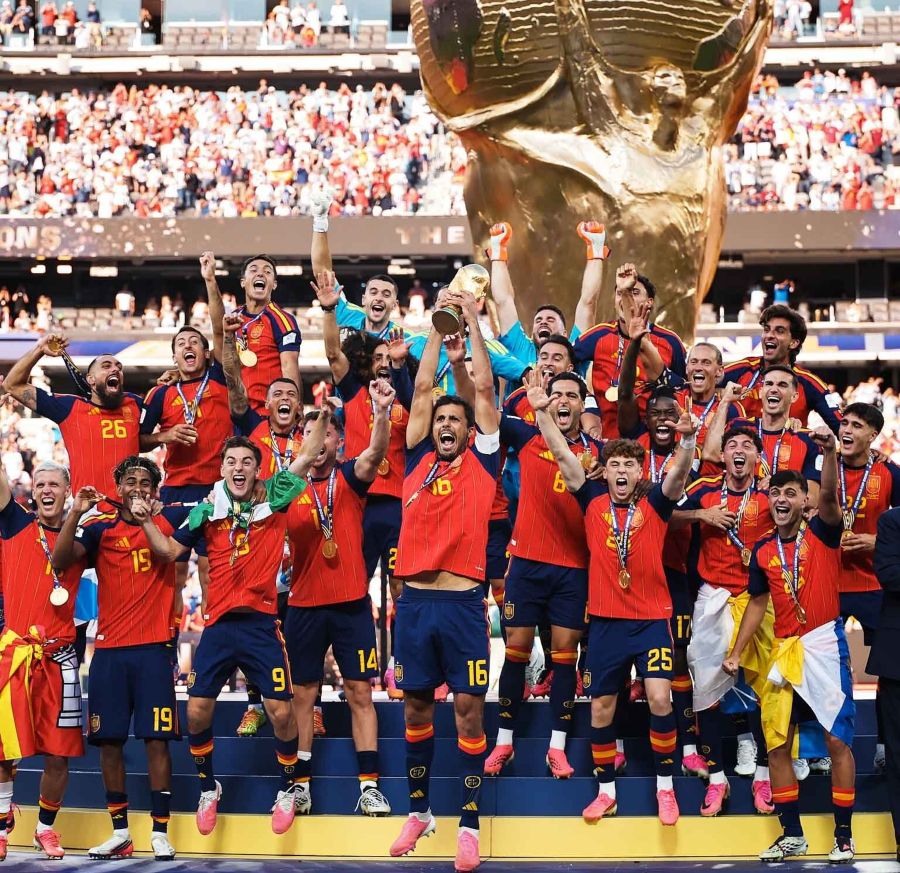
MON JULY 20 2026-theGBJournal| When the final whistle blew and Spain edged Argentina 1-0 through a dramatic late strike from Ferran Torres, football crowned a new world champion.
But the 2026 FIFA World Cup will be remembered for much more than Spain’s triumph.
It was a tournament that rewrote records, created new heroes, celebrated old legends and reminded the world why football remains its universal language.
Spain’s victory was built on remarkable discipline. The champions conceded just one goal in eight matches, producing one of the finest defensive displays in World Cup history while combining possession football with clinical efficiency.
Yet even that achievement became just one chapter in a tournament overflowing with unforgettable stories.
Every World Cup announces a new generation. In North America, the baton passed before the world’s eyes.
Lionel Messi, one of football’s greatest icons, made what many believe was his final appearance on the biggest stage.
Every touch drew admiration from packed stadiums, but the tournament also belonged to fearless teenagers.
Spain’s Lamine Yamal dazzled defenders with breathtaking skill, pace and maturity far beyond his years, becoming one of the defining faces of the competition.
It was football’s timeless cycle: legends taking their final bow as new stars stepped confidently into the spotlight.
Africa, too, found fresh reasons to celebrate.
Cape Verde, one of the tournament’s smallest nations, captured hearts with fearless performances that defied expectations.
Their goalkeeper emerged as one of the stories of the competition, producing spectacular saves that turned him into an overnight global sensation. His heroics became social media highlights, proving once again that the World Cup is where unknown players become household names.
For African football, the tournament reinforced an enduring lesson: organisation, belief and tactical discipline can narrow the gap with traditional football powers. The continent may not have lifted the trophy, but it left with renewed confidence that its breakthrough moment is drawing closer.
The numbers told their own story.
The expanded tournament produced record-breaking crowds as fans filled magnificent stadiums across the United States, Mexico and Canada.
It demonstrated why football has become one of the world’s biggest economic industries.
The month-long tournament generated more than $40 billion in economic activity, with FIFA itself projected to earn a record $15 billion in commercial revenue from broadcasting rights, sponsorships, hospitality, licensing and ticket sales.
The tournament itself drew a record prize pool of $871 million, record 5 million tickets sold, and 6 million spectators in over 104 matches played- the highest in the history of the tournament.
Millions more watched from homes, fan parks and giant public screens, making it one of the most watched sporting events in history.
Goals flowed freely throughout the competition-308 in total, averaging 2.96 goals per game, reflecting football’s growing emphasis on attacking play and entertainment.
Off the pitch, the economic impact stretched far beyond football.
Hotels overflowed with visitors.
Airlines added extra flights. Restaurants, transport operators and local businesses enjoyed unprecedented demand as supporters travelled across three nations.
Host cities experienced a tourism boom, while participating countries benefited from increased global exposure, stronger commercial partnerships and renewed interest in their football brands.
Hotels filled up months in advance, airlines added extra flights, restaurants overflowed with visitors and local businesses enjoyed an unprecedented tourism boom.
Yet perhaps the tournament’s greatest success lay beyond statistics.
This was a celebration of cultures unlike any before it.
Mexican mariachi bands performed alongside American marching bands. Canadian hospitality blended effortlessly with football chants from Buenos Aires, Lagos, Madrid, Tokyo and Casablanca.
Streets became festivals of colour as jerseys, flags, music and food from every continent mixed into one extraordinary month-long celebration.
The World Cup reminded everyone that football is more than a game. It is culture, commerce, diplomacy and entertainment rolled into one.
Children found new heroes. Veterans received emotional farewells. Small nations earned global respect. Giants discovered that reputations alone win nothing.
As fans head home and stadium lights fade, the memories remain: Torres’ title-winning strike, Spain’s defensive masterclass, Messi’s final dance, Yamal’s dazzling emergence, Cape Verde’s fairytale and millions of strangers united by ninety minutes of hope.
World Cup 2026 did not simply produce a champion. It produced stories that will be told for generations.
X-@theGBJournal|Facebook-the Government and Business Journal|email:gbj@govbusinessjournal.com|govandbusinessj@gmail.com