
MON JULY 06 2026-theGBJournal| The federal government rejected claims that it spent more than N8 trillion, or roughly 2% of gross domestic product, outside the approved budget, saying the allegations stem from a misreading of the International Monetary Fund’s 2026 Article IV Consultation Report and do not reflect unlawful or unapproved public expenditure.
The clarification follows growing public debate after commentaries cited remarks attributed to the IMF’s representative in Nigeria and the Fund’s latest assessment of Africa’s largest economy to suggest the government had operated a “shadow budget.”
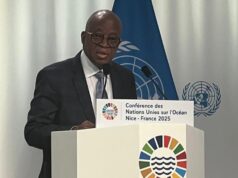
Finance Minister and Coordinating Minister of the Economy Taiwo Oyedele said the interpretation was inaccurate, arguing that the IMF’s observations related to fiscal reporting practices rather than the legality of government spending.
The controversy emerged after analysts and commentators interpreted the IMF’s 2026 Article IV Consultation as indicating that government expenditure equivalent to about 2% of GDP, estimated at more than N8 trillion, had occurred outside the federal budget.
The claims fueled concerns over fiscal transparency and compliance with Nigeria’s constitutional budget process.
In a statement issued on Sunday, Oyedele dismissed the allegations, insisting that the federal government cannot legally spend public funds outside the constitutional framework established by the National Assembly.
According to him, Sections 80 to 83 and 162 of Nigeria’s Constitution require all public expenditure to be backed by appropriations or other statutory authorities enacted by parliament.
Federal spending, he said, is implemented through Appropriation Acts, Supplementary Appropriation Acts and other laws passed by the National Assembly, while multi-year infrastructure projects are executed under legally approved capital rollover provisions where necessary.
“The Federal Government does not operate a shadow budget or expend public funds outside the constitutional and statutory framework established for public finance,” Oyedele said.
He argued that allegations of secret spending worth trillions of naira lacked evidence, noting that critics had failed to identify specific projects allegedly executed without legislative approval.
The minister said much of the confusion arose from differences between budget presentation and fiscal reporting under international statistical standards used by the IMF and other multilateral institutions.
Nigeria’s public finance architecture, he explained, includes several expenditure items established under separate legislation that may not appear in the annual Appropriation Act in the same format but remain legally authorised.
These include statutory transfers to development commissions and government agencies, debt service obligations, costs of revenue collection retained by designated agencies, capital expenditure approved under separate budgets for certain institutions and the Federal Capital Territory, as well as legally authorised intervention programmes covering security, infrastructure and emergency responses.
Such expenditures, he said, are fully disclosed in fiscal reports and remain subject to legislative oversight, auditing and accountability mechanisms.
Oyedele also rejected suggestions that the reported N8 trillion represented an unaccounted expansion of Nigeria’s fiscal deficit.
He said a country’s fiscal deficit is determined by the relationship between total government revenue and expenditure, rather than by the financing channel through which projects are implemented.
Consequently, expenditures financed through supplementary appropriations, statutory transfers or other lawful mechanisms do not automatically increase the deficit.
The minister maintained that the IMF’s assessment focused primarily on improving the comprehensiveness, timing and presentation of fiscal reporting rather than questioning the legality of Nigeria’s spending practices.
He noted that the administration of President Bola Tinubu had already begun reforms aimed at consolidating multiple budget frameworks into a single fiscal structure.
During presentation of the 2026 Appropriation Bill to the National Assembly on Dec. 19, 2025, Tinubu formally requested lawmakers to discontinue the practice of overlapping budgets and adopt a unified budgeting framework.
According to Oyedele, Nigeria continues to strengthen public financial management through reforms designed to improve budget credibility, digitalise government financial processes, enhance treasury management and increase transparency in revenue administration.
He said those reforms have been acknowledged by the IMF, other multilateral institutions, international credit rating agencies and foreign investors.
While welcoming public scrutiny of government finances, the minister urged commentators to distinguish between appropriation, expenditure authorisation, financing arrangements and fiscal reporting standards, warning that mischaracterising technical observations as evidence of unlawful spending could undermine informed public debate.
He reaffirmed the government’s commitment to constitutional compliance, fiscal transparency and continued collaboration with the National Assembly, oversight institutions and development partners to strengthen Nigeria’s public financial management framework in line with international standards.
However, analysts are unsatisfied; They say the overall, the response is legally and procedurally convincing, but analytically incomplete.
”It explains why off-budget reporting can exist without implying illegality, yet it stops short of providing the detailed fiscal reconciliation needed to fully settle questions about the reported N8 trillion,” one analysts told theG&BJournal in Lagos.
He said any investor, economist or market participant, will raise legitimate questions around the necessary numerical reconciliation, which is the most important missing element in the Oyedele’s denials.
X-@theGBJournal|Facebook-the Government and Business Journal|email:gbj@govbusinessjournal.com|govandbusinessj@gmail.com