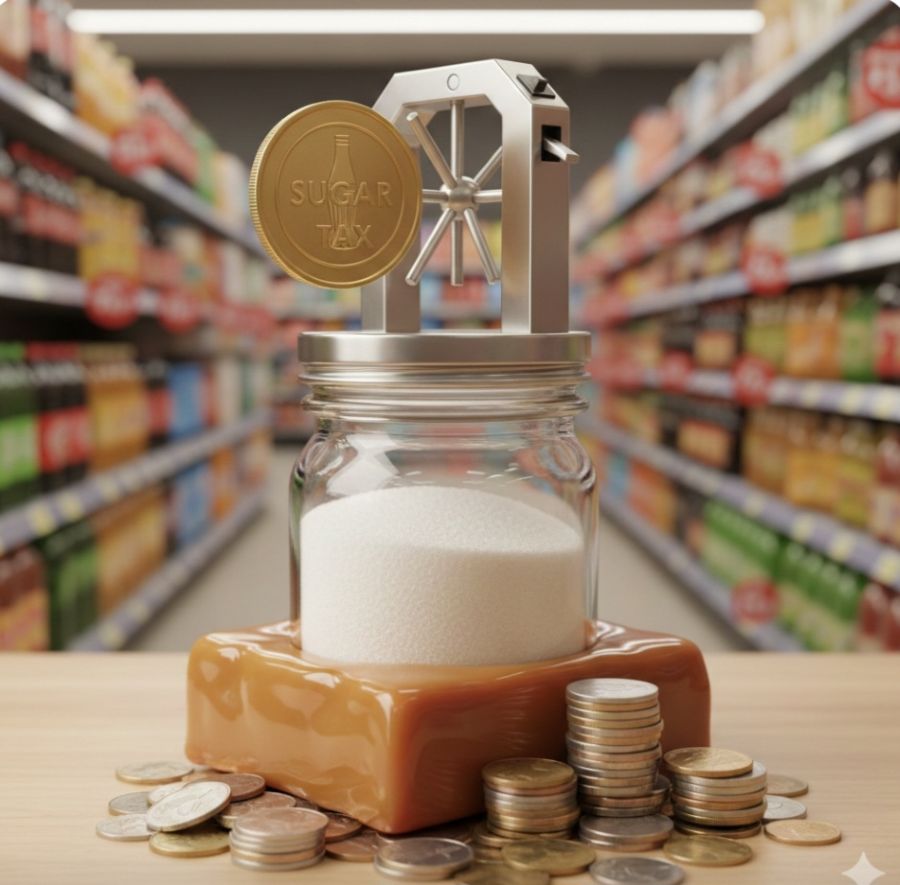

SUN JUNE 07 2026-theGBJournal| The Centre for the Promotion of Private Enterprise (CPPE) has called on Nigeria’s House of Representatives to reject the proposed Sugar-Sweetened Beverage (SSB) Tax Bill, expressing concern over the Senate’s approval of the legislation despite strong opposition from private sector stakeholders.
In a statement, the CPPE said it was “shocked and deeply concerned” by the Senate’s decision to advance the bill, noting that industry groups, including the Manufacturers Association of Nigeria (MAN), had repeatedly warned against additional fiscal burdens on producers.
”The bill is ill-timed, insensitive to prevailing economic realities, and inconsistent with the Federal Government’s commitment to reducing the tax burden on businesses,” the advocacy group said.
The CPPE noted that manufacturers are already grappling with elevated energy costs, high interest rates, exchange rate pressures, logistics challenges, weak consumer purchasing power, and multiple taxes and levies.
”The imposition of an additional excise tax on non-alcoholic beverages would further erode industrial competitiveness and weaken investment prospects.”
CPPE sees the tax as a threat to Manufacturing, Jobs and Value Chains.
It cites the food and beverage industry is one of the strongest pillars of Nigeria’s industrial economy, accounting for a significant proportion of manufacturing output and jobs and notes that any additional tax burden on the industry would inevitably increase production costs, raise consumer prices, weaken demand, reduce capacity utilisation and threaten jobs across the value chain.
It warns that at a time when the economy needs stronger industrial growth, this Senate proposal risks becoming a tax on production, investment and employment.
It said the proposed legislation also runs contrary to the spirit of the ongoing fiscal and tax reforms designed to create a more investment-friendly business environment.
According to the CPPE ”the 2026 fiscal policy framework already provides for an excise duty of N10 per litre on non-alcoholic beverages.”
Further escalation of the tax burden through additional legislation would create policy inconsistency, heighten regulatory uncertainty and undermine investor confidence.
Investors thrive on predictability. Frequent additions to the tax burden send the wrong signal to both existing and prospective investors.
CPPE recognises the importance of addressing the growing incidence of diabetes and other non-communicable diseases in the country. However, available evidence suggests that sugar taxes, on their own, deliver limited public health outcomes.
The major drivers of diabetes and related health conditions in Nigeria include poor dietary habits, excessive consumption of carbohydrate-rich foods, physical inactivity, sedentary lifestyles, inadequate health awareness and genetic predisposition.
Taxation does little to address these underlying factors. What it achieves is an immediate increase in production costs, higher consumer prices and additional pressure on investment and employment.
For CPPE, if the objective is to improve public health outcomes, lawmakers should prioritise legislations that directly address the root causes of lifestyle-related diseases.
These include nutrition education, public health awareness campaigns, promotion of exercise and physical activity, encouragement of healthier food choices, improved preventive healthcare systems, and urban planning that supports active living through walking and cycling infrastructure.
”Such interventions are more sustainable, more inclusive and less damaging to economic activity than punitive taxation targeted at a major manufacturing subsector. Public health goals should not be pursued through policies that inadvertently weaken production, investment and job creation.”
CPPE therefore strongly urges the House of Representatives to decline concurrence to the bill. The proposed legislation is fundamentally anti-growth. It penalises production, discourages investment, threatens jobs and imposes additional costs on already burdened consumers.
The House of Representatives has historically demonstrated sensitivity to the welfare of citizens and the concerns of productive enterprises. We urge members to uphold that tradition by rejecting this legislation in the interest of manufacturing sustainability, employment preservation, investment confidence and policy coherence.
CPPE argues that the economy needs relief, not additional taxation; support for production, not policies that weaken enterprise; and reforms that create jobs, not measures that put them at risk, at a time when businesses and households are struggling with unprecedented cost pressures.
”Public health objectives and economic growth are not mutually exclusive.
Nigeria can pursue both through policies that promote healthier lifestyles while protecting investment, jobs and industrial development. The Sugar-Sweetened Beverage Tax Bill fails this test and should therefore be rejected in its entirety,” CPPE said.
X-@theGBJournal|Facebook-the Government and Business Journal|email:gbj@govbusinessjournal.com|govandbusinessj@gmail.com