
…Overall, the Q1 2026 GDP report reflects an economy supported by resilient services, digital activities, trade, construction and expanding domestic refining capacity.
THUR MAY 28 2026-theGBJournal| The Centre for the Promotion of Private Enterprise notes with cautious optimism the Q1 2026 GDP growth outcome released by the National Bureau of Statistics, which recorded a year-on-year real GDP growth of 3.89%, compared with 3.13% in Q1 2025.
Although marginally lower than the 4.0% growth recorded in Q4 2025, the performance reflects continued macroeconomic stabilization, improving business confidence and the resilience of key non-oil sectors.
The moderation relative to the preceding quarter is not unusual, as first-quarter economic activities are typically softer because of seasonal and business cycle factors. Overall, the economy remains on a gradual recovery path.
SERVICES SECTOR SUSTAINS GROWTH MOMENTUM
The services sector remained the principal driver of growth, contributing 57.73% to GDP and expanding by 4.31%. ICT, financial services, trade, entertainment and construction posted particularly strong performances, reinforcing the increasing centrality of the digital and services economy to Nigeria’s growth structure.
The ICT sector grew by 10.98%, financial services expanded by 8.54%, while the entertainment sector recorded 11.25% growth. These sectors continue to demonstrate impressive resilience despite persistent structural and macroeconomic headwinds.
TRADE BECOMES LARGEST GDP CONTRIBUTOR
One of the most significant highlights of the report is the emergence of the trade sector as the single largest contributor to GDP at 17.89%.
This reflects the positive effects of improved exchange rate stability, better FX liquidity conditions, easing inflationary pressures and recovering business confidence on commercial activities and trade flows.
However, sustainable economic transformation cannot be driven by commerce alone.
Long-term growth resilience requires stronger productive capacity, deeper industrialization and significantly higher domestic value addition.
MANUFACTURING RECOVERY REMAINS FRAGILE
The manufacturing sector recorded a modest growth of 3.29%, up from 1.13% in Q4 2025, supported largely by petroleum refining, food and beverages, cement, chemicals and pharmaceuticals.
Nonetheless, manufacturing contribution to GDP remains below 10%, highlighting the continuing structural constraints confronting the industrial sector. High energy costs, elevated interest rates, weak infrastructure, logistics bottlenecks and policy uncertainties continue to undermine industrial productivity and competitiveness.
The economy cannot achieve durable structural transformation without a stronger manufacturing base. Industrialization remains the most sustainable pathway to large-scale job creation, export competitiveness and inclusive growth.
REFINING, REAL ESTATE, CONSTRUCTION AND MINERALS RECORD STRONG PERFORMANCE
The construction and real estate sectors maintained solid momentum, jointly contributing close to 18% to GDP, reflecting sustained infrastructure investments and growing investor interest in property-related assets.
Particularly noteworthy was the exceptional performance of the oil refining sector, which expanded by 37.46% — the strongest growth recorded by any sector in the quarter.
This remarkable performance underscores the transformative potential of domestic refining in advancing energy security, deepening import substitution, accelerating industrialisation and conserving foreign exchange.
The impressive growth trajectory was also likely supported by elevated regional and global demand for locally refined petroleum products amid persistent geopolitical tensions in the Middle East and the resultant disruptions within the global energy market.
The exceptional performance of the sector was driven largely by the operations of the Dangote Refinery, whose emergence is increasingly reshaping Nigeria’s energy ecosystem, strengthening domestic value addition and reducing the economy’s dependence on imported petroleum products.
Similarly, quarrying and minerals grew by 23.41%, while the cement sector expanded by 11.53%, reflecting robust construction activities within the economy.
NON-OIL ECONOMY DOMINATES GDP BUT NOT FX EARNINGS
The non-oil sector accounted for 96.08% of GDP, while the oil sector contributed just 3.92%.
However, a major structural imbalance persists. Despite accounting for over 96% of GDP, the non-oil economy contributes less than 15% of foreign exchange earnings. This reflects weak export competitiveness, low productivity and limited integration into global value chains.
ELECTRICITY/GAS SECTOR CONTRACTION IS A MAJOR RED FLAG
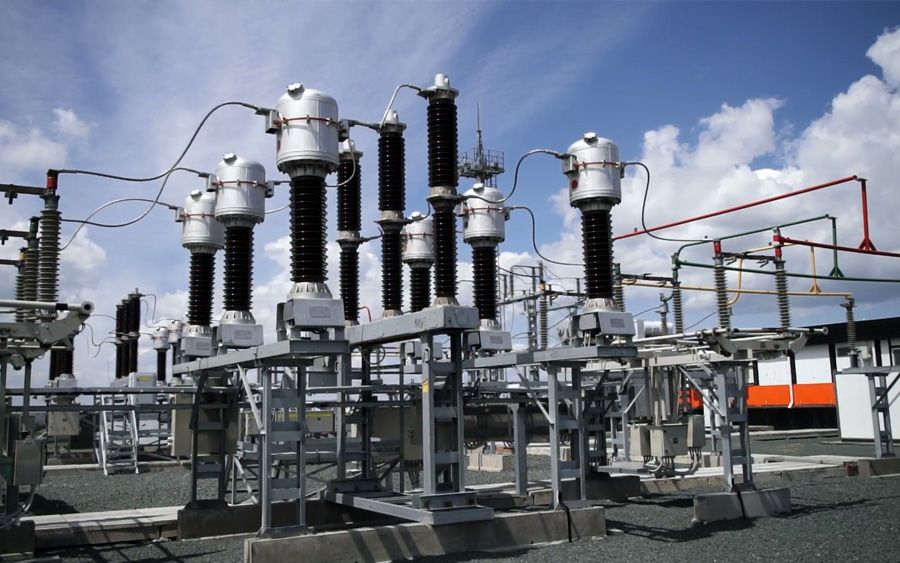
The most troubling aspect of the report is the sharp contraction of the electricity/gas sector by 15.30%, making it the weakest-performing sector in the quarter and the steepest contraction recorded by the sector in recent years.
This underscores the deepening fragility of Nigeria’s power sector and raises serious concerns about the sustainability of economic growth, industrial productivity and business competitiveness.
This development is concerning because electricity is not merely another economic sector; it is the foundation upon which productivity, industrialization, competitiveness and inclusive growth depend. A contraction of this magnitude signals persistent structural weaknesses across generation, transmission and distribution, as well as continuing liquidity and governance challenges within the power sector.
The implications for businesses are severe. At a time when firms are already burdened by high interest rates, logistics costs and weak consumer purchasing power, deteriorating electricity supply further escalates production costs and weakens competitiveness.
Heavy dependence on diesel and petrol-powered self-generation continues to erode profitability across the manufacturing, SME, hospitality, agro-processing and digital sectors.
Sustainable economic transformation cannot be built on fragile energy infrastructure. Without reliable, affordable and stable electricity, gains recorded in other sectors may prove difficult to sustain.
This underscores the urgent need for accelerated reforms across the electricity value chain, including stronger investment in transmission infrastructure, improved market liquidity, accelerated metering, reduction in technical and commercial losses, and governance reforms that can restore investor confidence in the sector.
AVIATION AND TEXTILE SECTORS UNDER PRESSURE
The aviation sector contracted by 7.62%, reflecting the extremely difficult operating environment confronting domestic airlines. Elevated aviation fuel prices, exchange rate pressures, multiple taxation, regulatory charges and high maintenance costs continue to undermine the financial sustainability of operators.
The contraction has wider economic implications because aviation is a critical enabler of trade, tourism, investment and business connectivity.
Equally troubling is the persistent weakness of the textile industry, which remains trapped in a prolonged recessionary cycle. This reflects the continuing challenge of deindustrialization and the erosion of domestic productive capacity.
The decline of labour-intensive industries such as textiles has profound implications for employment, household incomes, industrial linkages and poverty reduction.
These outcomes reinforce the urgency of a production-focused growth strategy anchored on energy reforms, infrastructure investment, industrial support and a more competitive operating environment for domestic enterprises.
OIL SECTOR MODERATION REQUIRES POLICY ATTENTION
The oil and gas sector slowed significantly from 6.79% growth in Q4 2025 to 2.57% in Q1 2026.
This moderation is concerning given the strategic importance of the sector to fiscal revenues, foreign exchange earnings and macroeconomic stability. Oil production remains below both national potential and budget assumptions despite ongoing reforms.
QUALITY OF GROWTH REMAINS CRITICAL
While the GDP numbers are encouraging from a macroeconomic standpoint, concerns remain regarding the quality, inclusiveness and welfare impact of growth. Weak electricity supply, modest industrial contribution, fragile oil output and elevated operating costs continue to constrain employment generation, productivity and household welfare.
Economic growth must ultimately translate into improved living conditions, stronger purchasing power and better welfare outcomes for citizens. Growth without inclusion delivers limited economic and social dividends.
CONCLUSION
Overall, the Q1 2026 GDP report reflects an economy supported by resilient services, digital activities, trade, construction and expanding domestic refining capacity.
However, the report also exposes structural vulnerabilities, especially in power supply, industrial productivity and export competitiveness.
The next phase of economic reform should therefore focus more deliberately on productivity enhancement, industrialization, power sector reforms, export competitiveness and inclusive growth. These remain the critical foundations for sustainable economic transformation and improved welfare outcomes for Nigerians.
X-@theGBJournal|Facebook-the Government and Business Journal|email:gbj@govbusinessjournal.com|govandbusinessj@gmail.com