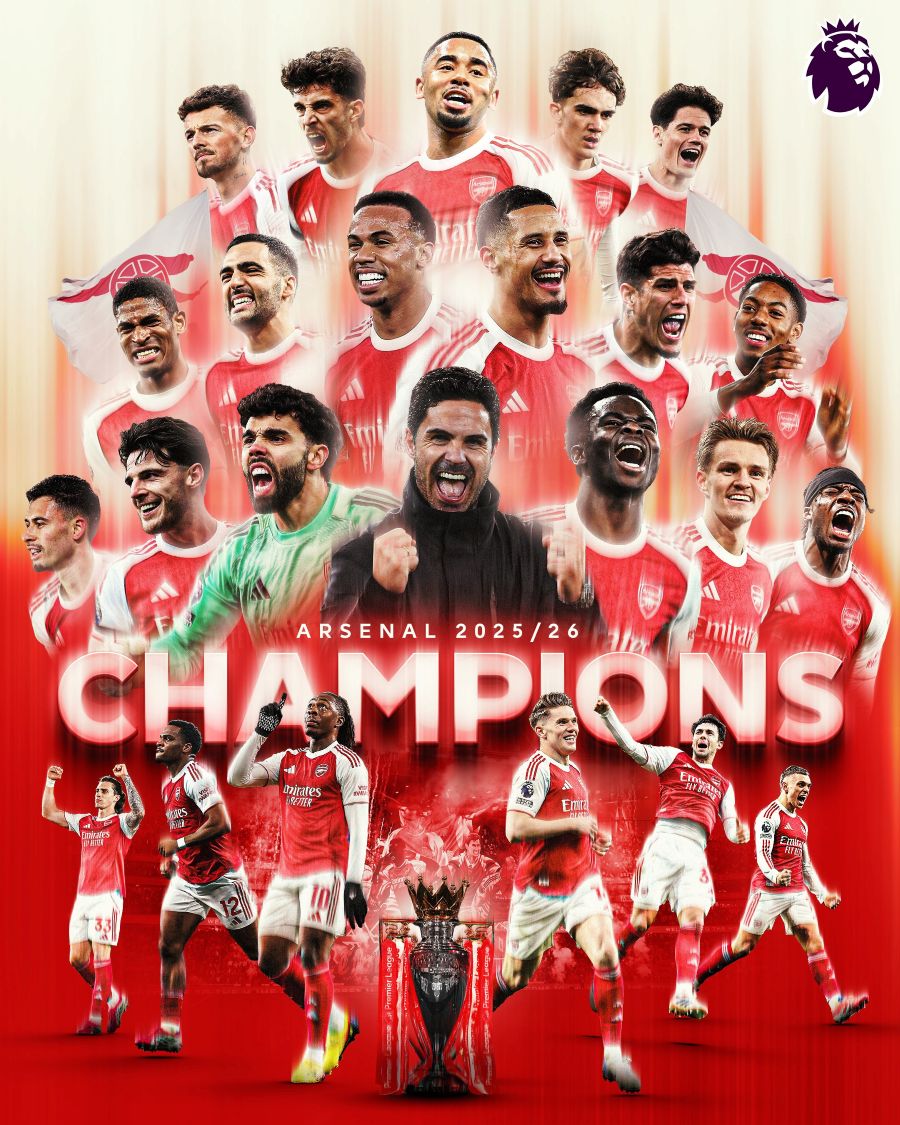

SUN MAY 24 2026-theGBJournal| Imagine this: Arsenal F.C. finally win the English Premier League after years of near misses.
Across Nigeria, fireworks explode in Lagos, Abuja, Benin City, Kano and Port Harcourt. Fans pour into the streets wearing red jerseys, chanting songs deep into the night. For millions of young Nigerians, it feels personal — as if they themselves have conquered something.
Now imagine another reality unfolding at the same time: Nigeria national football team fail once again to qualify for the World Cup.
That contrast says something profound about modern Nigeria.
Football in Nigeria is no longer simply entertainment; it is emotional migration. Many Nigerians now experience victory more intensely through foreign clubs than through national institutions.
An Arsenal title is not merely be a sporting achievement for fans — it is psychological compensation in a country where many citizens feel locked out of progress at home.
This is not because Nigerians love their country less. In fact, the opposite may be true.
Nigerians are deeply emotional investors in success, excellence and aspiration.
But where local systems disappoint repeatedly — politics, infrastructure, power supply, employment, even national football administration — many citizens shift their emotional futures elsewhere. Europe’s football leagues become theatres of borrowed possibility.
That is why an Arsenal triumph triggers extraordinary joy in Nigeria while the Super Eagles’ struggles provoke sadness mixed with resignation.
One story feels organised, merit-based and hopeful; the other feels trapped in cycles Nigerians know too well: confusion, poor planning and unrealised potential.
As the 2027 general election approaches, this matters politically.
A society that celebrates foreign victories more passionately than domestic progress risks becoming psychologically outward-looking rather than nation-building.
Citizens begin to imagine excellence happening somewhere else — London, Manchester or Madrid — but not necessarily Abuja or Lagos. Football becomes both escape and silent commentary on governance.
Yet there is also hope hidden inside this phenomenon.
The passion Nigerians show for football proves that the national spirit is still alive.
People who have stopped believing do not celebrate, argue, dream or invest emotionally.
The Nigerian fan remains intensely hopeful. Every season, Arsenal fans believe again. Every tournament, Nigerians still believe the Super Eagles can rise again. That resilience is political energy waiting for direction.
Perhaps the deeper lesson before 2027 is this: Nigerians do not lack optimism. They lack institutions that reward it.
As Arsenal lifts the Premier League trophy while Nigeria misses another World Cup, the celebrations and disappointment reveals the same truth from opposite directions — Nigerians are still desperate to belong to a winning story.
Igwebuike Okoh write from Cologne, Germany
X-@theGBJournal|Facebook-the Government and Business Journal|email:gbj@govbusinessjournal.com|govandbusinessj@gmail.com