
…African Energy Week’s AI and Data Center Track will position oil and gas as a critical enabler of Africa’s data center expansion
…Aliko Dangote’s conglomerate is targeting $100 billion in annual revenue by 2030, backed by at least $40 billion in investment across sectors including gas, power and data centers
FRI MAY 08 2026-theGBJournal| In April this year, Angola’s Ministry of Telecommunications, Information Technologies and Social Communication launched a national data center and government platform, marking a significant step in its digital transformation strategy.
The facility is designed to enhance cybersecurity by localizing sensitive data, reduce operational costs across government systems and expand access to digital public services, while strengthening investor confidence and positioning the country as an emerging digital hub in southern Africa.
The move highlights a broader continental shift in which Africa’s oil and gas sector is increasingly supporting data center expansion by providing reliable power, capital investment and industrial infrastructure.
This convergence between energy and digital systems will be a central theme at African Energy Week (AEW) 2026, taking place from October 12–16 in Cape Town, where a dedicated AI and Data Center Track will examine how energy resources can unlock scalable digital growth.
Angola’s rollout builds on a series of large-scale infrastructure investments aimed at strengthening connectivity and digital inclusion.
Since launching the ANGOSAT-2 satellite in October 2022, the country has expanded its national fiber-optic backbone to approximately 22,000 km and enhanced international bandwidth through connections to submarine systems including 2Africa, WACS, SACS and SAT-3/WASC.
Broadband coverage now exceeds 85% of the population, with roughly 17.7 million subscribers and mobile penetration approaching 75%, reflecting steady gains in digital adoption.
At the industrial level, the hydrocarbons sector is playing an increasingly central role in anchoring digital infrastructure. Angola’s state-owned Sonangol inaugurated a 920m2 corporate data center in Luanda on February 27, consolidating previously fragmented systems into a unified, high-security platform.
The facility enables AI-driven applications such as reservoir simulation, predictive maintenance and emissions monitoring, allowing operators to optimize production efficiency while aligning with global standards for lower-carbon oil and gas development.
International energy companies are accelerating this shift by embedding advanced digital tools across offshore and onshore operations.
Energy major ExxonMobil has deployed autonomous drones in Block 15, reducing inspection times by up to 60% while improving safety and continuity of production.
Meanwhile, multinational energy corporation TotalEnergies is leveraging AI-enabled seismic processing and airborne methane detection technologies across Blocks 17 and 32, increasing data processing speeds by roughly 30% and improving environmental oversight.
Beyond upstream operations, private capital is scaling Africa’s data center footprint to meet rising enterprise and cloud demand. Data center operator and developer Raxio Group has commissioned Angola’s first Tier III facility through a $30 million investment, aimed at retaining data traffic locally and supporting hyperscale and enterprise clients.
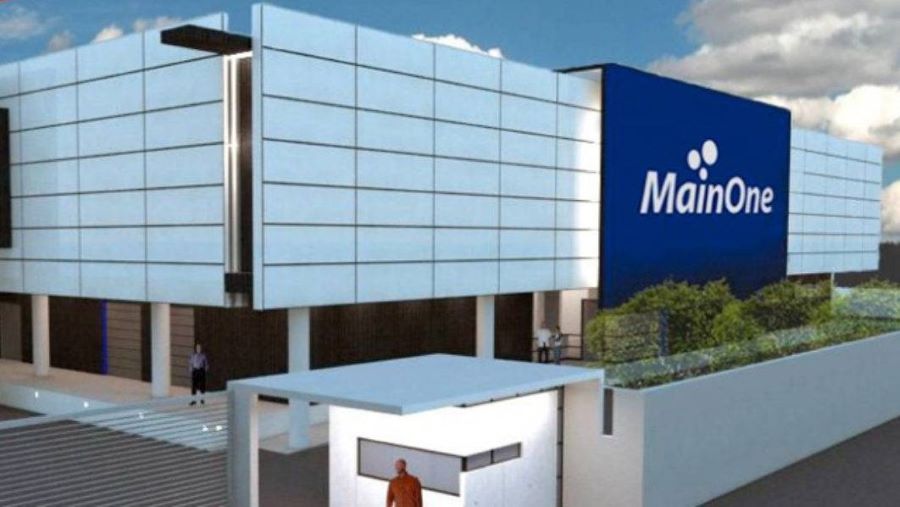
In Nigeria, MainOne launched the Lekki II data center in May 2025, reinforcing Lagos’ position as a premier digital infrastructure hub in West Africa.
Meanwhile, in South Africa, TotalEnergies and data center operator Teraco are pioneering wheeling agreements by building a 120 MW solar plant in the Free State province to power facilities in Johannesburg.
These developments are unfolding alongside broader industrial expansion plans that link energy production director to digital growth.
Aliko Dangote’s conglomerate is targeting $100 billion in annual revenue by 2030, backed by at least $40 billion in investment across sectors including gas, power and data centers.
As demand for compute capacity rises, gas-to-power projects and integrated energy systems are expected to provide the stable electricity required to sustain large-scale digital infrastructure.
As Africa’s digital economy expands, the intersection of hydrocarbons, power generation and data infrastructure are becoming increasingly strategic, particularly in markets where grid stability remains a constraint.
Through the AI and Data Center track, AEW 2026 is expected to position this energy-digital nexus as a cornerstone of future investment.
The AI- and data center-focused track is further expected to highlight how oil and gas resources can support AI deployment, strengthen data sovereignty and accelerate the continent’s transition toward a more connected, technology-driven economic model.
X-@theGBJournal|Facebook-the Government and Business Journal|email:gbj@govbusinessjournal.com|govandbusinessj@gmail.com