
…The parties said confidence in the electoral umpire had been severely eroded and argued that the current INEC leadership no longer commands the neutrality required to oversee a credible election.
…The declaration also laid bare the opposition’s deep distrust of the Independent National Electoral Commission (INEC), accusing its chairman, Prof. Joash Ojo Amupitan, of partisanship and bias in favour of the APC.
SUN APRIL 26 2026-theGBJournal| Nigeria’s opposition parties have fired their opening salvo ahead of the 2027 general election, adopting a defiant, coordinated posture that reflects deep distrust of the electoral process, rising anxiety over democratic backsliding, and a growing determination to confront the ruling All Progressives Congress (APC) with a united front.
In the Ibadan Declaration issued at the close of their national summit in Oyo State, opposition leaders cast the 2027 contest not merely as another election, but as a high-stakes battle for the survival of Nigeria’s multiparty democracy.
The communiqué captures an opposition bloc entering the next electoral cycle with a siege mentality—angry at what it sees as systematic repression, alarmed by what it describes as APC’s bid to entrench one-party dominance, and openly distrustful of INEC’s neutrality under its current leadership.
Beneath the rhetoric is a clear political calculation: the opposition believes only unity, institutional reform, and public resistance to perceived electoral manipulation can prevent the 2027 polls from becoming a foregone conclusion.
Ibadan Declaration
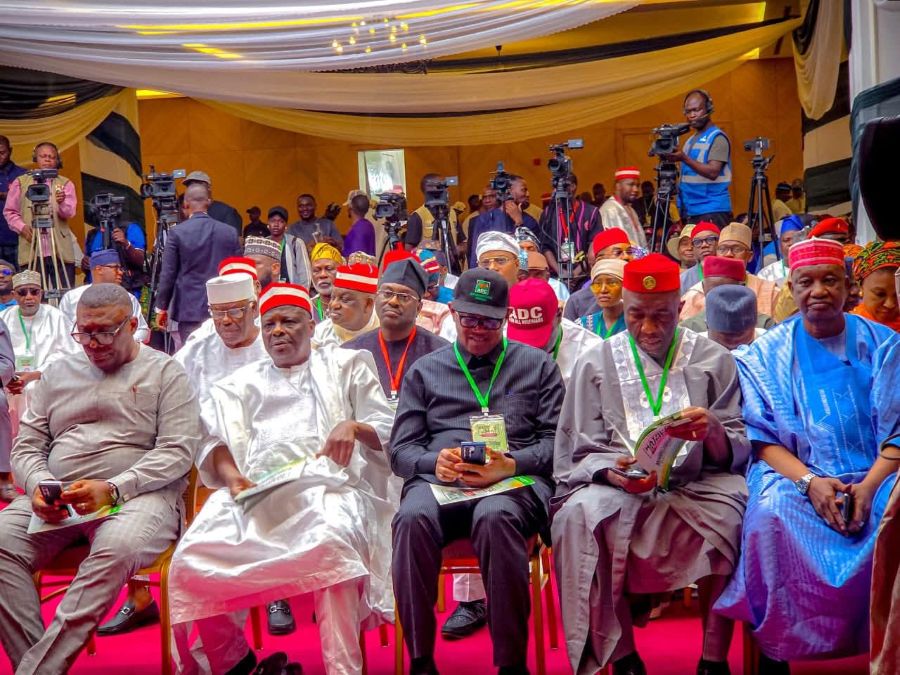
In a strongly worded communiqué issued at the end of the Opposition Political Parties National Summit held on Saturday, April 25, 2026, in Ibadan, Oyo State, Nigeria’s opposition parties declared their readiness to jointly confront what they described as the growing threat of authoritarianism under the ruling All Progressives Congress (APC).
After what they called extensive deliberations on the state of the nation and the future of Nigeria’s democracy, the participating parties said they were united by a shared conviction that the country faces an existential political moment—one marked by democratic erosion, institutional capture, and worsening national hardship.
Framing their mission as a collective effort to “rescue” Nigeria and protect the democratic rights of over 200 million citizens, the opposition resolved to intensify cooperation ahead of the 2027 general election.
The parties vowed to resist what they described as attempts by the APC to impose a one-party state and pledged to defend Nigeria’s multiparty democratic order. They insisted that, despite what they called the ruling party’s political intimidation and manoeuvring to predetermine the 2027 presidential outcome in favour of President Bola Tinubu, the opposition would remain in the race and field candidates across all levels.
In a major strategic signal, the opposition parties said they would work towards presenting a single presidential candidate in 2027—one jointly agreed and backed by all participating parties—as part of a coordinated effort to consolidate anti-APC votes and mount a credible national challenge to the ruling party.
The declaration also laid bare the opposition’s deep distrust of the Independent National Electoral Commission (INEC), accusing its chairman, Prof. Joash Ojo Amupitan, of partisanship and bias in favour of the APC.
The parties said confidence in the electoral umpire had been severely eroded and argued that the current INEC leadership no longer commands the neutrality required to oversee a credible election.
They warned that allowing the chairman to supervise the 2027 polls could inflame political tensions and undermine national stability.
Beyond leadership concerns, the opposition said recent guidelines issued by INEC were deliberately structured to frustrate opposition participation through restrictive conditions and compressed timelines.
They described the new framework as politically exclusionary and called for an immediate extension of the deadline for party primaries to the end of July 2026.
The summit also called on the National Assembly to urgently review the Electoral Act 2026, particularly provisions the opposition says threaten electoral integrity and conflict with constitutional guarantees.
It further demanded the immediate release of opposition politicians allegedly detained or harassed over bailable offences, arguing that such actions amount to political intimidation and an assault on participatory democracy.
Despite their grievances, the parties praised Nigerians for what they described as growing resilience and willingness to support a democratic alternative to the current administration.
They also thanked Oyo State Governor Seyi Makinde and the people of Oyo State for hosting what they described as a defining moment in the opposition’s effort to reclaim Nigeria’s democratic future.
X-@theGBJournal|Facebook-the Government and Business Journal|email:gbj@govbusinessjournal.com|govandbusinessj@gmail.com