
…The expansion move is also consistent with the broader competitive direction, with BUACEMENT progressing a 3.00MTPA Sokoto expansion and DANGCEM advancing its 6.00MTPA Ogun State project, reinforcing an industry wide expectation
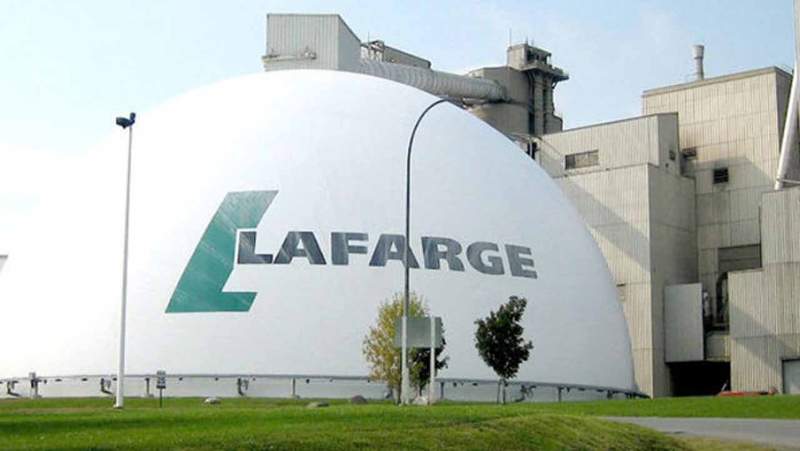
FRI FEB 06 2026-theGBJournal| Lafarge Africa Plc (WAPCO) recently announced plans to expand production capacity at its Ashaka and Sagamu cement plants, targeting post completion capacities of 2.00MTPA and 3.50MTPA, respectively.
This would raise the total production capacity to 14.00MTPA (Current: 10.50 MTPA).
This marks the company’s first major capacity expansion in roughly a decade, since the 2016 commissioning of the additional 2.50MTPA line at Mfamosing in Cross River.
The announcement signals a clear strategic shift and a reacceleration in growth investment after an extended period of capital restraint.
Huaxin’s emergence as majority shareholder is seen as an important driver, pointing to a recalibration of priorities toward scale, asset optimisation and longer-term market positioning.
The choice of Sagamu and Ashaka likely reflects footprint optimisation, especially Sagamu given it has been mothballed since 2021 and would therefore require reactivation alongside the planned capacity uplift.
The expansion move is also consistent with the broader competitive direction, with BUACEMENT progressing a 3.00MTPA Sokoto expansion and DANGCEM advancing its 6.00MTPA Ogun State project, reinforcing an industry wide expectation of a more constructive medium to long term demand backdrop for Nigeria’s cement market.
Why is WAPCO raising capacity now?
At face value, this expansion looks counter-intuitive. Production capacity is not fully absorbed, yet WAPCO is moving to raise capacity. We believe the decision reflects a forward-looking strategic shift. Our read is that three dynamics are at work:
Change in ownership and strategic posture: With Huaxin Cement Co now the majority shareholder following the transition from Holcim, WAPCO appears to be shifting toward a more expansion oriented strategy consistent with Huaxin’s strategic approach in other African markets such as Zambia, Malawi and Mozambique, where acquisitions have typically been followed by plant upgrades and capacity additions.
The announcement is viewed as an early signal of a renewed focus on building long term scale and strengthening competitive relevance under the new ownership structure.
Management’s demand and export thesis: Management has indicated that there is opportunity in the market, noting expectations that existing assets are expected to reach full utilisation over time as demand strengthens. The company also highlighted the attractiveness of export markets, given supply shortfalls in neighbouring markets.
While near-term domestic absorption will be constrained, our key takeaway is that the company is positioning for what it expects to be a medium to long term surge in demand, underpinned by a stronger infrastructure pipeline, improving housing activity and incremental cross-border volumes.
Competitive and industry positioning: The broader Nigerian cement industry is moving in the same direction, with DANGCEM and BUACEMENT advancing capacity expansion plans despite current underutilisation. In this context, WAPCO’s move looks as much defensive as it is offensive – aimed at preserving market share and avoiding a structural disadvantage should demand conditions improve.
Capex intensity to trend higher
We believe the expansion will drive a shift in WAPCO’s capital allocation posture, with capex intensity likely to move back into double-digit territory over 2026E – 2029E.
This follows several years of capital spend restraint, focused largely on plant maintenance, logistics optimisation, and fleet renewal. For context, WAPCO’s capex intensity averaged c.17.0% during its last major expansion phase (2014 – 2016), compared with a much lower c.8.4% over 2017 – 2024, a period characterised by limited productive capacity additions.
By comparison, peers reported higher capex intensity over the period (DANGCEM: 12.8% | BUACEMENT: 30.2%), consistent with their capacity buildouts (DANGCEM: +6.50MTPA | BUACEMENT: +13.50MTPA) during the period.
While we await management disclosure on project costs, peer announcements provide a useful reference point for unit economics:
-BUACEMENT has guided to capex of c.USD240.00 million for its 3.00MTPA Sokoto integrated plant, while
-DANGCEM has guided at c.USD800.00 million for its 6.00MTPA Ogun State greenfield expansion.
Against this backdrop, WAPCO’s planned capacity build of 4.50MTPA in total (including the reactivation of the mothballed 1.00MTPA Sagamu assets) suggests a material capex envelope in the near term.
Nonetheless, the largely brownfield scope should moderate unit costs versus a full greenfield build, implying project economics could skew closer to BUACEMENT’s benchmark than DANGCEM’s.
To add, the likely reacceleration in capex implies near-term free cash flow margins (2026E: c.20.0%) could come under pressure. Nonetheless, we see the investment as structurally value accretive over the longer term, with benefits more likely to crystallise as incremental capacity is absorbed and utilisation normalises.
Funding structure skewed toward internal and group support
While we await management’s disclosure on the funding mix for the expansion, recent industry trends provide useful context.
Among peers, BUACEMENT has typically funds capacity expansion through a combination of operating cash flows and structured debt, including long-tenor facilities from DFIs and local banks, reflecting a greater willingness to lever the balance sheet to fund growth.
DANGCEM, on the other hand, has relied on a mix of strong internal cash generation and incremental borrowings to fund expansion projects, including funding support at the group level, underscoring its access to deep internal capital pools.
For WAPCO, Huaxin’s ownership stands out as a key differentiator. Huaxin has publicly stated that it is able to self-finance and has sufficient operating cash flows to finance expansion and upgrade projects across its footprint, suggesting a preference for internally funded growth.
This raises the likelihood that funding support for WAPCO’s expansion could be sourced, at least in part, from the parent, particularly in the early stages of execution.
That said, WAPCO’s low leverage position (2025E net debt to EBITDA: -0.9x) also leaves room for selective debt financing should management seek to optimise the capital structure.
Valuation update – modest uplift on outer-year expansion upside
We raise our valuation modestly by 7.6% to NGN218.33/s (Prev: NGN203.65/s), reflecting incremental upside from the expansion flowing into our outer forecast years from 2028E – 2029E, assuming H1-26 groundbreaking and a typical 24 – 36 month construction timeline plus ramp up.
Under our updated assumptions, we see scope for production volumes to rise to c.8.80MTPA by 2029E (Prev: 7.88MTPA), supporting a slightly stronger medium-term earnings profile; however, the uplift is not front-loaded, given the offset from a capex upcycle, with capex intensity expected to run in the low teens over 2026E to 2028E.
We will revisit our valuation more explicitly as management provides greater clarity on project capex, funding structure and execution timelines, which could further refine our medium to long term earnings and cash flow outlook.-Written by Cordros Research and made available to theG&BJournal.
X-@theGBJournal|Facebook-the Government and Business Journal|email:gbj@govbusinessjournal.com|govandbusinessj@gmail.com