
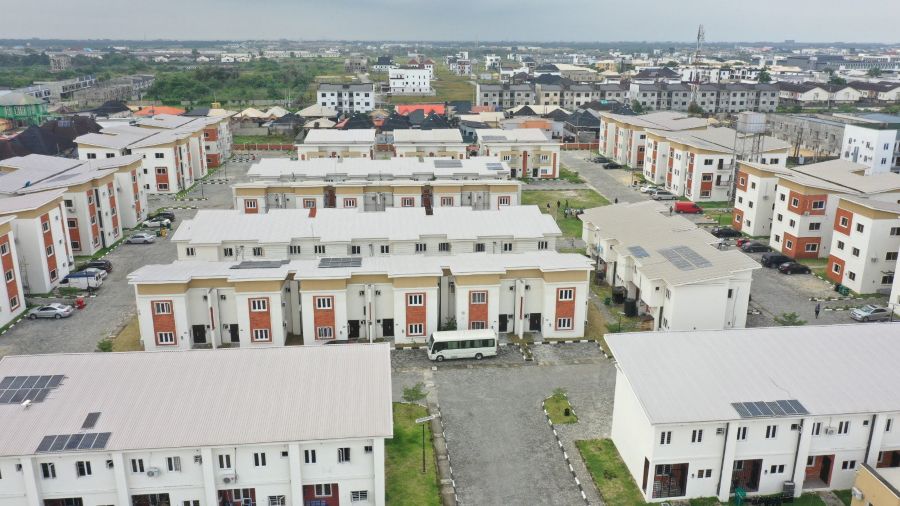

…Specifically, the MOFI Real Estate Investment Fund (MREIF) aims to channel institutional and private capital toward residential and commercial property projects, potentially easing long-term financing constraints in the sector
FRI DEC 19 2025-theGBJournal| The real estate sector now accounts for approximately 13.0% of real GDP, trailing behind the trade and crop production subsectors.
This suggests that developments in the real estate sector could be pivotal to Nigeria’s economic narrative, significantly influencing growth patterns in the years ahead.
Against this backdrop, several government measures are expected to strengthen
mortgage access and stimulate real estate activity in 2026. This includes the
recapitalisation of the Federal Mortgage Bank of Nigeria (FMBN), the launch of the MOFI Real Estate Investment Fund (MREIF) in March 2025, and renewed
public-private partnerships in housing delivery.
Together, these initiatives are expected to enhance liquidity within the mortgage system, enabling a gradual expansion of affordable housing loans and broader access to homeownership among low- and middle-income groups.
Specifically, the MOFI Real Estate Investment Fund (MREIF) aims to channel
institutional and private capital toward residential and commercial property
projects, potentially easing long-term financing constraints in the sector.
In addition, renewed public–private partnerships (PPPs) in housing delivery may
enhance project execution capacity, facilitate the use of underutilized public land, and encourage greater private sector participation through risk sharing
arrangements.
Collectively, these interventions are likely to support increased project initiation, stimulate construction activity, and broaden housing supply.
On the demand side, a gradual recovery in disposable incomes, driven by moderating inflation, together with Nigeria’s fast-paced urbanisation, may underpin a steady increase in housing demand over the medium term.-Analysis provided by Cordros Research
X-@theGBJournal|Facebook-the Government and Business Journal|email:gbj@govbusinessjournal.com|govandbusinessj@gmail.com