
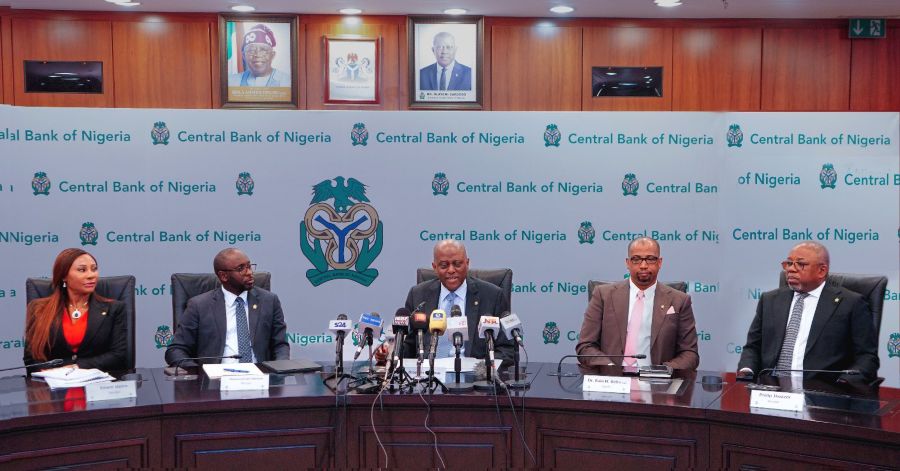

THUR SEPT 25 2025-theGBJournal| When The Central Bank of Nigeria (CBN) on September 23, 2025 cut benchmark interest rate from 27.5 percent to 27 percent, the first cut in fives years, a notable new measure was the introduction of a 75 percent CRR on non-Treasury Single Account (TSA) public sector deposits, aimed at containing excess liquidity risks that could arise from fiscal operations.
The Centre for the Promotion of Private Enterprise (CPPE) hailed the policy as a ”prudent measure to prevent excessive fiscal-driven liquidity injections from destabilizing the financial system.”
The 75 percent CRR on non-Treasury Single Account is designed by the CBN to prevent volatility in money supply growth that could undermine recent progress in price stability.
The policy requires banks to hold three-quarters of such deposits with the CBN as sterile reserves, earning no return and unavailable for lending or investment, and also aimed at tightening liquidity and reinforcing fiscal-monetary alignment.
By heavily sterilising public sector funds placed outside the Treasury Single Account (TSA), the CBN reduces the scope for banks to recycle government cash into credit expansion or FX demand.
The measure discourages ministries, departments, and agencies from keeping idle funds in the banking system, nudging them toward TSA compliance.
This, in turn, might lead to tighter liquidity, which may keep interbank rates
elevated and reinforce CBN’s control.
In the FX market, this liquidity limits speculative demand for foreign exchange, which could support exchange rate stability further.
-@theGBJournal|Facebook-the Government and Business Journal|email:gbj@govbusinessjournal.com|govandbusinessj@gmail.com