
FRI AUG 08 2025-theGBJournal| The Lagos State Government, through the Office of Sustainable Development Goals, has reaffirmed its commitment to placing data at the heart of planning, implementation, and performance tracking of the 2030 Agenda.
At a capacity-building workshop for SDGs Champions across Ministries, Departments, and Agencies (MDAs), the State Government reiterated its resolve to strengthen institutional capacity and inter-agency coordination as a strategy for accelerating progress towards inclusive and sustainable development.
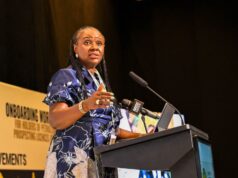
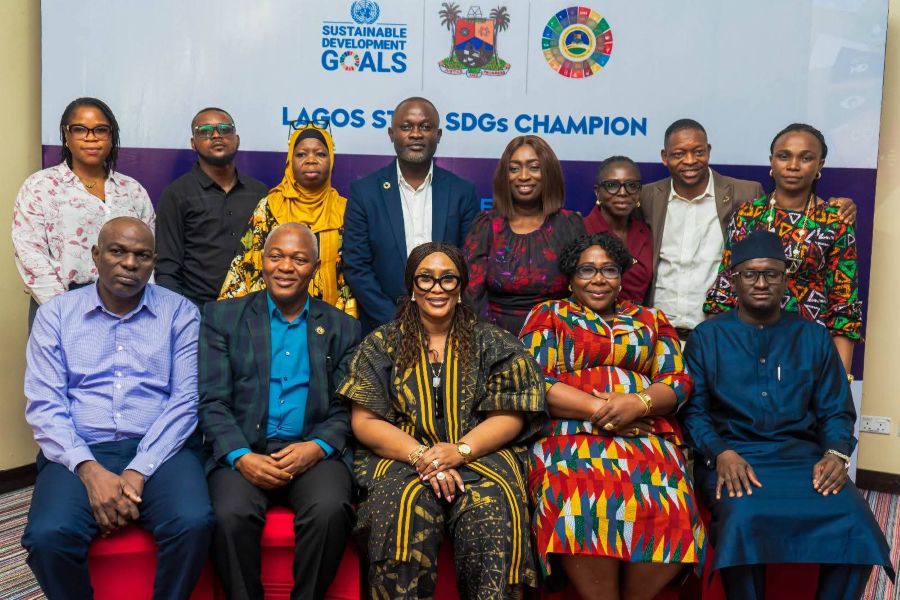
Held at Protea Hotel, Ikeja, with the theme “Building Capacity for SDGs Reporting Through Effective Data Use and Advocacy,” the one-day strategic engagement brought together statisticians, planners, programme officers, and key personnel from various MDAs tasked with integrating and championing the data management within their institutional mandates.
In her opening remarks, the Special Adviser to the Governor on SDGs, Dr. Oreoluwa Finnih, who was represented by the Permanent Secretary, Office of SDGs, Mrs. Kaphayah Olayemi Sarumi, described the training as a critical platform to deepen understanding, foster collaboration, and reinforce data-driven governance in the state’s pursuit of the SDGs and HCD.
“The SDGs are not just aspirational targets. They are a global blueprint to transform lives, institutions, and communities,” she said. “Achieving them demands a whole-of-government approach anchored on accurate, timely, and reliable data.”
According to her, Lagos must embrace data-driven sustainability by strengthening its capacity for evidence-based decision-making and performance tracking. She noted that while commendable progress has been recorded, the absence of sufficient data across many of the SDGs remains a key limitation.
“As commendable as your efforts have been in the last four years, we still lack adequate data for each of the SDGs indicators. Without this, we cannot measure our impact or know the specific advancements being made”, she noted.
She urged participants-designated as SDGs Champions – to see their roles not just as administrative, but transformational, emphasising their unique responsibility in embedding the SDGs into policies, programmes and service delivery frameworks.
Delivering the keynote address, the Permanent Secretary, Ministry of Economic Planning and Budget, Mrs. Olayinka Ojo, stressed that the future of sustainable development lies in statistical integrity. She charged statisticians and MDA representatives to adopt a unified, intentional, and dynamic approach to data gathering and analysis.
“The kind of data we generate for the SDGs must be purposeful and standardised. It directly influences the effectiveness of planning and decision-making across all sectors”.
“As we proceed with this workshop, I urge you to see yourselves not just as data collectors but as architects of progress. Each dataset you curate, each methodology you refine, and each insight you uncover brings us closer to a world where no one is left behind. The SDGs are not just goals; they are a promise to future generations and your work ensures that this promise is kept”, she submitted.
While delivering the goodwill message, the Director of the Lagos Bureau of Statistics, Mr. Bashiru Oseni-Ope, emphasised the pivotal role of data in governance, particularly the importance of disaggregated data in driving inclusive policy formulation and targeted development.
He re-emphasised the need for greater synergy among MDAs, noting that the fragmentation of data systems remains a major barrier to coordinated and effective development planning.
“We must dismantle data silos. If we can harmonise our data frameworks, Lagos will continue to lead as a model of integrated development planning and policy alignment,” he said.
Presenting a paper on “From Files to Facts: Turning Routine MDA Records into Powerful SDGs Insight,” the Technical Assistant to the Statistician General of the Federation, Mr. Shamsideen Lawal, emphasised the untapped potential of routine administrative records in MDAs as a valuable source of real-time, policy-relevant data for tracking SDGs progress.
He advocated for enhanced data documentation practices and institutional collaboration to bridge existing information gaps.
Similarly, the Associate Professor of Statistics at the Lagos State University of Science and Technology, Dr. Taofeek Arowolo, delivered a presentation on “Overview of SDGs Indicators and Challenges of Data Gathering,” where he highlighted the complexities of data harmonization, limited technical capacity, and the need for standardized frameworks as key challenges impeding effective SDGs monitoring and evaluation.
There were also practical sessions on SDGs indicator mapping, the use of data tools, and methods to align agency-level activities with the broader development goals of the state.
X-@theGBJournal|Facebook-the Government and Business Journal|email:gbj@govbusinessjournal.com|govandbusinessj@gmail.com