

…The IMF Directors agreed that the Central Bank of Nigeria is appropriately maintaining a tight monetary policy stance, which should continue until disinflation becomes entrenched.
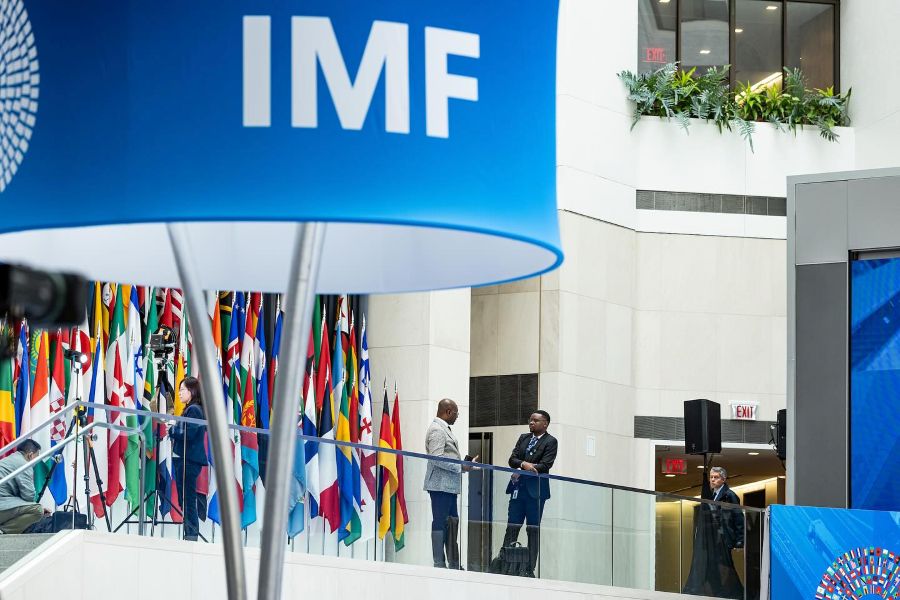
WED JULY 02 2025-theGBJournal| The Executive Board of the International Monetary Fund (IMF) on Wednesday reported on their latest Article IV Consultation.
Executive Directors of the IMF agreed with the thrust of the staff appraisal while commending the federal government on the successful implementation of significant reforms during the past two years and welcomed the associated gains in macroeconomic stability and resilience.
What the Executive Directors said
Executive Directors agreed with the thrust of the staff appraisal. They commended the authorities on the successful implementation of significant reforms during the past two years and welcomed the associated gains in macroeconomic stability and resilience.
As these gains have yet to benefit all Nigerians, and with heightened economic uncertainty and significant downside risks, Directors emphasized the importance of agile policy making to safeguard and enhance macroeconomic stability, creating enabling conditions to boost growth, and reducing poverty.
The IMF Directors agreed that the Central Bank of Nigeria is appropriately maintaining a tight monetary policy stance, which should continue until disinflation becomes entrenched.
They welcomed the discontinuation of deficit monetization and ongoing efforts to strengthen central bank governance to set the institutional foundation for inflation targeting. Directors also welcomed steps taken by the authorities to build reserves and support market confidence and praised reforms to the foreign exchange market that supported price discovery and liquidity.
They called for implementation of a robust foreign exchange intervention framework focused on containing excess volatility, stressing that the exchange rate is an important shock absorber. Directors also agreed with staff’s call to phase out existing capital flow management measures in a properly timed and sequenced manner.
Directors called for a neutral fiscal stance to safeguard macroeconomic stabilization with priority given to investments that enhance growth. Directors also called for accelerating the delivery of cash transfers to assist the poor.
They commended the authorities on advancing the tax reform bill, an important step towards enhancing revenue mobilization and creating fiscal space for development spending, while preserving debt sustainability.
Directors recognized actions to strengthen the banking system, including the ongoing process of increasing banks’ minimum capital.
They welcomed the authorities’ efforts to boost financial inclusion and promote capital market development, while emphasizing the importance of moving to a robust risk‑based supervision for mortgage and consumer lending schemes as well as the fintech and crypto sectors.
Directors welcomed progress made in strengthening the AML/CFT framework and stressed the importance of resolving remaining weaknesses to exit the FATF grey list.
To lift Nigeria’s growth outlook, improve food security, and reduce fragility, Directors highlighted the importance of tackling security, red tape, agricultural productivity, infrastructure gaps, including boosting electricity supply, as well as improved health and education spending, and making the economy more resilient to climate events.
They noted that addressing structural impediments to private credit extension is also needed to support growth. Directors welcomed the IMF’s capacity development to support authorities’ reform efforts and agreed that enhancing data quality is critical for sound, data‑driven policymaking.
IMF Staff Observations
The Nigerian authorities have implemented major reforms over the past two years which have improved macroeconomic stability and enhanced resilience. The authorities have removed costly fuel subsidies, stopped monetary financing of the fiscal deficit and improved the functioning of the foreign exchange market.
Investor confidence has strengthened, helping Nigeria successfully tap the Eurobond market and leading to a resumption of portfolio inflows. At the same time, poverty and food insecurity have risen, and the government is now focused on raising growth.
Growth accelerated to 3.4 percent in 2024, driven mainly by increased hydrocarbon output and vibrant services sector. Agriculture remained subdued, owing to security challenges and sliding productivity.
Real GDP is expected to expand by 3.4 percent in 2025, supported by the new domestic refinery, higher oil production and robust services. Against a complex and uncertain external environment, medium-term growth is projected to hover around 3½ percent, supported by domestic reform gains.
Gross and net international reserves increased in 2024, with a strong current account surplus and improved portfolio inflows. Reforms to the fx market and foreign exchange interventions have brought stability to the naira.
Naira stabilization and improvements in food production brought inflation to 23.7 percent year-on-year in April 2025 from 31 percent annual average in 2024 in the backcasted rebased CPI index released by the Nigerian Bureau of Statistics.
Inflation should decline further in the medium-term with continued tight macroeconomic policies and a projected easing of retail fuel prices.
Fiscal performance improved in 2024. Revenues benefited from naira depreciation, enhanced revenue administration and higher grants, which more-than-offset rising interest and overheads spending.
Downside risks have increased with heightened global uncertainty. A further decline in oil prices or increase in financing costs would adversely affect growth, fiscal and external positions, undermine financial stability and exacerbate exchange rate pressures. A deterioration of security could impact growth and food insecurity.
X-@theGBJournal|Facebook-the Government and Business Journal|email:gbj@govbusinessjournal.com|govandbusinessj@gmail.com